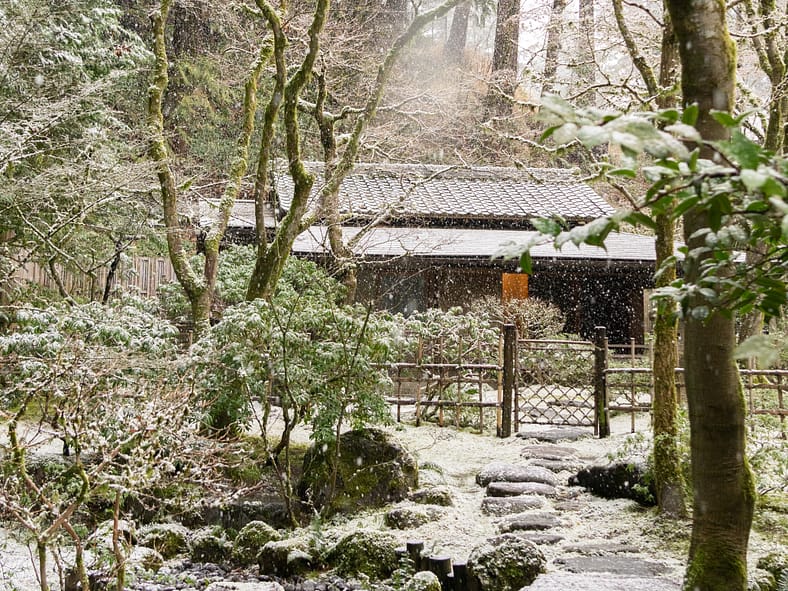
Throughout 2025, Portland Japanese Garden published several stories that reveal its depth, community history, and importance as a place for human connection to our local Portland community, and those around the globe. We were able to share more about those who have made an indelible impact on it, the spaces within its 12.5 acres in Washington Park, and the cultural traditions of Japan that are the source of the organization’s programming.
Here we present original writing crafted by the Garden in 2025, all imbued with the spirit of this nonprofit organization’s mission of Inspiring Harmony and Peace and aligned with its vision of cross-cultural understanding.
Community
Representation Matters: Mari Watanabe, Board Trustee, on Making History by Becoming First Japanese American Woman to Join Oregon Legislature
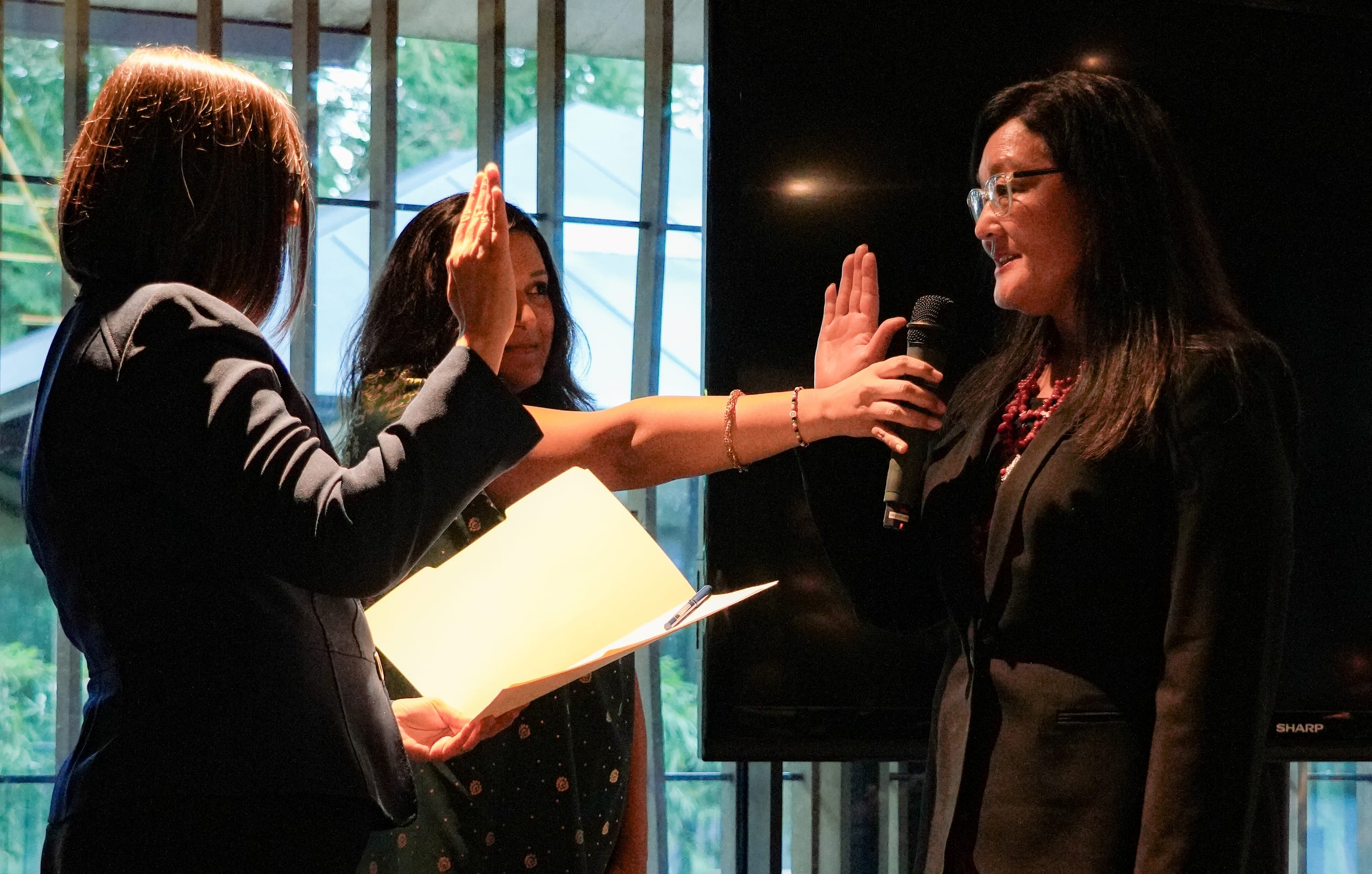
On January 19, 2025, history was made at Portland Japanese Garden when Oregon State Representative Mari Watanabe was sworn in by Justice Aruna Masih of the Oregon Supreme Court to fill a vacant seat for House District 34. Watanabe, who has served on the Garden’s Board of Trustees since May 2024, is the granddaughter of Japanese immigrants and has been a Portland resident since 2000. Representative Watanabe’s appointment, makes her the first Japanese American woman to serve in the Oregon legislature, a body that held its first regular session in 1860.
Garden Profile: Trustee Emerita Maggie Drake on Her Journey with Portland Japanese Garden
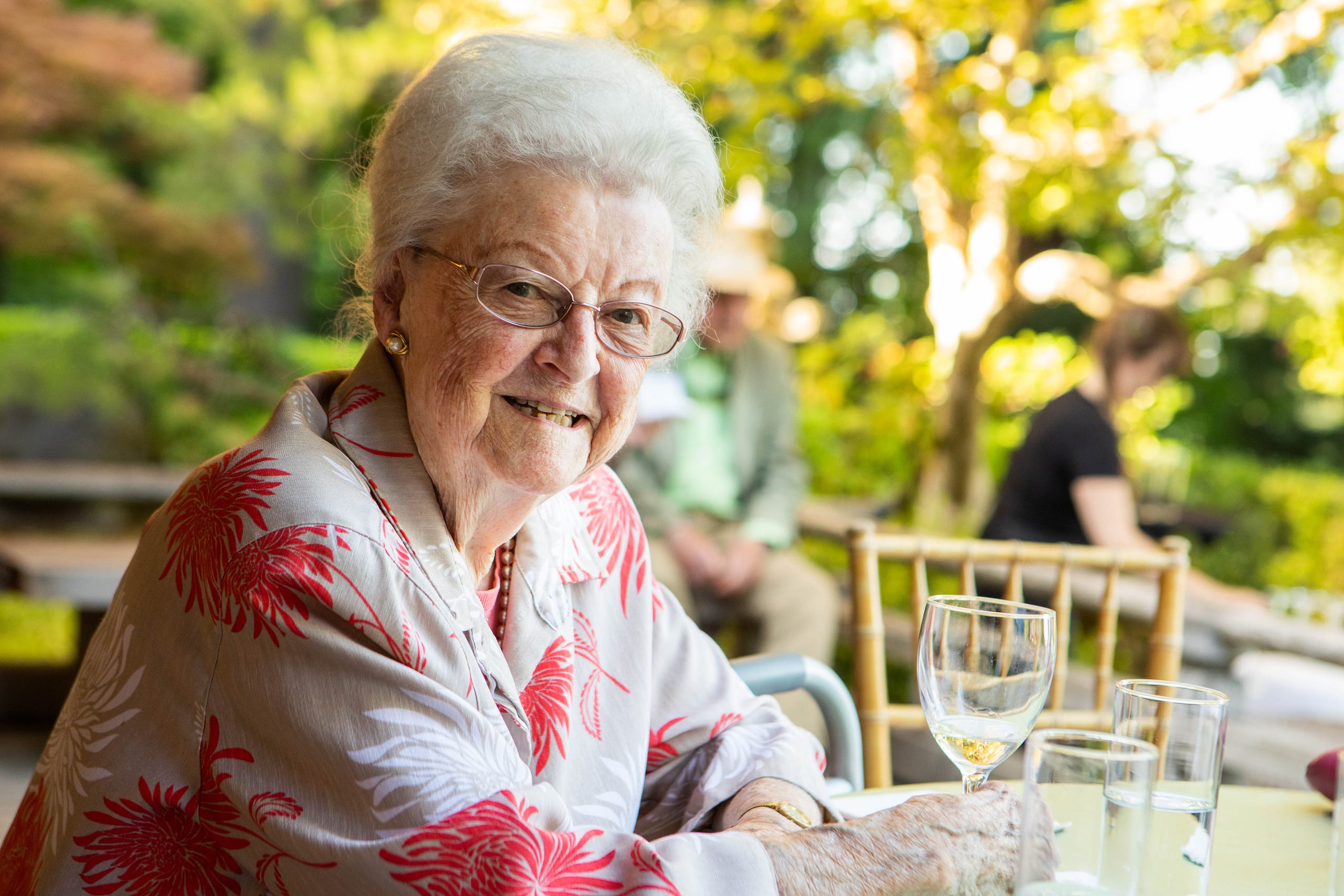
Maggie Drake is one of the civic leaders who helped found Portland Japanese Garden in the 1960s. One of the earliest Board Members of the organization, Drake made history when she became the first woman to be its President. She was present at the Garden when the Flat Garden was constructed in 1963 and has either led, collaborated on, or witnessed every step of the way since. In 2025, we sat down with Drake to learn firsthand about this remarkable person.
Tana’s Tree: The History of the Weeping Cherry of Portland Japanese Garden
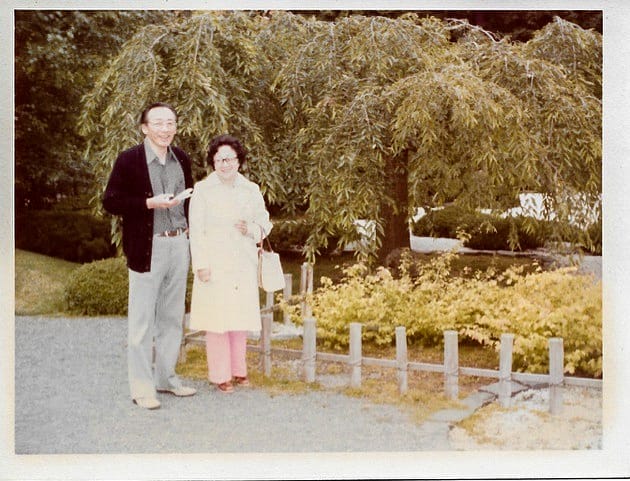
In Portland Japanese Garden there stands one tree rooted in the significance of both what it means to be Asian in America and the strength of a mother’s love: its weeping cherry. The story of this tree in the Flat Garden is especially appropriate to tell as May approaches, when we celebrate both Mother’s Day and Asian American Native Hawai’ian Pacific Islander (AANHPI) Heritage Month.
Volunteer Spotlight: Mona Ozaki
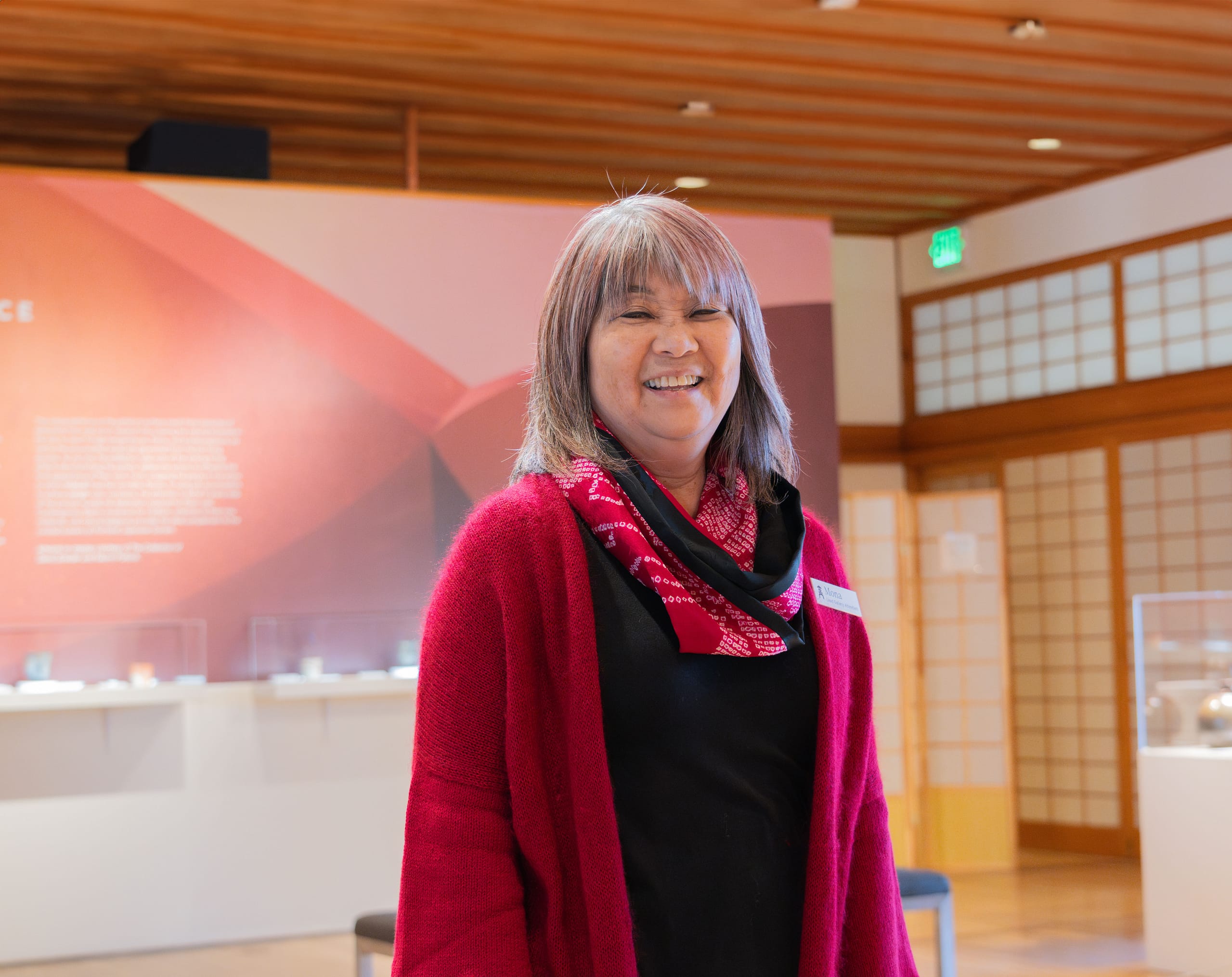
One person who exemplifies the profound qualities of immense compassion, kindness, and care is Mona Ozaki. Ozaki, who in addition to working as a Gallery Attendant since 2016 has given time as a Horticulture Support Volunteer since 2010 and has made a lasting and positive impact. After reaching over 2,000 hours of service, she sat down to discuss her time with the Garden.
Artist Profile: Katazome Artist Karen Illman Miller
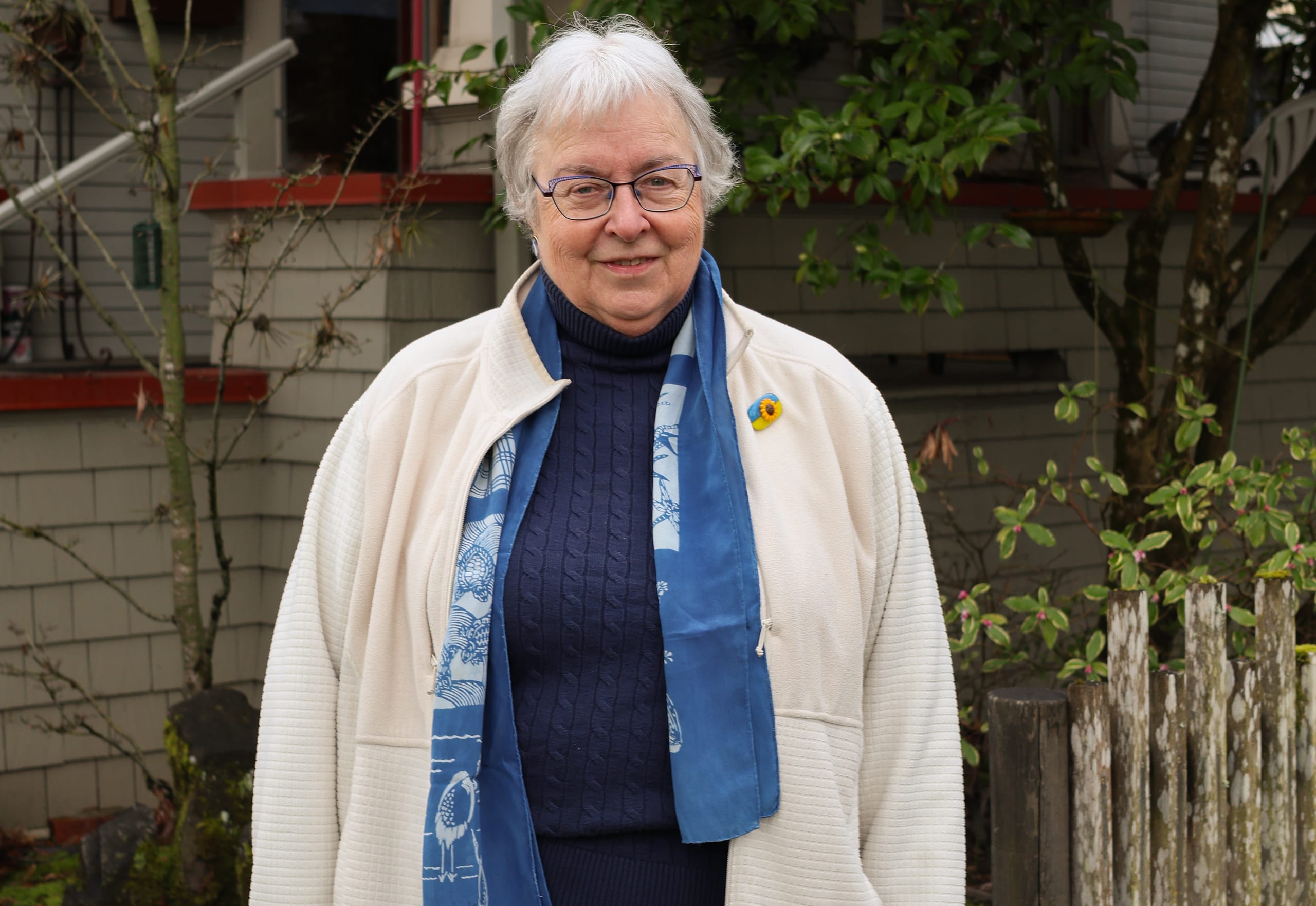
In March, Portland Japanese Garden debuted its new art exhibition, Natural Patterns: Katazome Stencil Dyeing, featuring the katazome artistry of Oregon resident Karen Illman Miller. To learn more about Miller’s fascinating transformation from marine biologist to practitioner of a lesser-known Japanese artform, we traveled to her handsome craftsman home in Corvallis, Oregon where she creates her pieces in a basement brimming with her work, supplies, and ideas. If you want to learn more about katazome itself, Miller discusses it here.
Cultural Partner Spotlight: Father and Son Presenters Jeffrey and Andrew Robson
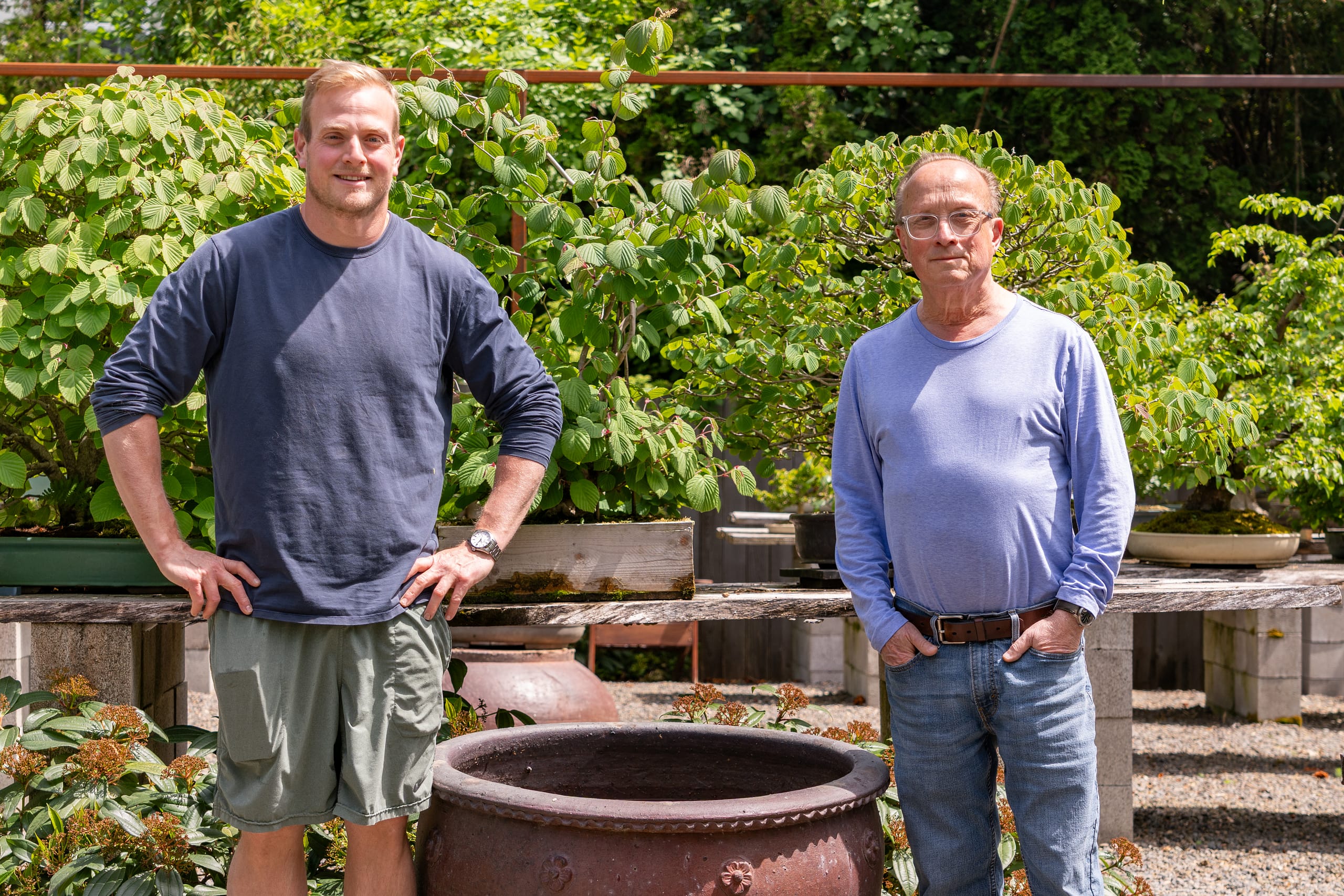
Jeffrey and Andrew Robson are a father and son who have been demonstrating at the Garden over the past several years, helping shine light on Japanese culture as a form of cultural diplomacy. Andrew, the son, is an award-winning bonsai artist and former President of the Bonsai Society of Portland, the largest club in the U.S. Jeffrey, the father, began studying at the Ikenobō School of Ikebana in 2016, and has attained the rank of Kakyō, Assistant Professor third grade. Ahead of Father’s Day, we sat down with the Robsons to learn more about their background and how they’ve become such integral parts of the Portland Japanese Garden community.
George Takei Returns to Portland Japanese Garden to Stage Performance with Chamber Music Northwest

On May 31, Portland Japanese Garden partnered with Chamber Music Northwest to host the West Coast premiere performance of Lost Freedom: A Memory. Inspired by autobiographical accounts of the incarceration of Japanese-American citizens in World War II, the event weaved together music and spoken word in a profound exploration of a chilling time in American history. It featured a live and in-person appearance by pioneering actor, author, and activist, George Takei. Takei, a member of the Garden’s International Advisory Board, narrated his own story as one of the citizens forced from their homes and made to live in desolate camps thousands of miles away. Set to music by composer and violist Kenji Bunch, this poignant program also included music by composer and percussionist Andy Akiho.
Phoenix Legacy Society Spotlight: Jacquie Siewert-Schade and W. Curtis Schade

Portland Japanese Garden has created the Phoenix Legacy Society to assist individuals who want to support the organization through their estate. Joining the Phoenix Legacy Society is an incredibly generous and thoughtful way to honor the Garden and help ensure it remains able to pursue its mission of Inspiring Harmony and Peace for generations to come. We recently sat down with two members of the Society, Jacquie Siewert-Schade and W. Curtis Schade, about why they decided to make this meaningful gesture.
Being the Change: Emerging Leaders in Sakura Society Seek to Uplift Portland Through the Garden
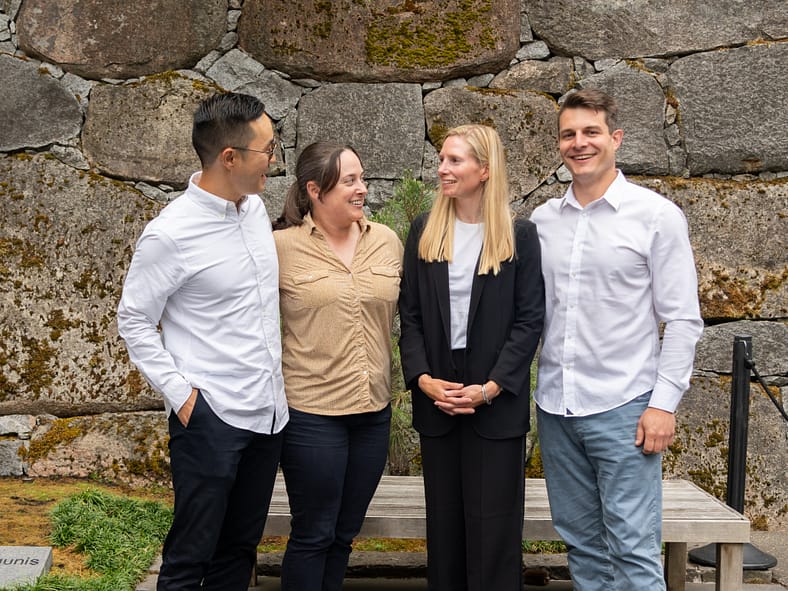
In March, Portland Japanese Garden established its Sakura Society, a membership level that welcomes emerging leaders from the ages of 21 to 45 to become patrons of the organization. Working alongside staff to help this exciting new endeavor lift off is an Advisory Council of accomplished young professionals: Thomas Cho, Evan Gremillion, Amanda Jacobs, and Gretchen Johnson. On a pleasant summer day at the Garden, the four sat down to speak about the inspiration for the Sakura Society, their plans for it, and why they believe the Garden is worth championing.
We All Need Each Other: A Cultural Partner Spotlight on David Komeiji
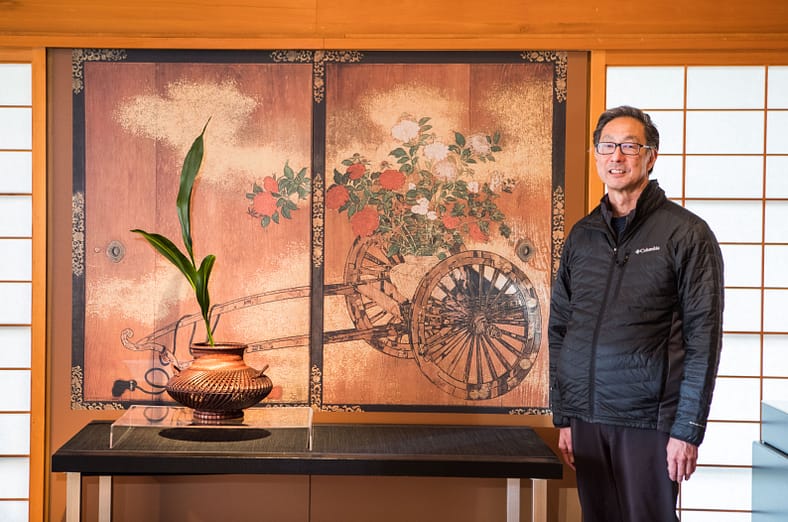
David Komeiji’s partnership with the Garden has largely been through, though not limited to, his work as the leader of the Saga Goryu North America Chapter. Saga Goryu is a centuries-old Japanese school of ikebana, the Japanese art of flower arranging, which has been translated as “living flowers” or “giving life to flowers.” Komeiji, with an artist’s eye and an egalitarian’s heart, can plainly see what others can’t or won’t, that everyone is an essential element in what constitutes our universe.
Portland Japanese Garden Welcomes Anne Hunter From Brooklyn Botanic Garden as Part of Exchange Program
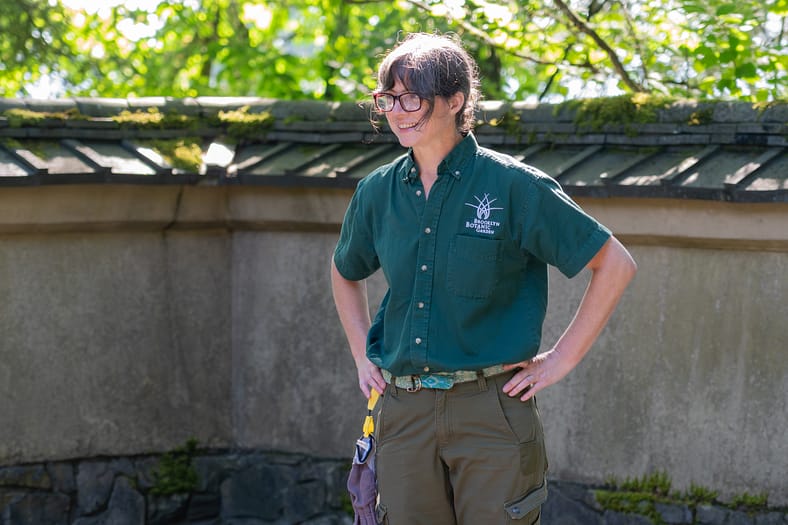
In July, Portland Japanese Garden welcomed Anne Hunter, gardener and curator for Brooklyn Botanic Garden’s three-acre Japanese Hill-and-Pond Garden and Japanese Tree Peony Collection, to become the latest professional to participate in the Professional Gardener Work Exchange Program an initiative led by Hugo Torii, Garden Curator and Director of the Japanese Garden Training Center. Hunter sat down to chat about her week in Portland.
Volunteer Generosity Leads to Purchase of New Tatami Mats for Tea House
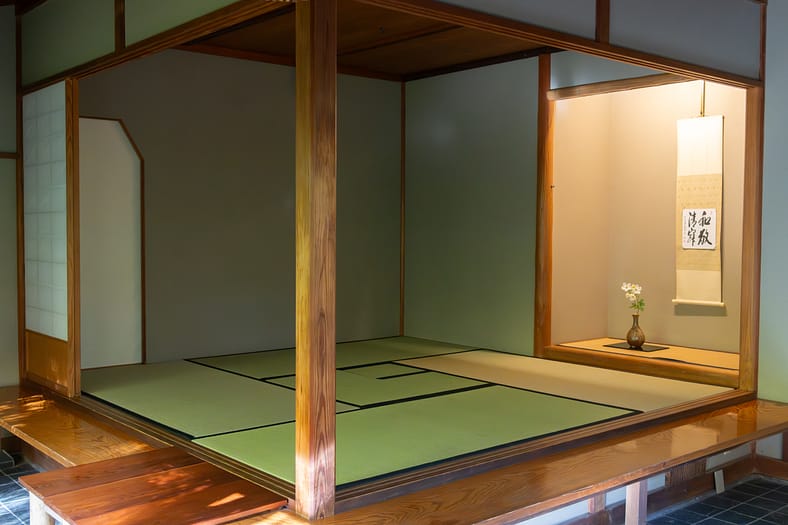
In October, Portland Japanese Garden refreshed its Kashintei Tea House by adding new tatami mats thanks to generous support from its volunteers. The tatami that had been in place in the Tea House had been used for nearly 25 years and was revealing a kind of wear and tear that no longer met the standard of excellence that is now expected by the organization and its community. Hugo Torii, Garden Curator and Director the Japanese Garden Training Center, decided to purchase the new mats from the Tokyo-based Morita Tatami Mat Maker, a family-owned business in operation since the early 1930s.
Volunteer Spotlight: Dick Doi
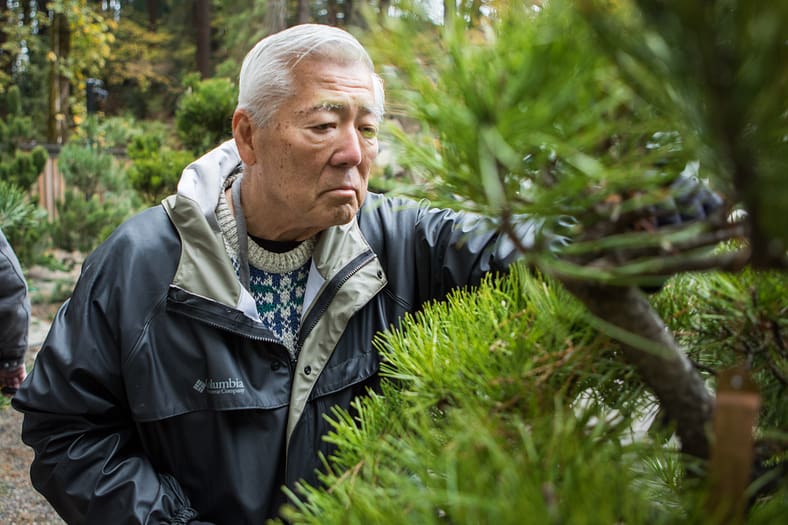
Dick Doi, Volunteer Emeritus, has left an indelible impression on Portland Japanese Garden over his 2,000+ hours of volunteering. Doi retired from active volunteering in 2023 with experience in a variety of different roles, including horticulture and bonsai support and giving tours. Still a regular and welcome presence at the Garden and beloved for his kindness, warmth, and intelligence, Doi is regarded as a standard bearer of excellence for both volunteers and staff. On a warm summer day, we went to his home in Vancouver, Washington to learn more about him and his time with the Garden.
Portland Japanese Garden Participates in Trade Mission Led by Oregon Governor Tina Kotek

In October, Portland Japanese Garden was delighted to participate in a trade mission led by Oregon Governor Tina Kotek. Governor Kotek had traveled overseas to Japan and South Korea “to expand opportunities for trade and tourism between the state and the countries.” Included in this itinerary was a meeting between Aimee Kotek Wilson, First Lady of Oregon and Misako Ito, Executive Director of the Garden’s Japan Office in Tokyo. Ito and the First Lady discussed cultural ties between Oregon and Japan and Portland Japanese Garden’s position as a bridge in this diplomatic pursuit.
Northwest Portland: Eat and Drink Your Way Through the Charming Neighborhood Next to Portland Japanese Garden
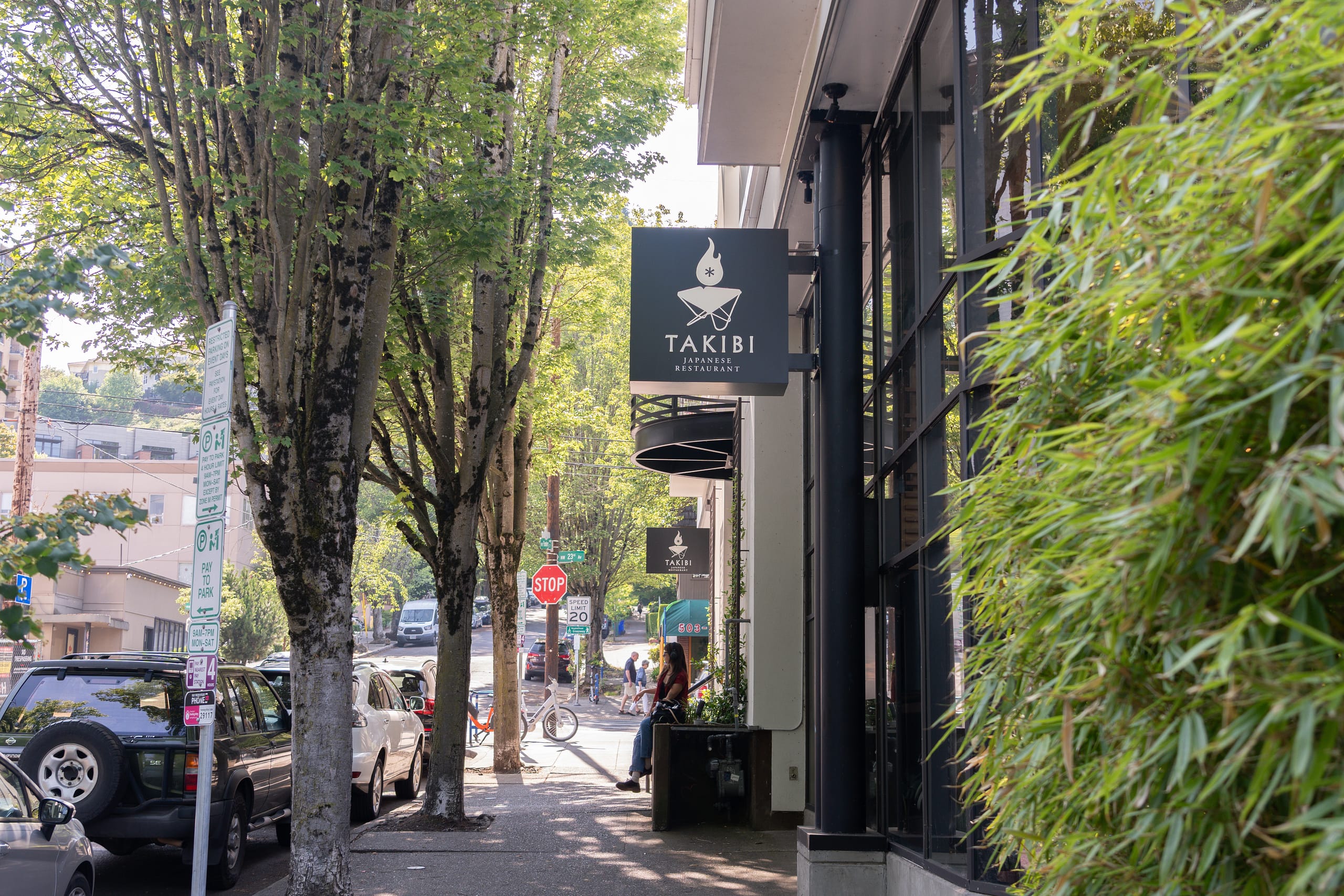
Despite feeling very much like an oasis tucked away from an urban environment, Portland Japanese Garden is only a stone’s throw from one of its host city’s most beloved areas, referred to casually as Northwest Portland. To help complement your visit to Portland Japanese Garden, we’ve curated a list of nearby recommended spots to enjoy quick and casual bites, elegant meals, and drinks hot, cold, or boozy. Each featured business is also a philanthropic partner of Portland Japanese Garden!
Culture
The Distinction of Japanese Gardens as Told by the Experts Who Create and Maintain Them
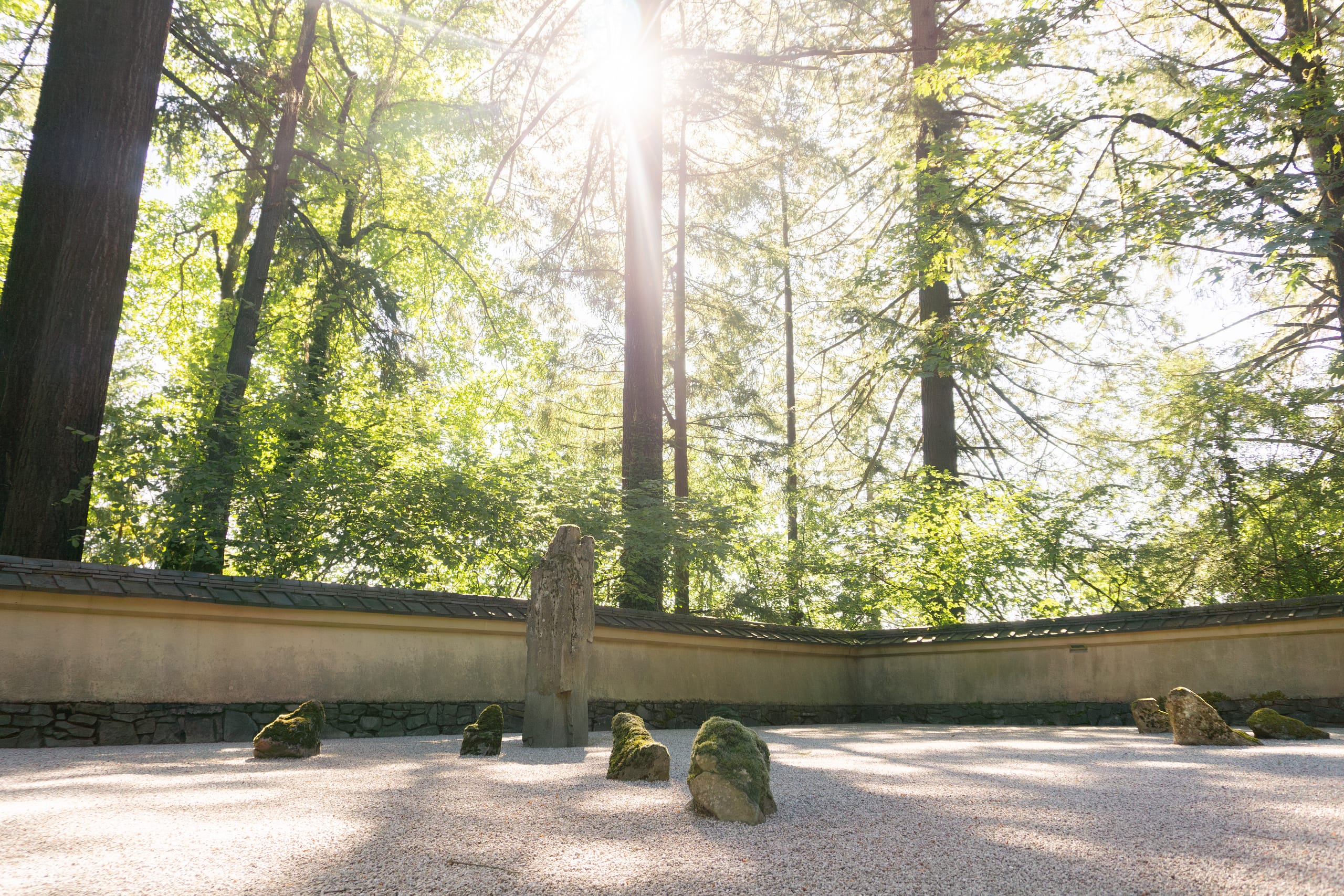
Originally published in Pacific Horticulture, this article by Will Lerner, Marketing and Communications Manager, asks and answers, “What makes a Japanese garden a Japanese garden?” In this piece, learn about elements and principles—both aesthetic and philosophical—that make Japanese gardens truly special by reading the thoughts of the experts who have devoted their lives to building them.
How to Go For a Walk in Portland Japanese Garden
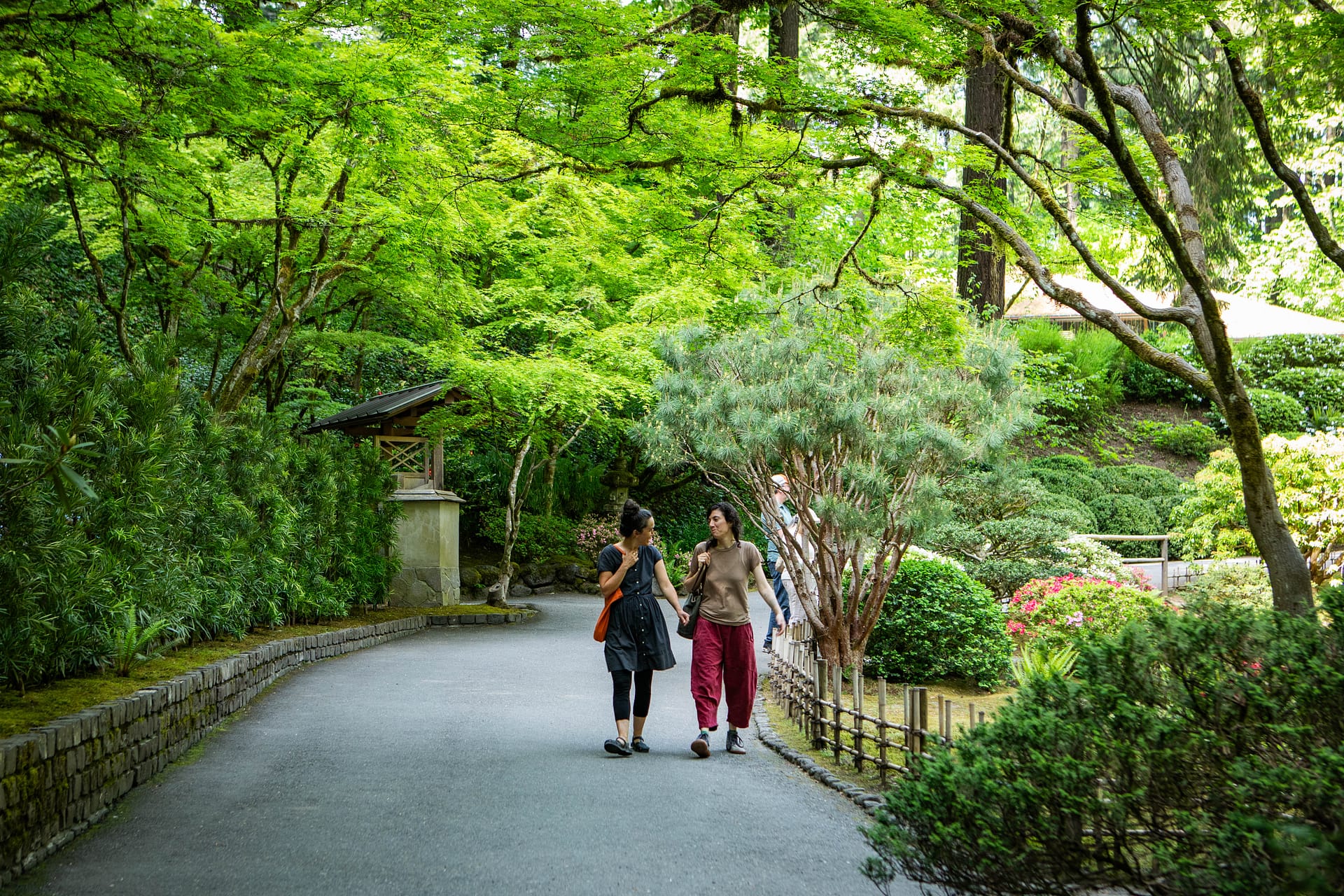
The setting for humanity’s story has only recently introduced the urban skyline. For the vast majority of it, the wild was the only home we knew and we traversed it as naturally as we breathe. That’s why walking through a space like Portland Japanese Garden, profoundly articulate in its expression of nature’s beauty, feels so comforting. To help inspire you to achieve some self-care, we put a Portland Japanese Garden twist on a recent New York Times article that introduced some fun and novel ways to get yourself walking. To paraphrase journalist Jancee Dunn, we hope these creative approaches give you some motivation to get out and about in the Garden.
The Future of Social Resiliency and Natural Environment: Living Traditions Returns to Portland
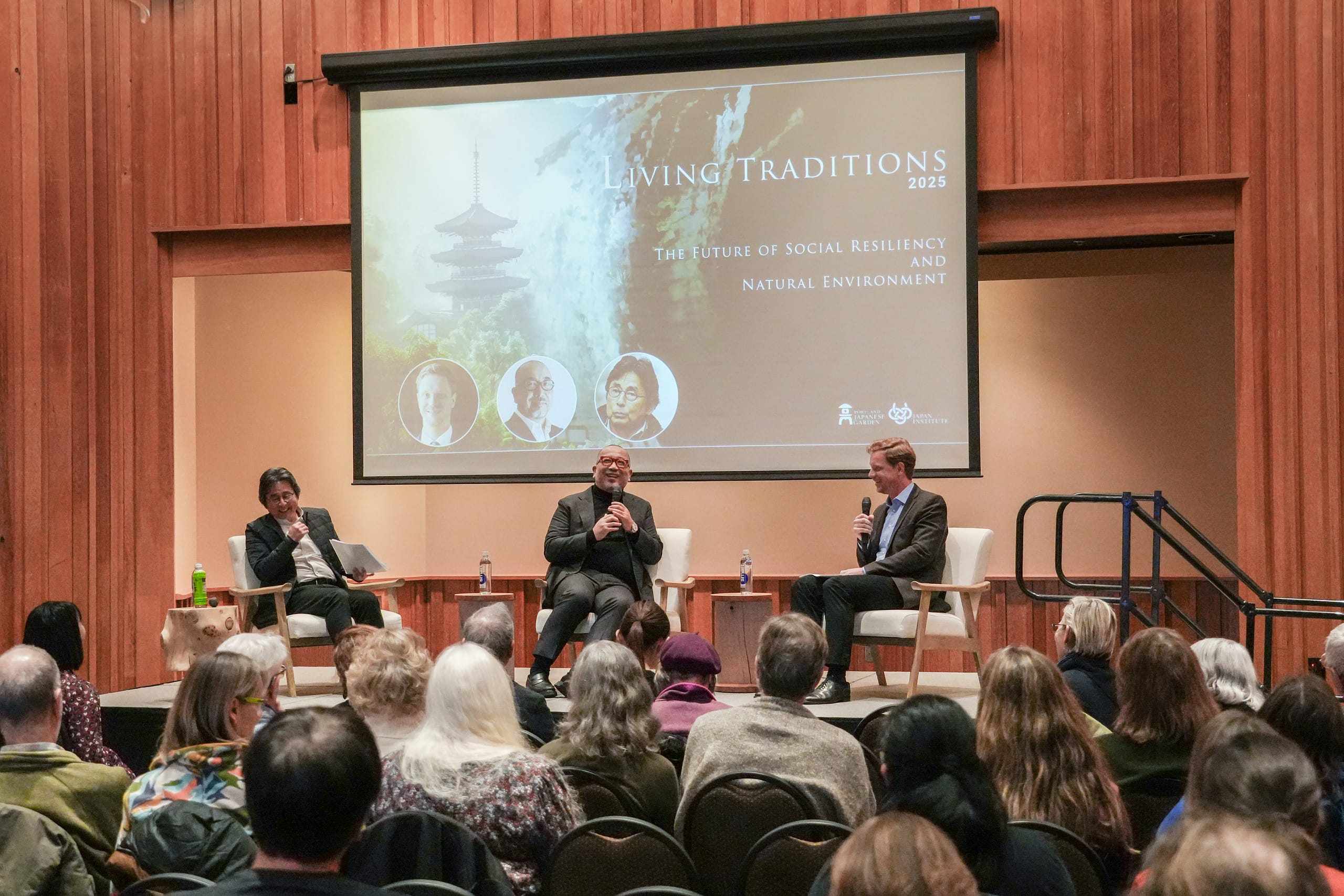
On January 18, Living Traditions returned to Portland. A series of conversations and talks that explore the most iconic facets of Japanese culture and traditions, Living Traditions launched in 2020 as a joint project of Japan Institute of Portland Japanese Garden and Japan Society, supported by the Prime Minister’s Office of Japan. 2025’s installment, titled “The Future of Social Resiliency and Natural Environment,” explored new frontiers in the cultural fusion of American ingenuity, technology, and craftsmanship with Japanese aesthetics. It was an especially timely conversation amidst the devastating wildfires in Los Angeles County.
“Earthen Elegance: The Ceramic Art of Bizen” Showcases Modern Interpretation of Ancient Practice
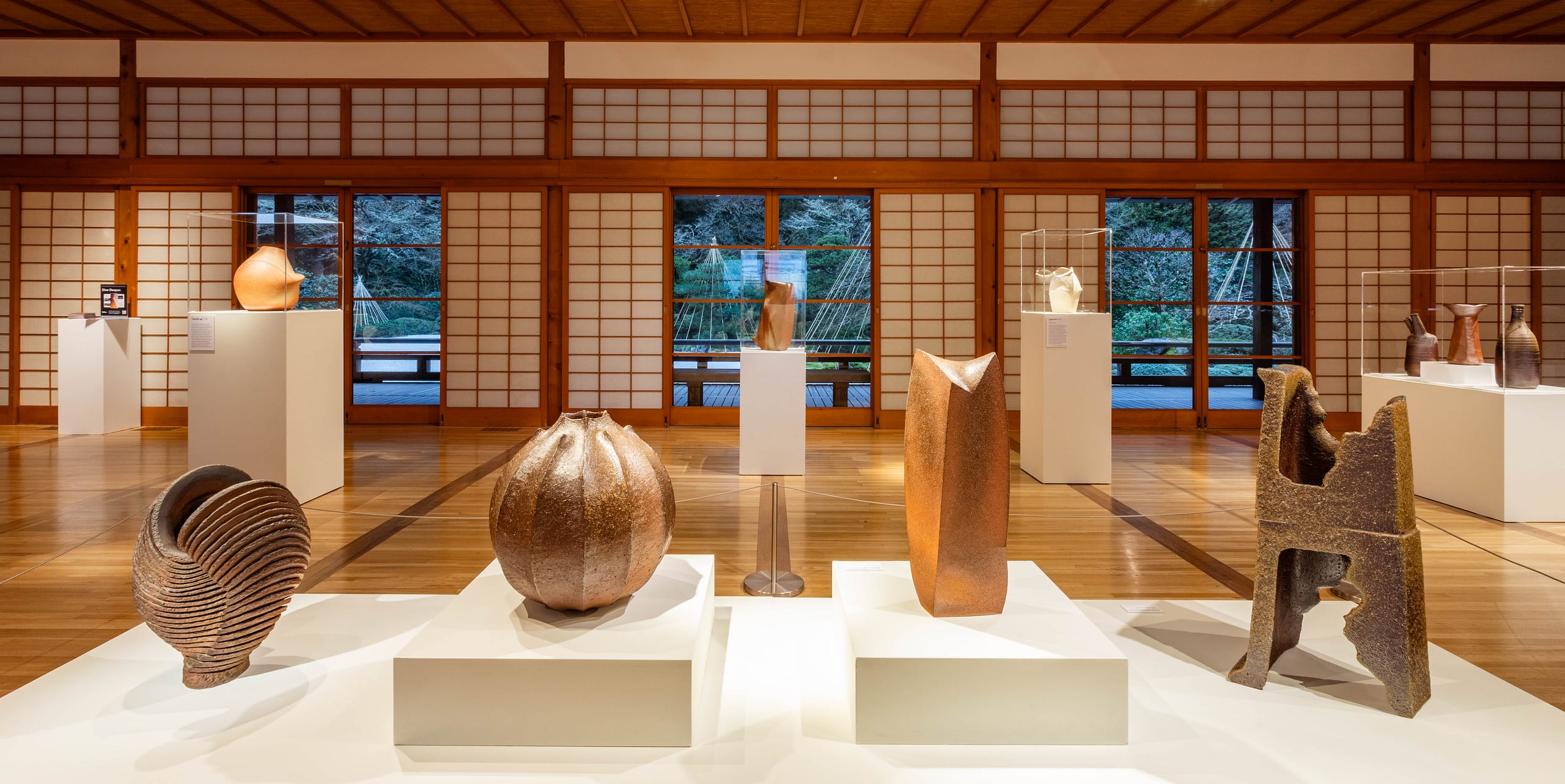
Portland Japanese Garden’s first art exhibition of 2025, Earthen Elegance: The Ceramic Art of Bizen, showcased some of Japan’s leading potters presenting expert and contemporary renditions of a more than 800-year-old tradition. This piece showcases the history and site-specificity that make Bizen ceramics so unique.
The Magic of Katazome
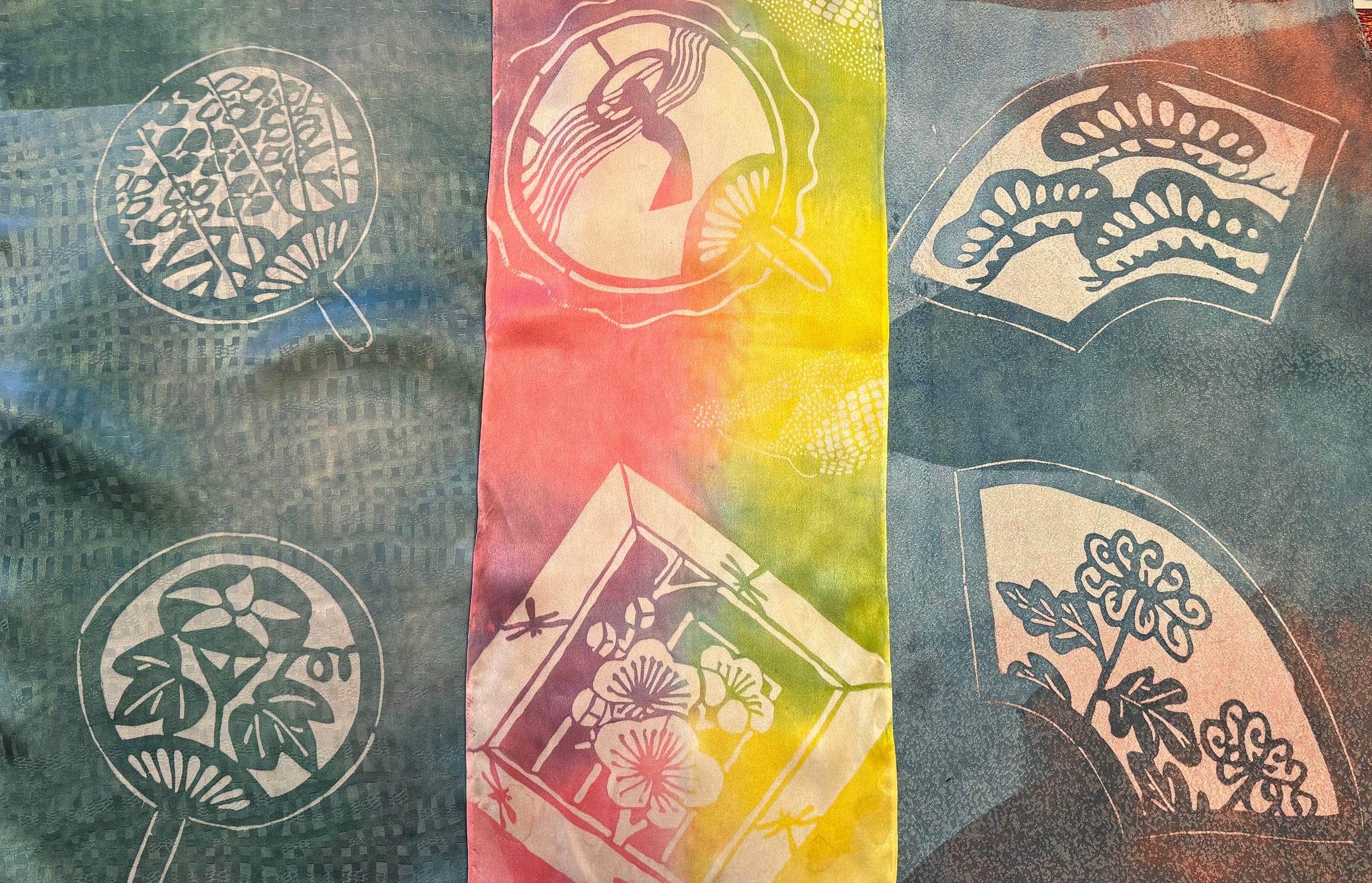
In March, the Garden debuted its new art exhibition, Natural Patterns: Katazome Stencil Dyeing, featuring the katazome artistry of Oregon resident Karen Illman Miller. Initially used to add elaborate patterns onto commonly used fabrics, like yukata (cotton kimono), katazome is a method of using exquisitely cut paper stencils and resist paste to dye fabrics. Read more to learn about the multi-step process of katazome.
TEIEN FORUM 2025: Looking at the Global Reach of Japanese Gardens
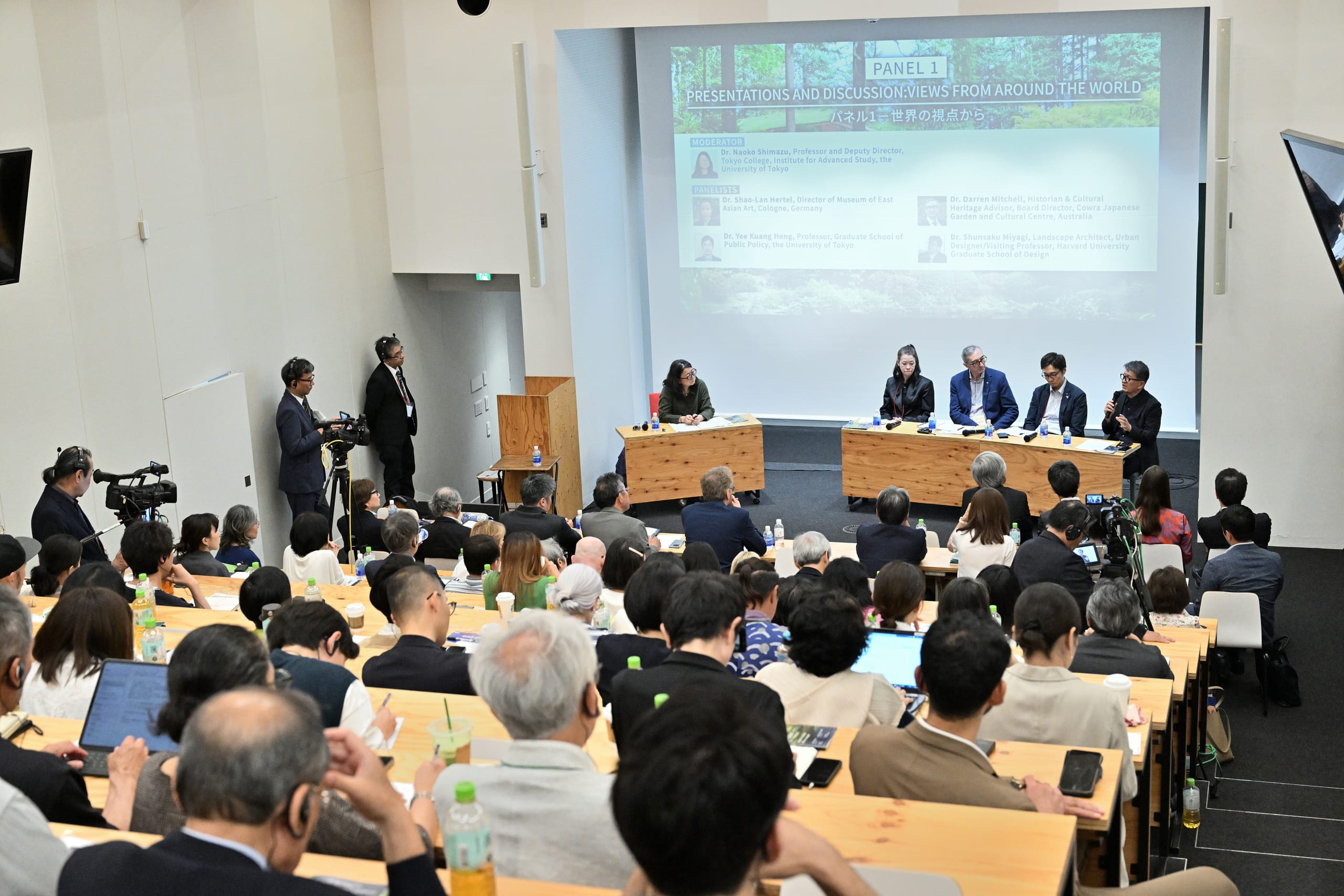
In May, Japan Institute and Portland Japanese Garden partnered with the Japan Association for the International Horticultural Expo 2027, Yokohama (GREEN×EXPO 2027) to host its second annual TEIEN FORUM at The University of Tokyo in Japan. This gathering, titled “Japanese Gardens: Why Go Global?”, explored the international significance of Japanese gardens through conversations and presentations featuring some of the world’s most respected thought leaders in the field. This article covers highlights from the first half of the forum—the second half can be read here.
A Generational Artform: Learn More About Bonsai at Portland Japanese Garden
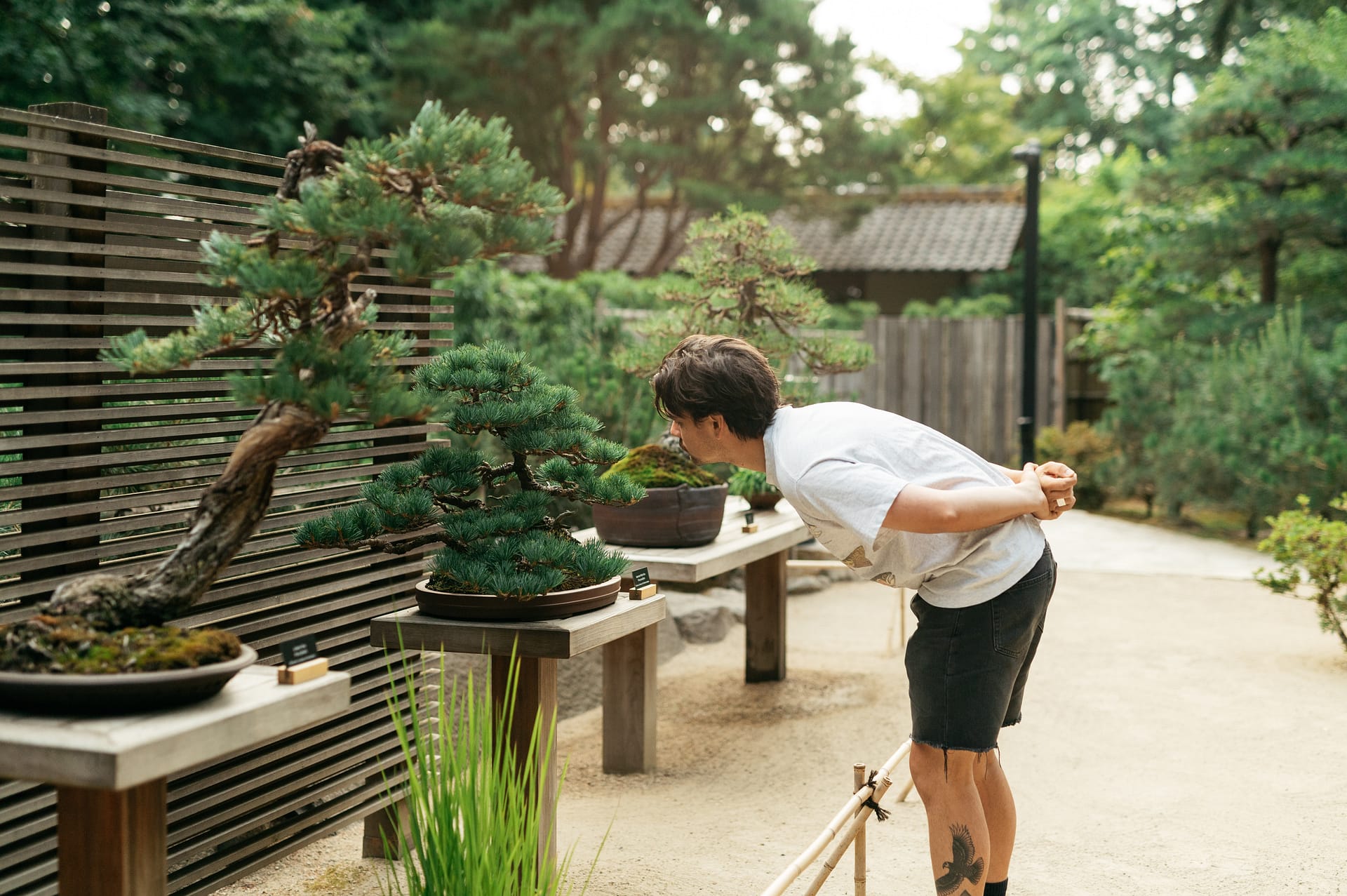
Bonsai have had a presence at Portland Japanese Garden since at least 1969 when the miniature trees were exhibited in celebration of Mother’s Day. Today, our bonsai are typically displayed from mid-April through mid-November, and rotated out based on what is most appropriate for the season both aesthetically and for the well-being of the trees. Learn more about these tiny trees in this article.
“Waza to Kokoro”: Japanese Garden Training Center’s Flagship Program Returns
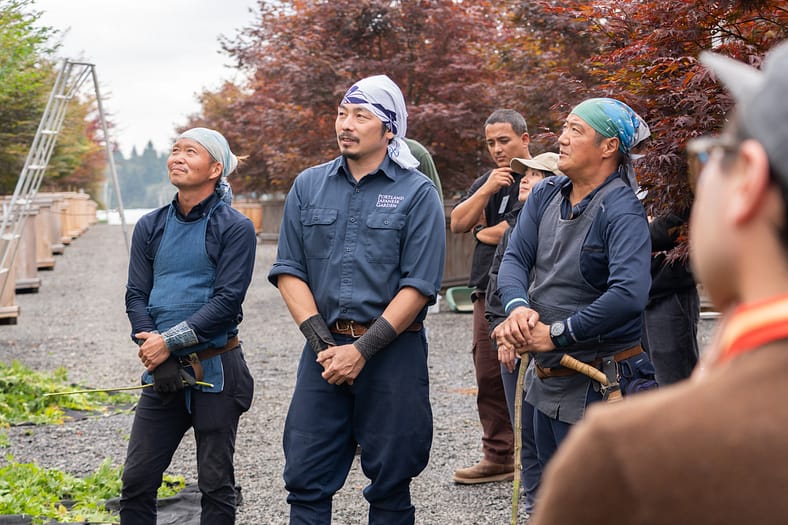
In September, the Japanese Garden Training Center, one of Japan Institute’s programming centers, saw the return of Waza to Kokoro. This flagship program helps Japanese gardens outside of Japan find authentic, locally-appropriate solutions in design, construction, maintenance, and preservation. This article provides a recap of the week-long seminar.
The Flowers of Spring at Portland Japanese Garden
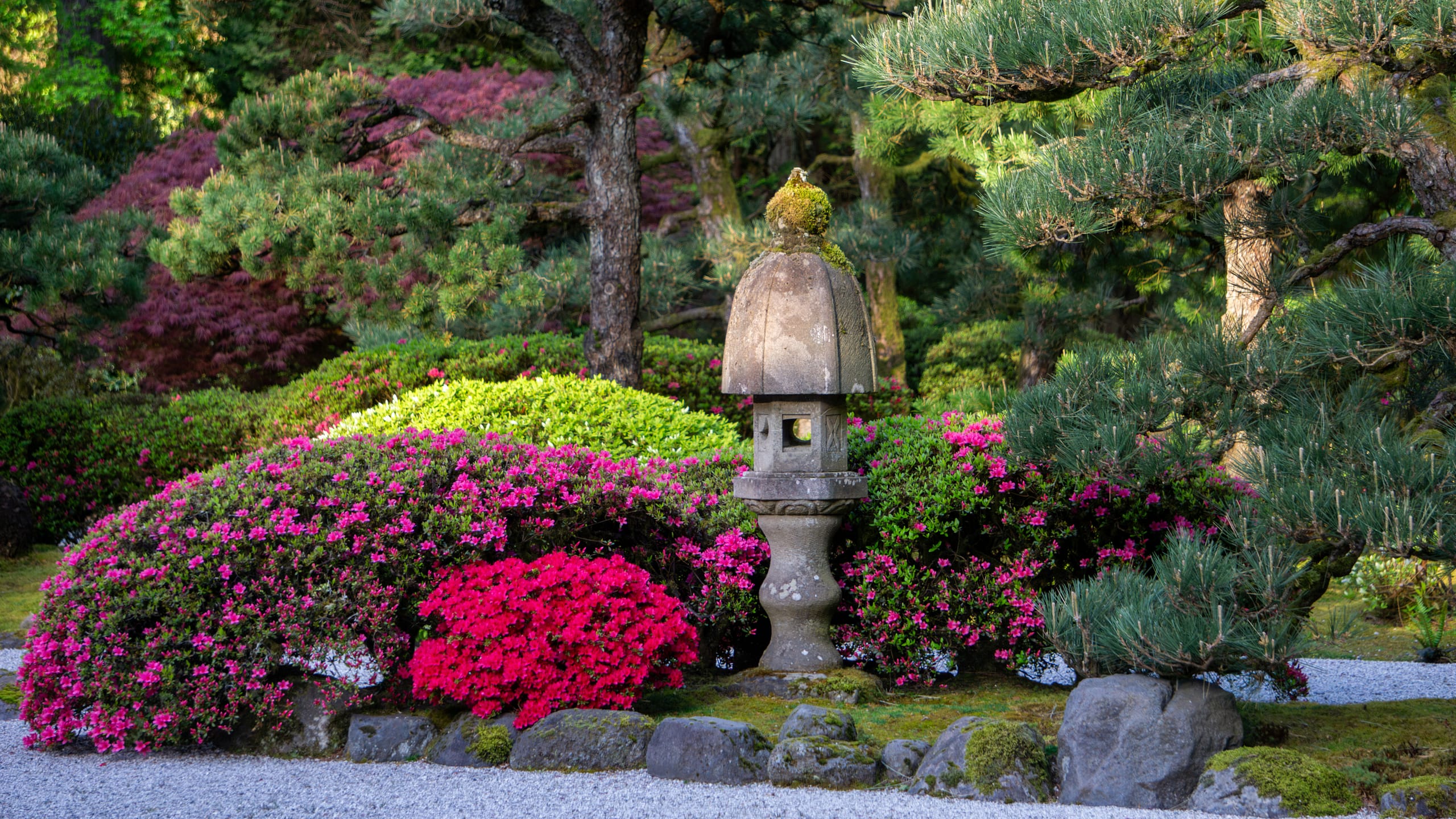
Among the characteristics of Japanese gardens that differentiates them from those designed and built by other cultures of the world is that they heavily favor green over other colors. Whereas some gardens will favor an eruption of many vividly colored flowers, Japanese ones are, typically, far more selective and sparing in their use. This article is a quick guide to some of the springtime splendor one can expect to see in the Garden.
2025 in Review
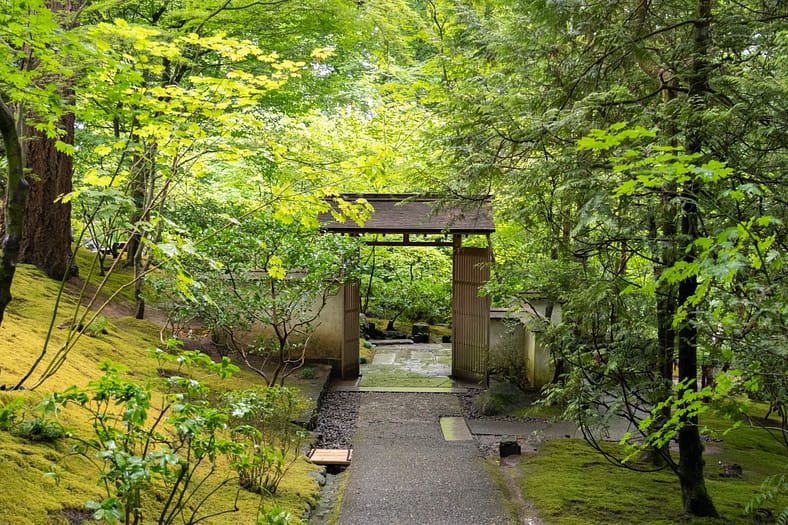
Read more about all the many events, gatherings, updates, news, and coverage of Portland Japanese Garden that took place in 2025: