Written by Will Lerner, Marketing and Communications Manager
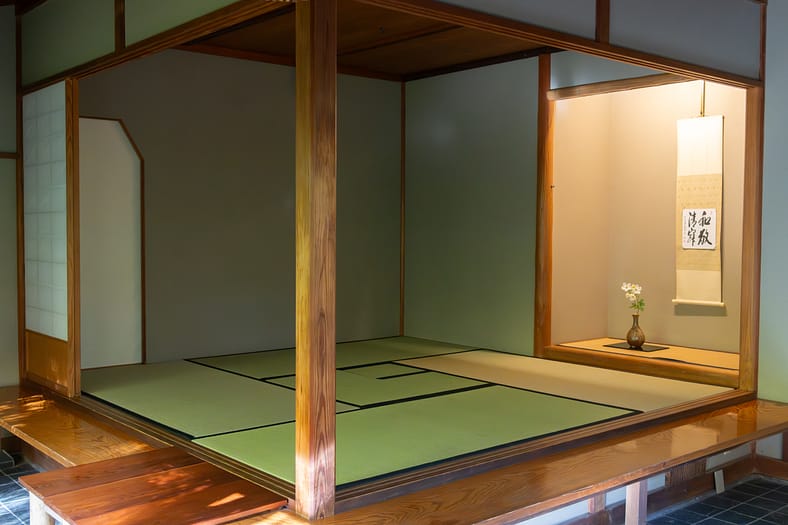
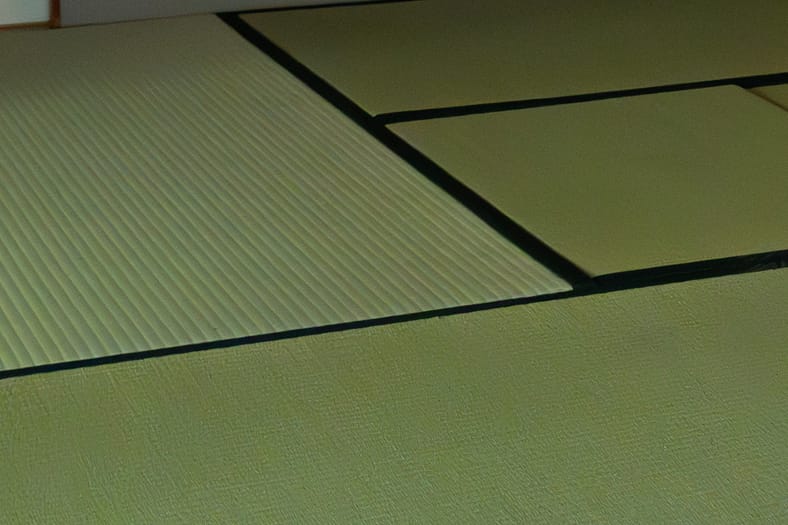
In October, Portland Japanese Garden refreshed its Kashintei Tea House by adding new tatami mats thanks to generous support from its volunteers. Floor coverings traditionally composed of woven grass and straw, tatami mats are often found in Japanese buildings, including but not limited to tea houses. Believed to be wholly Japanese in its origin, tatami first began to appear in the homes of Japan’s wealthier classes during its Heian period (794-1185) before becoming more commonly used during its Edo period (1603-1868).
Tatami were included among some of the original items that Portland Japanese Garden looked to procure as construction began more than 60 years ago. Correspondence between Professor Takuma Tono, the Garden’s original designer, and Philip Englehart, the Garden’s first Board President, indicate it was considered as much of a necessity as stone lanterns and clay roof tiles. However, unlike lanterns and tiles, tatami has a shorter lifespan. The tatami that had been in place in the Tea House had been used for nearly 25 years and was revealing a kind of wear and tear that no longer met the standard of excellence that is now expected by the organization and its community.
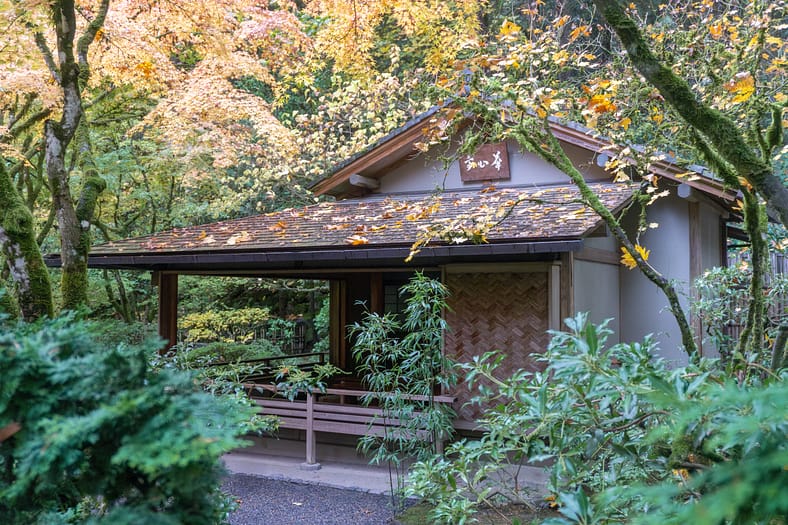
As with all items that appear in its historic spaces, Portland Japanese Garden engaged in a thoughtful process to make sure that its new tatami would be sourced from a reputable craftsperson. Hugo Torii, Garden Curator and Director the Japanese Garden Training Center, decided to purchase the new mats from the Tokyo-based Morita Tatami Mat Maker, a family-owned business in operation since the early 1930s. The reason why Torii was able to get the tatami from such a highly reputable proprietor was because of the Garden’s volunteers. Together, they rallied together to donate enough funds for the purchase. “I am deeply grateful for the volunteers’ generosity in helping provide the funds necessary to purchase such quality materials,” Torii shares. “The new tatami was long awaited for.”
“The Kashintei Tea House is a truly special space within Portland Japanese Garden, and our volunteers have a deep sense of pride for it because it speaks to the values we aim to uphold at the Garden – authenticity, dedication to craft, and cultural understanding,” adds Sarah Lynch, Volunteer Programs Manager. “Our volunteers, generous in all aspects of their care of the Garden, know that investing in items like new tatami is vital to the continued renewal and maintenance of these spaces. Their understanding of our mission and values makes them excellent supporters of initiatives like these, and we couldn’t be more grateful for their decision to give.”
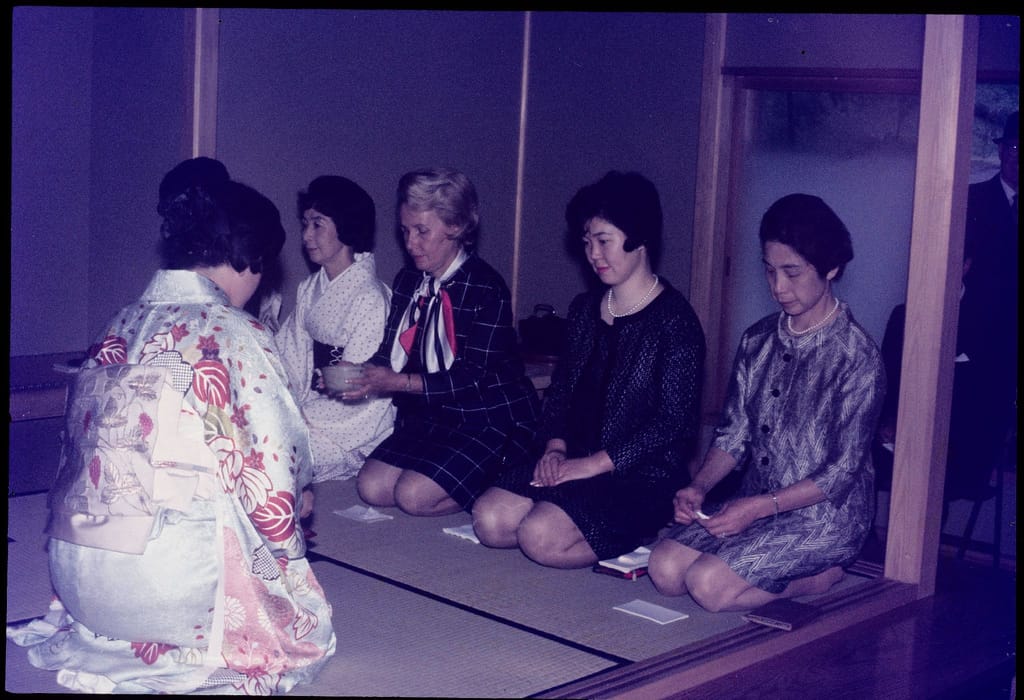
“After Kashintei was built in the Tea Garden in 1968, it began to fall into disrepair,” shares Marjorie Yap, a member of Kashintei-kai, a group of community members who generously provide care for the tea house. “Kashintei-kai was formed in 1981 to care for and use the tea house. The group began to meet quarterly in 1982, and by the early 1990s, we were giving presentations about tea ceremony to the public. We also use it as a place to train our volunteers in how to talk about this important Japanese custom and the tea gardens it takes place in.”
“Tea ceremony is traditionally performed in a tea house on tatami,” Yap, also a cultural partner of the Garden, continues. “Tatami are an integral part of the ceremony, influencing everything from the sounds of stepping on it, the foot work, the silk kimono sliding across the mats, and the precise placement of tea utensils atop the tatami weave. I have long wanted to replace this floor covering in Kashintei to show how beautiful a space it truly is.”