By Will Lerner
Portland Japanese Garden has earned a reputation for its excellence over its more than 60 years, but that excellence would remain an aspiration were it not for the quality that truly makes the Garden special: its people. It begins with its visitors: more than 400,000 folks annually from more than 90 nations and territories and all 50 United States. But that same appreciation and passion for nature and cultural immersion that beckons people from all over the world to visit is the same magnetism that draws people here in other capacities: members, staff, trustees, donors, and the beating heart of Portland Japanese Garden: its volunteers.
Related: Learn more about volunteering at Portland Japanese Garden
The Garden is fortunate to have 235 volunteers—a group that gives thousands of hours of service to the organization. They give tours, act as docents for art exhibitions and bonsai displays, greet visitors in the Cultural Village, serve as ambassadors of our mission and history, provide horticultural support, help us host events, festival celebrations, and workshops, and provide much needed help behind the scenes. But more than what they do, it’s who they are that makes them a remarkable group of people. Enthusiastic, bright, filled with wonder and curiosity and enthusiastic to help, the volunteers of Portland Japanese Garden have reached and maintained a standard of excellence unsurpassed by any other public garden and cultural institution.
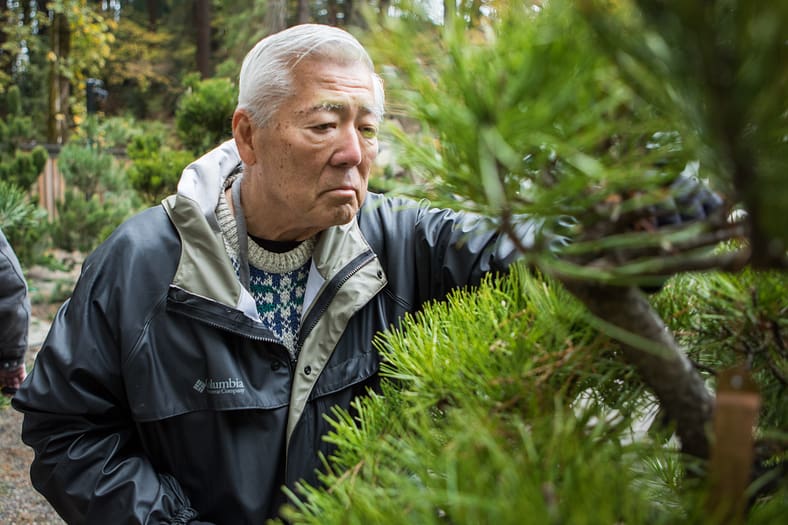
A person who embodies all these traits is Dick Doi. Now Volunteer Emeritus, Doi retired from active volunteering in 2023. Still a regular and welcome presence at the Garden, upon his retirement, he had donated more than 2,000 hours of his time and helped in a variety of different roles, including horticulture and bonsai support and giving tours.
“Dick Doi is truly a legend and a cornerstone of our volunteer community, having worn nearly every hat possible during his remarkable tenure,” says Sarah Lynch, Volunteer Programs Manager. ”Dick has been a part of the Portland Japanese Garden community at so many stages in our history, and his voice, his wisdom, and experience have so much value in capturing where we’ve been as an organization and helping guide where we’re going. His emeritus title is well-earned, and I’m grateful that he continues to be such a vital part of the Garden in all the ways he can be.
Beloved for his kindness, warmth, and intelligence, Doi is regarded as a standard bearer of excellence for both volunteers and staff. On a warm summer day, we went to his home in Vancouver, Washington to learn more about him and his time with the Garden.
From Hawai’i to Oregon with a Few Stops Along the Way
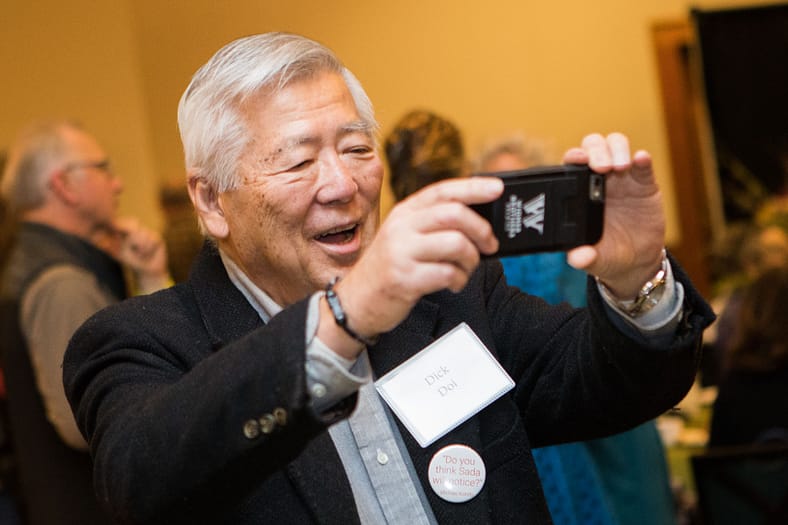
Though he’s lived in the Pacific Northwest for more than 25 years now, Doi was born and raised in Hawai’i. His parents were both Americans, but his grandparents came from Yamaguchi, a small city nestled against the Seto Inland Sea in southern Japan. “I was born in Honolulu,” Doi shares. “I spent the first six years of my life in a small town called Haleʻiwa on the North Shore.”
A large part of Doi’s youth was spent in the ballpark. A talented second baseman, Doi’s gifts on the diamond would lead to his first visit to Japan. “I went in 1956 with a baseball team,” Doi recalls. “A Japanese high school all-star baseball team visited us in Hawai’i to play, so then a few of us went to go play there. I was very fortunate to go—we played at Korakuen Stadium. It’s not there anymore, but we had a crowd of 46,000 people watching us. We were used to playing in front of maybe 800 people.”
After graduating from high school, Doi did a year of studies at the University of Oregon, taking advantage of a reciprocal program that allows residents of western states, including Hawai’i, to avoid out-of-state tuition fees. However, feeling some uncertainty about what kind of career path he would want to pursue, he came back home and chatted with his dad.
“He told me I should think about enlisting in the Army,” Doi says. “So, I went down, and I joined the Army. I was stationed in Okinawa for three and a half years. After five and a half years of military service, I got a baseball scholarship from the University of Minnesota and played a season there. But then the NCAA started to make a big deal about me having played semi-pro ball in Hawai’i. I didn’t want the school or myself to have to go through any rigamarole, so I just transferred to Bradley University in Peoria, Illinois, where my brother was attending.”
“I graduated with a degree in finance and accounting, but I didn’t want to be an accountant. A friend of mine had a connection with an investment banking firm that issued corporate bonds. I worked for them about five to six years and then caught the political bug.”
Doi shares that after the U.S. Congress passed the Clean Water and Consumer Product Safety Acts in 1972, the Attorney General of Illinois, William J. Scott, needed individuals who could help administrate rules and regulations stemming from the legislation. “I spent about 14 years in the Attorney General’s office before taking a job with [construction, mining, and engineering equipment manufacturer] Caterpillar in Arizona,” Doi remembers. “I helped an important client navigate the various rules and regulations, and acquire permits at county, city, state, and federal levels.”
Home in the Pacific Northwest
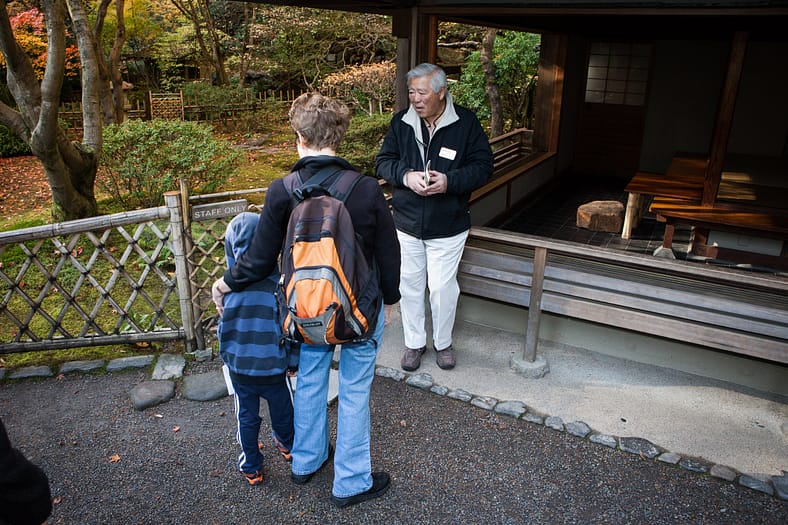
Not fond of the corporate life, Doi left Caterpillar to run a small kitchen-top company alongside a friend before eventually selling it as big box stores began to eat up the clientele they served. “I came out here to the Pacific Northwest around 2000 and saw that the grass was green in the middle of January. So I said, ‘I’m going to move here.’ And I’m glad I did. One of the first things I did was visit the Garden and thought it was fabulous.”
“The first thing I noticed was how clean and pristine it was,” Doi remembers. “The Garden has always been led by gardeners from Japan, and this is what has kept the tradition and the culture of maintenance that exists to this day.”
Doi began giving his time to the Garden shortly after, inspired by the opportunity to reconnect with his heritage. “I decided to start volunteering to learn more about my culture—my parents wanted me to assimilate into society, and I did,” Doi shares. “And after spending 40 years in Illinois, I didn’t know much about my background or organizations like the Japanese American Citizens League [JACL].”
His experience is one that was commonly endured by those of Japanese ancestry. Because of the rabid anti-Japanese sentiment that pervaded American society, beginning nearly as soon as they began to immigrate to the U.S. in the 19th century, Issei (first generation Japanese immigrants) and Nisei (second generation) felt the need to abandon their culture to “fit in.” World War II, and the illegal and racist incarceration of Japanese and Japanese Americans into American concentration camps, only added to this pressure.
Related: The Experience of Oregon’s Nikkei
At the Garden, Doi quickly became an admired leader within the group. In remarks given to Points of Light, he remarked, ““I […] wanted to share [the Garden’s] splendor with others. I also enjoy working with and sharing the history and culture of Japan with children. And I am proud to support a nonprofit whose mission is to bring tranquility and peace to others.” Those warm feelings he brought to the guests were enjoyed by his fellow volunteers.
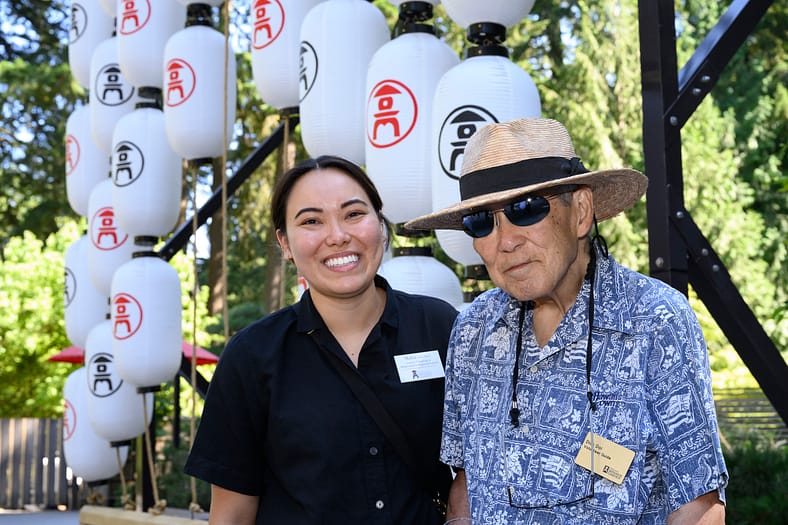
“[Dick is] a private and complex man, with an astonishing background in his professional life,” shares Polly Wall Lauser, Vice President of the Board of Trustees and a longtime volunteer. “Always in a trademark Hawaiian shirt and light khaki slacks, leaning casually against a wall with arms crossed, peering out from under that ubiquitous straw hat. That’s Dick. Quietly not missing a thing. Not saying much, but when words come, be sure you listen—it’ll be a great and often insightful observation. When a smile emerges, it takes over his whole face.”
“When I started as a volunteer, I noticed a cool-looking gentleman wearing a hat, aviation sunglasses and a great smile,” remembers Masaki Shimada, who in addition to being a volunteer serves as Seasonal Assistant Bonsai Caretaker for the Garden. “He was one of the first people to approach me and said, ‘Eh, you are the new guy. Let’s have lunch.’ I was a bit nervous at first as I thought he was going to ‘test’ me. But his calm and kind demeanor and warm smile made me comfortable from the first day. He has much admiration for Japanese culture, society, and people which made him feel close to his family heritage. Dick-san often wanted to hear my take on what he knew and experienced. He and I became close friends and we started to study bonsai together. His strong affirmations and affection for Portland Japanese Garden make it more significant and legitimate for the people who are lucky to get to know him and spend time with him.”
A Standard of Excellence
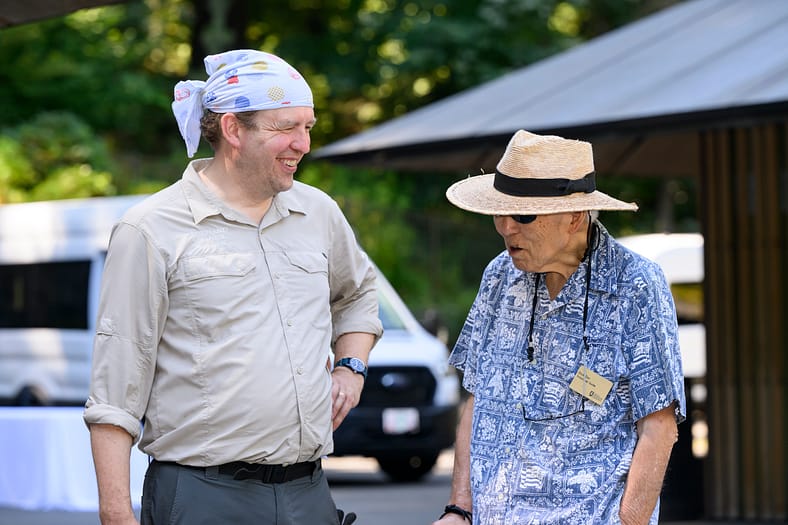
“[Portland Japanese Garden] is playing an important role right now by being an excellent garden,” Doi offers. “What is happening today is that we’re kind of losing track of excellence. Even in Japan, they’re losing the artisans. Japan has always been defined by its shokunin [artisans who have achieved a high level of accomplishment and a deep commitment to carry on the legacy of a traditional craft] because whether it’s a hobby like bonsai or ikebana or whether it is engineering, the Japanese always look for excellence. They don’t strive to be the best because, as the old saying goes, only Buddha is perfect. They look for excellence.”
“And this is why the Garden is so important, because it is an example of excellence. More than the rhododendrons and azaleas and Acer palmatums [Japanese maples]. Portland Japanese Garden represents excellence. The Garden under [Hugo Torii, Garden Curator] is just magnificent. The best part about it is something that most people don’t get to see—the maintenance. The gardeners work very hard.”
The appreciation Doi has for the gardeners is mutually felt.
“When I started at the Garden, Dick was still a very active tour guide, and one of our most active volunteers,” offers Evan Cordes, who before his current role as Lead Gardener joined the organization in its Visitor Relations team in 2017. “He used to walk with me on rounds teaching me history and background about the Garden. He also knew the Garden Department and knew the work the team did. Dick saw my passion for the Garden and for the work it took to make it, and he encouraged me to apply to be a gardener. His encouragement is what made me start volunteering with the horticultural support group, and to take my first part-time role with the Garden Department that eventually led to my current role.”
The excellence that Doi see in the work of Torii, Cordes, and the Garden Department he also sees in other aspects across it, such as the art exhibitions that were initiated under Diane Durston, now Curator Emerita, in 2008, a person he considers the best hire Steve Bloom made during his tenure as CEO (2005-2024): “You look at Diane Durston and how much passion she has. It just oozes from her pores.”
Of course, the standard must be maintained. Doi may have retired from regular volunteer service, but he’s still keeping a watchful eye on what his home away from home has been up to.
“I expect that the people that are taking care of the visitors are at their best,” Doi shares. “People like [Sarah Lynch, Volunteer Programs Manager] have taken care of the visitors, as well as the volunteers. She’s doing an excellent job.”
For Doi now, it’s a life of quiet comfort. After recovering from some health concerns, he plans to tend to his garden, perhaps resume his education in bonsai, and return to the place he’s given so much energy, knowledge, and joy: Portland Japanese Garden. Maybe age has slowed the physical body, but the mind is still sharp and energetic and ready to embrace the world. It’s a new chapter for a man who has had several.
“Life is strange,” Doi concludes. “Every ten years you have to remake yourself because it changes and you’ve got to change with it. Whether it’s up, down, side to side, whether you want to wear a hat, don’t want to, it changes, and you’re just got to evolve and just keep evolving.”