
In March, Portland Japanese Garden established its Sakura Society, a membership level that welcomes emerging leaders from the ages of 21 to 45 to become patrons of the organization. The Sakura Society offers a deeper connection to the Garden and its mission of Inspiring Harmony and Peace through tailored engagement opportunities with the Garden, art, and cultural experts. Additionally, members will have access to special networking events with like-minded peers who are passionate about finding peace, harmony, and beauty through nature. These events include yoga in the Garden, social lunches with the organization’s corporate sponsor, Bamboo Sushi, and exclusive gatherings with cultural experts. Even more are being planned.
More information about the Sakura Society, including how to join is available here.
Working alongside staff to help this exciting new endeavor lift off is an Advisory Council of accomplished young professionals: Thomas Cho, Evan Gremillion, Amanda Jacobs, and Gretchen Johnson. Gremillion, Johnson, and Jacobs are all Portland natives who spent time living and working away from home across the world. Cho, a native of Texas and more recently based in Los Angeles, moved to the City of Roses a few years ago. Among what unites the four is their love of Japanese culture, nature, Portland, and its crown jewel in the West Hills: Portland Japanese Garden. The appreciation is felt both ways.
“I am so impressed by the passion and hard work Thomas, Evan, Amanda, and Gretchen have had in helping us launch the Sakura Society,” shares Lisa Christy, Executive Director. “Younger donors bring fresh energy and ideas, ensuring our cultural institutions remain relevant and dynamic. Whether volunteering, serving on a board, or attending events, their involvement strengthens both our organization and Portland’s creative future.”
On a pleasant summer day at the Garden, the four sat down to speak about the inspiration for the Sakura Society, their plans for it, and why they believe the Garden is worth championing.
A Love for the Garden

To understand the motivation of the Sakura Society Advisory Council to get involved, all you have to do is ask them why they care about Portland Japanese Garden.
“I think that as Americans, we can be quick to see nature as something to ‘conquer,’” offers Gremillion, a financial advisor and founding partner at the Gulla Gremillion Group at Morgan Stanley. “Japanese culture, though, through its gardens, demonstrates that nature is something we are a part of, something we live within. I think the Garden does a great job of connecting you to that feeling. It’s a gift to have one of the best Japanese gardens outside of Japan on our doorstep. It somehow simultaneously feels like you’re escaping the city while seeing Portland at its most beautiful.”
“The Garden serves as a living museum of Japanese garden design and aesthetics that helps us preserve and share the culture of Japan,” adds Johnson, a Director at Becker Capital Management. “I find that the history of this garden as a platform to heal and to bring two countries closer together is very powerful and inspiring. It’s a story that should be told more frequently and more broadly.”
“I love seeing the care the community has for preserving something together through the Garden,” concurs Cho, a creative brand marketing leader and strategic storyteller who consults with multiple organizations and businesses. “I think the values that the Garden has brought on, peace, tranquility, and balance, are exactly what we need right now in a world that can often feel fractured. We often need to reminded how to be whole.”
“If you look at society, you look at the last five years—it’s been a roller coaster to put it nicely,” notes Jacobs, who runs Jacobs Heating & Air Conditioning, a family-owned HVAC business in operation in the greater Portland area since 1952. “You come up here and that fades away. If you can bring that peace and tranquility to people, I think you have a very special place.”
Sakura Society’s Origins

While the Advisory Council is enthusiastic about Sakura Society, the idea for it was developed outside of their circle by Katherine Frandsen. Frandsen was a member of the Garden’s Board of Trustees from 2011 to 2024, was an important part of the organization’s 55th and 60th anniversaries, and has been a generous patron through the Golden Crane Society.
“For years, as a Board Member, I held onto a dream: to create a young patrons group for the Portland Japanese Garden,” recalls Frandsen. “I was inspired by my own experience decades ago at the Huntington Library, Art Museum and Botanical Gardens in California. What made that group so special was the direct access we had to curators, who taught us about the art and exhibits firsthand. We didn’t just observe; we learned. We left each event with new knowledge, a deep appreciation for the gardens, and lasting friendships.”
“Bringing this idea to life in Portland has been a collaborative effort, and I am so grateful to Gretchen Johnson,” Frandsen continues. “Her passion and leadership were the spark that launched this group, and she worked tirelessly to bring together Amanda Jacobs and other talented supporters.”
“A ton of credit is due to Katherine,” shares Johnson. “I was introduced to her a couple years ago through a mutual friend. We sat down and talked about how much of an asset the Garden is to the city and how fortunate the Garden is to have a core group of patrons in the Golden Crane Society to drive it into the future and sustain it.”
In referring to the Golden Crane Society, Johnson is speaking about donors who generously give a total of $1,500 or more annually through membership dues, tribute gifts, general donations, in-kind donations, and more.
“We discussed how there was an opportunity to bring new people into the Garden: Myself, for example, who didn’t come from a family that were longtime members or in the Golden Crane Society, and to start building relationships with children or grandchildren of current Golden Crane Society members,” Johnson continues. “Katherine had an idea for a number of years for a young patrons group and I leaned in to turn that vision into reality.”

“Sakura Society as an idea encapsulates what made Katherine such a valued and respected member of our Board of Trustees: It’s innovative, community-oriented, and built on a deep love for Portland Japanese Garden,” adds Christy. “Katherine not only came up with this excellent notion, she also made sure to connect us with the right emerging leaders to help our staff lay its groundwork. When we speak of our organization being a thought leader in public garden and cultural institution spaces, it’s because we have highly knowledgeable people like Katherine offering their perspective and guidance.”
With Johnson aboard, she connected with friends in her network and like-minded people through the Garden’s partners and community leaders.
“I got excited—I had to lean in and engage,” Johnson says. “I recruited Amanda knowing that she had a lot of authenticity and connection to Japanese culture. And then Thomas was introduced through the founder of Creo Chocolate, a corporate sponsor of the Garden. We’re all thrilled that Evan has joined the advisory group recently and he’s already pulling in great leaders that can help us continue to grow thoughtfully.”
Community Building

A significant reason why Portland Japanese Garden has remained a cornerstone of its home city is that it has and always been a community effort. It took a community to champion its establishment in the face of hostile racism towards Japanese culture, it takes a community to maintain its stunning 12.5 acres and world-class programming. Implicit in this fundamental truth is that in the more than 60 years of its existence, new people have had to step up to steward the Garden, passing the torch. Sakura Society embodies this spirit. Beyond seeking new community members to ensure the Garden’s existence for centuries to come, it also wants to build community.
“If you look at where donations come from, it is not often from those 40 and under, it’s usually from those further into their lives and careers,” shares Gremillion, who has additional insight as a member of the organization’s Foundation Board. “I think what we’re doing here is really important: Building up the next generation of donors and members.”
“A motivating factor is we’ve got a really good community of young professionals in Portland ranging from business owners to creatives to finance people, really the next leaders of Portland,” he continues. “Why not have a place like this where we can all meet and collaborate and network and be excited about Japanese culture and Japanese things together?”

“Japanese culture and language became a very meaningful part of my life thanks to the incredible Japanese Magnet Program in the Portland Public School District,” Jacob adds. “I got to begin learning about Japan at a young age, which then led to me to participating in JET [Japan Exchange and Teaching Programme]. Knowing how much I value and cherish my experience, I want to invest my time in Sakura Society and the Garden because I know the impact cultural immersion can have on someone’s life.”
“There are about 300 members of the Golden Crane Society,” adds Johnson. “These donors are all fabulous, yet there’s probably only five that are of a younger generation. We hit the ground running and collaborated with the Garden leadership team to think through what does a younger patronage group really look like? What does it entail? What does it cost? What are the exclusive experiences that we want to offer? How do we create a new dynamic group and culture that can help sustain the Garden financially for future generations?
“What the pandemic took from us, is what hopefully the Sakura Society is giving back—in connection, community, and peace,” Cho adds. “I think we’re in a unique moment where we get to shape the future of Portland’s story. It’s a city of quiet beauty and creativity, where nature and community are hyper localized and intersected. The Garden isn’t just a place to visit but rather belong, to find your people and to connect. If you’re looking for connection, culture or a sense of grounding, the Garden has a way of making space for that.”
Making Plans Through the Society

In March, the Sakura Society welcomed its first class of members with an inaugural reception in the Pavilion Gallery and has already begun incorporating some novel new programming since then including yoga on the Mount Hood overlook and even some off-site events, such as summer lunches at Bamboo Sushi.
“Golden Crane events tend to mostly be held here at the Garden,” Jacobs points out. “What will set the Sakura Society apart is that we’re planning on making site visits to the organization’s cultural and corporate partners and expanding the Sakura Society members’ awareness of Japanese culture outside of the Garden. We want to continue to invest in events here at the Garden but also start touching other parts of the city. And I think by doing that, by creating engaging events that will help and lead to long-term members and hopefully people joining the Golden Crane Society.”
“I’m excited about all the fun things we have on the radar to engage our community and to incorporate more of the Garden into it,” Gremillion says. “I want the Garden to be known as a place that does fun things in a community-based manner.”
“Coming out of COVID, we lost a few years socially and some of us are feeling the affects of digital fatigue,” Johnson notes. “There’s a thirst for seeing the whites of each other’s eyes and sharing experiences together. And as you get further and further away from school, it naturally gets harder to meet people that share common interests. I position Sakura Society to a lot of folks as a social club with a philanthropic tilt. This is an opportunity to be around a lot of high caliber, like-minded young people who you may not typically cross paths with, doing great things in their communities and their businesses. This is an opportunity to build new lifelong friends and develop valuable relationships for the long run.”
“Institutions like the Garden can be a bridge across communities and culture where we feel connected inside the city,” Cho adds. “And I think it is really exciting that the Sakura Society will be bringing all these young leaders together to continue to uplift Portland. And that’s what I hope we have.”
Goals for the Society
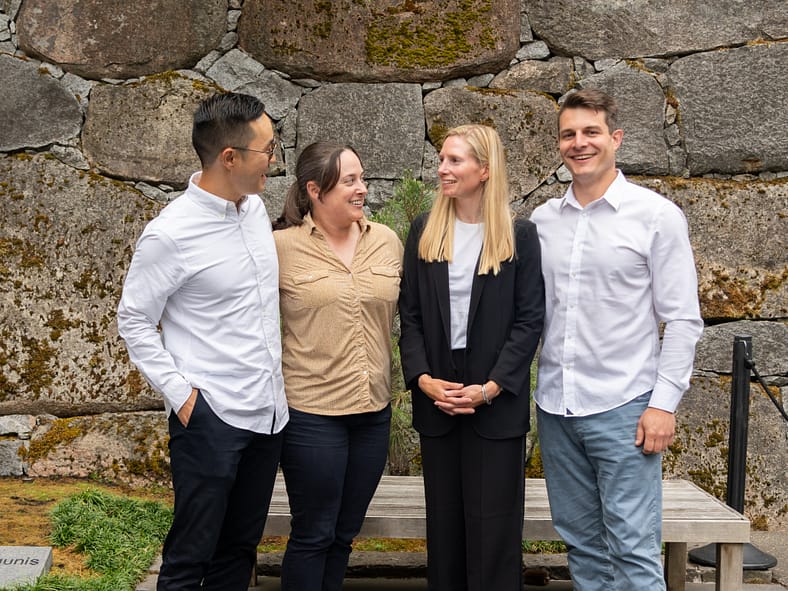
Abundant in ambition, the Advisory Council of Cho, Gremillion, Jacobs, and Johnson has goals not just for the Sakura Society, but Portland Japanese Garden as a whole.
“Year one, the goal for us was 30 founding members,” Johnson shares. “We were delighted that we had over 50 registered by our inaugural reception, and we’re excited that it’s grown to over 65. Our next goal is to get to 100 members. Our ultimate goal is to build a very vibrant, dynamic, and highly engaged community that grows their appreciation and acumen of Japanese culture and nature, as well as to build and strengthen relationships with each other.”
“I have endless hopes for the Garden, but at a bare minimum, I hope that we’re able to inspire the generations that come after us and they can leave this place with the same awe and respect that we all share and that they want to come back,” Jacobs adds. “We’ve got such a great city and so let’s reinvigorate it together. Let’s be part of that change and not let the media dictate what our city needs to be. Let’s make that change. Let’s be part of the change. I think that’s the greatest thing that I think we could provide for future generations.”
“When I think of my favorite cities in the world they are the ones that have many cultural enrichment assets like gardens, museums, and theaters,” Johnson offers. “I believe wholeheartedly that Portland Japanese Garden is truly one of the greatest assets in the city of Portland and that it’s a true treasure. The Garden has given so much to this community. One goal of Sakura Society is getting our generation in the habit of thinking about the organizations and missions that have had an impact on you, your family, and your friends. And then fast forward 10, 20 years from now when we’re a little bit further along in our careers, have a little more discretionary income, and have an opportunity to pick a few organizations to thoughtfully support that we’re already in the habit of giving back.”
“I envision the Garden of the future being a haven for creativity, networking, and idea generation that uplifts not just the organization itself, but the City of Portland as well,” shares Gremillion. “From a community aspect, we can always do better and the Garden can be a conduit that helps achieve that. It’s already helped build up the community. I’ve been really impressed with a lot of the difficult conversations that had been brought up and talked about through the Garden, for example, [American concentration camps] during World War II. Even some people who work here, people who are involved on the Board, they have a connection to what happened in World War II and see the Garden as a healing piece for two cultures. I find that super impactful.”
“The Sakura Society is one way we help preserve something truly sacred to our city, the Japanese Garden,” Cho notes. “Coming here gave me space to sit with my story in Portland, to breathe out what I was carrying, to re-envision my future in the city and to feel connected again. At a time when Portland has been navigating a lot, this place has been a quiet refuge for many and it’s a reminder of what still holds. It is a blessing to be a part of it.”
“As members of the Sakura Society, my greatest hope is that you will discover the same love for the Garden that I have,” concludes Frandsen, speaking directly to those who have joined this new membership tier. “I encourage you to learn about Japanese culture through our exhibitions, find peace during your walks, and allow this special place to capture your heart. Your support today ensures this Garden will continue to flourish for generations.”
Learn more about the Sakura Society, including how to join, on our membership page.