Flagship Training Program for Professionals
Waza to Kokoro: Hands and Heart is the Japanese Garden Training Center’s flagship program. This program helps Japanese gardens outside of Japan find authentic, locally-appropriate solutions in design, construction, maintenance, and preservation. It is designed for professionals working in Japanese gardens, but is also open to landscape design and construction professionals as well as students of landscape-related disciplines. We are a Landscape Architecture Continuing Education System accredited provider.
- Philosophy of Waza to Kokoro: The unity of techniques and spirit essential to understanding the art of the Japanese garden.
- History: The styles and techniques of the Japanese garden through the centuries and its relation to society, culture, religion and architecture.
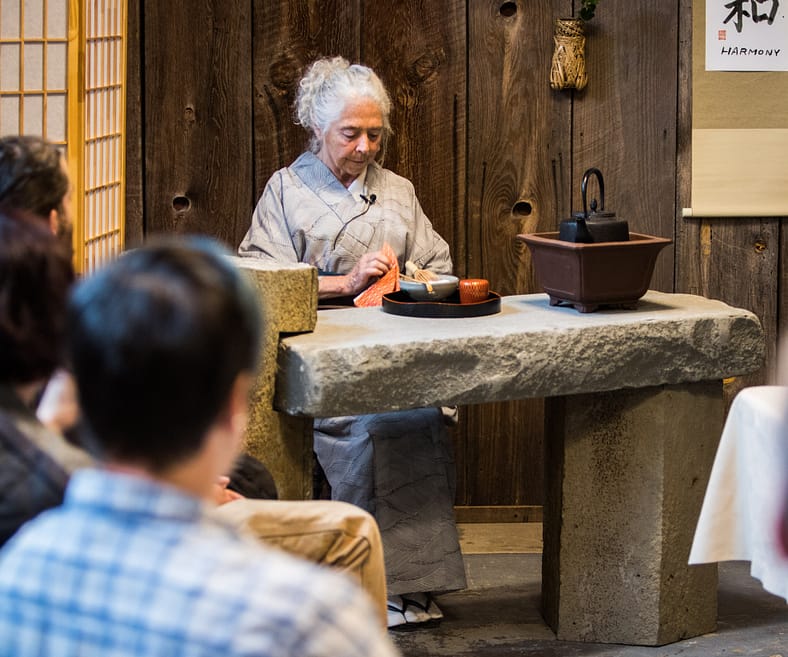
- Culture and connection to nature: Practicing tea ceremony while learning to integrate the aesthetics, philosophy, and way of tea into one’s own approach to the garden arts. Watch this video on the study of tea to learn more.
- Japanese aesthetics: The Japanese idea of beauty and how it is represented across art forms.
- Drawing and design: Learning to observe patterns, forms, and elements in the garden and nature and making accurate visual representations of original ideas.
- Garden components and composition: Principles of placement, size, style and proportion for built and natural elements.
- Garden materials: Understanding the origins and proper utilization in the garden of stone, plants, bamboo and wood.
- Plant management: Building a practical understanding of everyday practices in soil sciences, pruning, pest control and other areas.
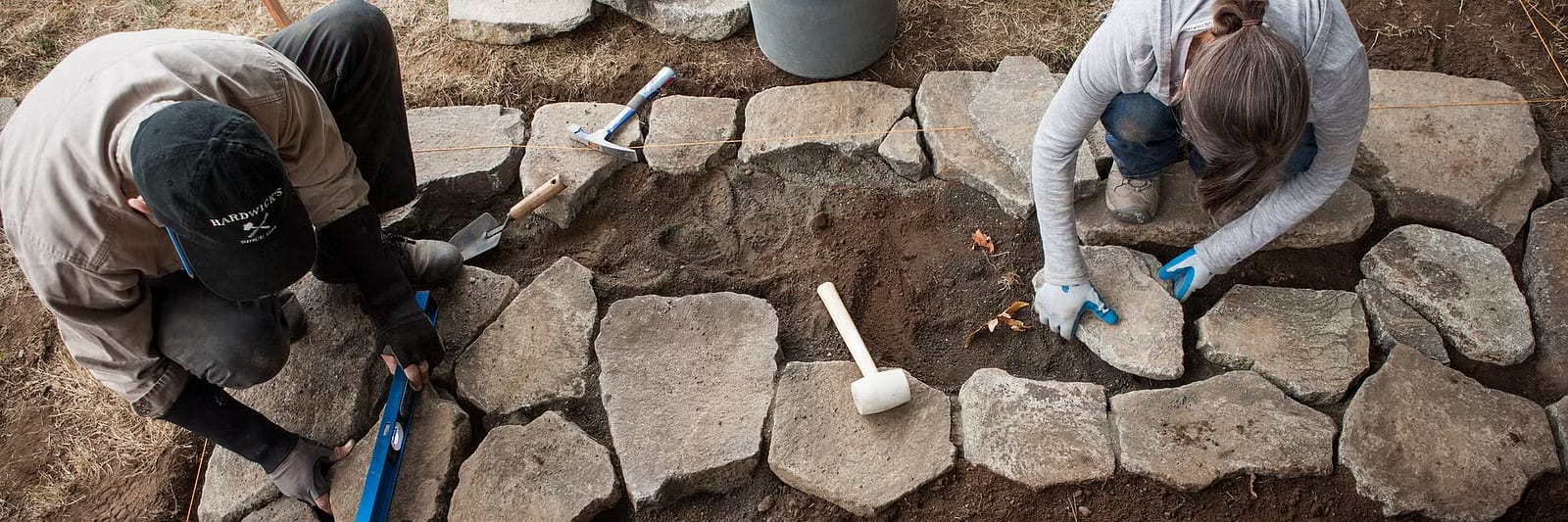
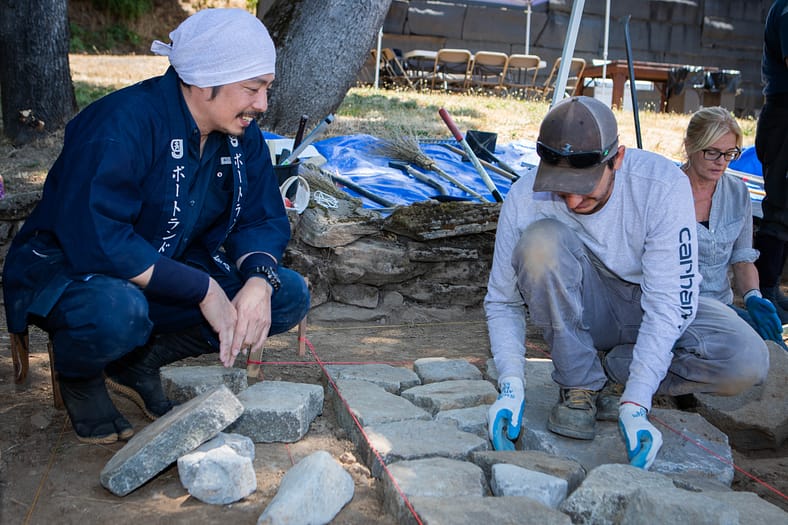
- Hands-on stone workshop: Learning, through careful observation and hands-on participation, the process of site preparation, materials selection and preparation, design, and construction of the stone elements of a tea garden.
- Practical application: Synthesizing lessons learned into a sketchbook with drawings and notes.
2026 Seminar: June 19-25
The 2026 Seminar is designed for beginner-level learners and centers on the traditional, hands-on practice of stonework in the tea garden. Instruction is grounded in the culture of the Way of Tea, offering an immersive experience that explores not only technical skills but also the cultural foundation of Japanese garden design.
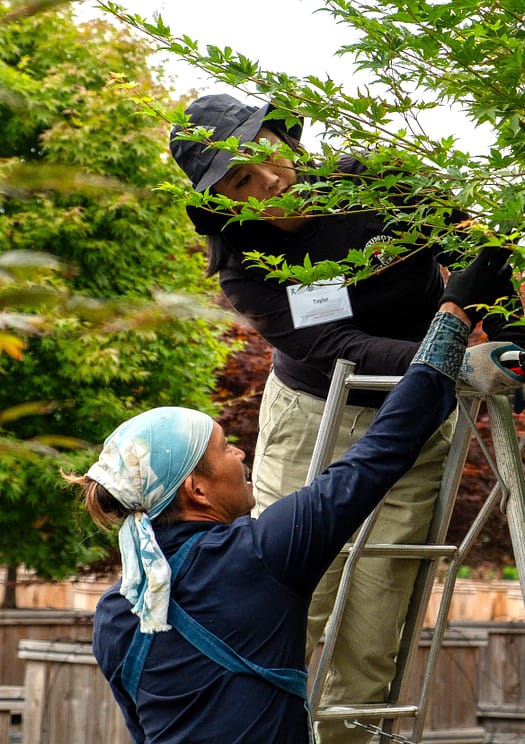
In addition to stonework, participants will receive both practical and theoretical instruction in garden design, pruning, bamboo fence construction, aesthetics, history, and traditional tool use. These skills are taught within a broader cultural framework to cultivate an understanding of balance, composition, and beauty.
The Seminar will be held at Portland Japanese Garden and select offsite venues, providing opportunities to study and learn from authentic techniques and design in context.
In keeping with our philosophy of integrating Western and Eastern teaching approaches, all instruction will be conducted in English. The program will be led by Garden Curator and Director of Japanese Garden Training Center, Hugo Torii, with guest instructors joining from Japan.
True to its philosophy of combining the western teaching and eastern teaching, everything will be taught in English while providing a very profound experience through the art of tea. This year, our Garden Curator and Director of Japanese Garden Training Center, Hugo Torii, will lead the seminar and we will also have a guest instructor from Japan.
Seminar Core Focus
The seminar’s core focus is on stonework in the Japanese tea garden, taught by visiting Japanese instructors and Portland Japanese Garden staff. A traditionally-grounded, hands-on learning process is supplemented with preparatory cultural instruction and theoretical knowledge, with content including:
- History and aesthetics
- Instruction in tea ceremony
- Japanese garden design
- Demonstration and practice with traditional Japanese tools and bamboo fence construction
- Preparatory lectures for a hands-on workshop
- Hands-on workshop for designing, material selection, and building the stone elements of a tea garden
- Pruning master class
- Food culture discussions
- Garden clinic
Admission: The seminar is designed for professionals working in Japanese gardens, but admission is also open to landscape design and construction professionals as well as students of landscape-related disciplines.
This seminar costs $3,000
Apply for Waza to Kokoro 2026Information About the Seminar & Application Details
What is the seminar?
Waza to Kokoro: Hands and Heart is a professional training seminar program in the art and technique of the Japanese garden, and the flagship program of Portland Japanese Garden’s Japanese Garden Training Center.
What can be learned in the seminar, and how is it unique?
The seminar combines hands-on skills training and theoretical learning in Japanese garden design, construction and maintenance. Its core subject is stonework taught in the traditional hands-on method, presented in the context of the culture of the way of tea, for an immersive learning experience, with several additional subjects including bamboo fence construction and pruning. Waza to Kokoro is designed for garden practitioners seeking authentic and locally-adapted design, maintenance, and construction solutions for Japanese gardens outside of Japan — as well as for landscape design and construction professionals who wish to create Japanese-style gardens for their clientele. It:
- teaches traditional skills in a combination of western and eastern learning methods
- imparts the essence of the garden through connecting it to related art forms and philosophies
- encourages individually-tailored study as well as group learning
- demonstrates practical applications of theoretical principles
What are this year’s seminar schedules and application deadlines?
This year’s seminar takes place from Friday, June 19 to Thursday, June 25. Applications open on March 1 and acceptance notices will be sent by the end of April.
How can taking the seminar benefit me professionally?
Waza to Kokoro’s learning activities reflect the traditional training of a Japanese garden craftsman, approaching designing, building and stewarding a garden as a single craft. Completion of Waza to Kokoro is recognized by professional organizations such as the American Society of Landscape Architects and the Oregon Landscape Contractors Association as eligible for professional development credits. The instructor-student radio of the program enables a high level of individual attention that allows for extensive professional development. Learners in the course are further eligible to submit a proposal to complete a work/study project at the Garden, and the program can also serve as a foundation for further study in Japan.
How is Waza to Kokoro structured?
The seminar represents approximately 80 hours of theoretical and applied instruction, including an online pre-seminar guided independent study module. The independent study module helps prepare learners coming from different professional areas. Readings and instructional videos include topics on stone selection and composition, aesthetics, drawing, garden history, Japanese religions, and the Way of Tea.
In 2026, the seminar will be geared toward beginner-level learners.
Please take a moment to review our Terms and Conditions
Where is the seminar taught, and who teaches it?
The facilities of Portland Japanese Garden, including the garden spaces themselves and the Kengo Kuma-designed learning spaces and library, combine for an educational experience of technical excellence and sublime beauty. Off-site facilities include a stone yard and one of the largest nurseries in the Pacific Northwest.
The seminar’s faculty pool comes from an international community of practitioners, designers and academics. These include leading Japanese garden artisans descended from families who have gardened for centuries, as well as designers and academics from top universities, noted authors, and practitioners of related art forms. See here for this year’s instructors.
How are students assessed?
Testing of knowledge and competences takes place throughout the seminar. As learners progress through the program, they are expected to demonstrate increased precision, aesthetic sensitivity, independence, and speed in technical skills. The seminar’s emphasis on history, culture and aesthetics means learners are expected to demonstrate an increasingly complex level of knowledge and a nuanced, sophisticated understanding of the garden and its related arts.
How much is tuition?
Tuition for this year’s seminar is $3,000.00. Tuition includes Garden admission, access to training venues, some meals, all learning materials, use of tools, and transportation to offsite locations, but does not include accommodation or travel costs.
How can I apply?
Applications are accepted through our 2026 Waza to Kokoro Seminar Application Form, which will be available in March.
It includes,
– Portfolio of drawings and photographs of realized works
– Knowledge of and experience with Japanese gardens
– Proficiency in drawing, traditional tool use, hands-on stonework, and other skills
If you have any difficulty with the platform, or have any other questions about the seminar, please contact our staff at trainingcenter@japanesegarden.org.
The Training Center is an approved LA CES (Landscape Architecture Continuing Education System) provider. Our courses are also eligible for continuing education credit by the Association of Professional Landscape Designers and the Oregon Landscape Contractors Association.

Please contact us at trainingcenter@japanesegarden.org for questions or more information.
See what past participants have said about the seminar and more related article from 2023 and 2025.