View all Events

Lectures

Bunraku Uncovered: The Art of Storytelling in Japanese Puppet Theater

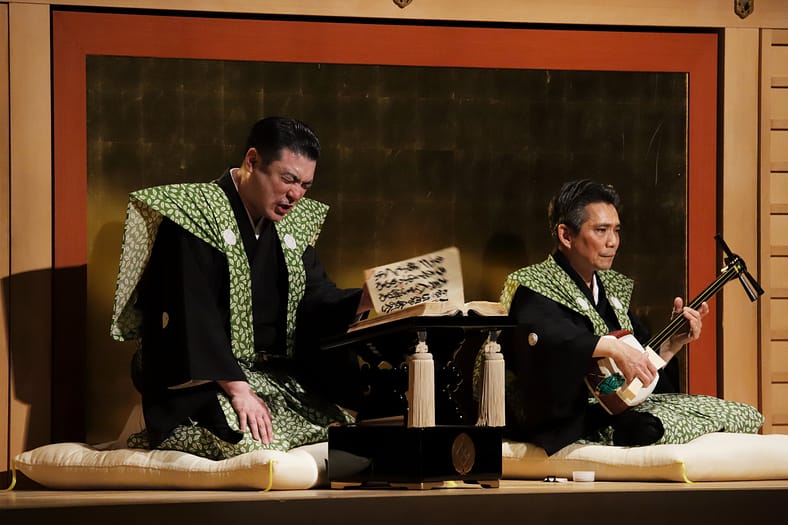
Oritayu (left) performing as Tayu, accompanied by shamisen.

Learn about a centuries-old Japanese art form in a rare U.S. appearance from one its most acclaimed masters! 

Portland Japanese Garden invites you to step behind the curtain of bunraku, Japan’s acclaimed puppet theater, through a firsthand conversation and live vocal demonstration. Takemoto Oritayu, a leading tayu (jōruri narrator/chanter) based in Osaka, joins Professor Larry Kominz (Portland State University) to explore how bunraku blends intricate puppetry, dramatic storytelling, and music into an art form recognized as a Japanese Intangible Cultural Heritage. 

Puppetry has nearly 1,000 years of history in Japan, and bunraku reached its peak in the eighteenth century—when many of Japan’s most revered plays were written with puppets in mind instead of human actors. While Western audiences often associate puppets with comedy or children’s entertainment, bunraku has long been celebrated for storytelling as dramatic and expressive as noh and kabuki

About Bunraku 

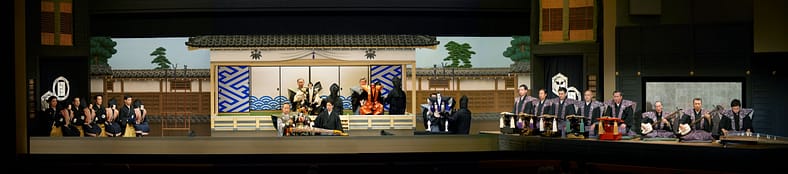
Ningyō jōruri bunraku (often simply called bunraku) combines three distinct roles into a single theatrical form:

  • Ningyō tsukai (puppeteers): teams of three bring each puppet to life through precisely controlled movement. 
  • Tayū (jōruri narrator/chanter): performs dialogue for every character and narrates the scene using a wide range of vocal techniques. 
  • Shamisen (musician): shapes mood and momentum with the three‑string traditional Japanese instrument. 

Together, puppet, voice, and instrument create an atmosphere that is uniquely bunraku. 

About Taketomo Oritayū

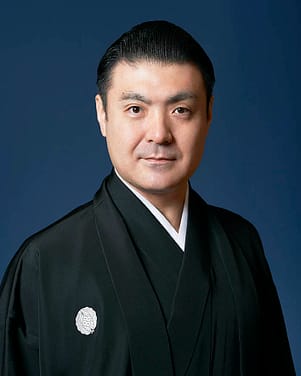
Born in 1975 in Osaka, Taketomo Oritayū (竹本織太夫) comes from a distinguished lineage of Bunraku shamisen musicians, with several members of his family recognized as masters of the art, including his grandfather Tsurusawa Dōhachi II and his uncle Tsurusawa Seiji. Despite this shamisen heritage, he chose the path of a jōruri narrator (tayū), beginning his training at the age of eight under the renowned master Toyotake Sakitayū. He made his stage debut in 1986 at the age of ten, quickly demonstrating his dedication to the demanding art of narrative chanting that brings Bunraku’s stories to life.

Over the years, he has become a central figure in the field, and in 2018, he assumed the name Taketomo Oritayū VI, marking a major milestone in his career and affirming his place within this historic lineage. He has received numerous awards, including the National Theatre Bunraku Award for Excellence.

In addition to his performances, he is deeply committed to sustaining and sharing the art form. He serves as a senior artist with the Bunraku Association, leads his own performance group, and teaches the next generation of performers through training programs supported by Japan’s national arts institutions. He has also appeared widely in media, including as a regular on NHK’s educational television program Nihongo de Asobo, and actively works to introduce Bunraku to broader audiences.
About Professor Larry Kominz 

Laurence Kominz (Ph.D. Columbia University) is Professor of Japanese at Portland State University, teaching on Japanese drama and pre-modern literature. He publishes on the literature, history, and performance of kabuki, kyôgen, bunraku, and noh.  Books include: Kabuki: Japan’s Mega-Theater, Mishima on Stage: The Black Lizard and Other Plays, The Stars who Created Kabuki, and Avatars of Vengeance: Japanese Drama and the Soga Literary Tradition. Kominz teaches and directs student performances of kyôgen (traditional and original plays) and kabuki. Recent kabuki projects include The Sardine Seller’s Net of Love (Willamette Univ. / 2010; PSU 2022); The Medicine Peddler (PSU / 2012; Colorado College / 2014); The Revenge of the 47 Loyal Samurai / 2016;  The Castle Tower and The Puppeteer / 2017; The Adventures of High Priest Kôchi (PSU/2023).  Between 2017 and 2026 Professor Kominz has taken PSU students to perform kabuki and kyôgen in Tokyo (four times), Kyoto, Kanazawa, Niigata (two times), Missouri, Massachusetts, and Victoria, Canada.  In 2022 Kominz received the Order of the Rising Sun, Gold Rays, for his contribution to mutual understanding between the United States and Japan.  

Kominz studied gidayûbushi singing for three years in Kyoto while a graduate student, and recently resumed lessons with Tsuruzawa Asazô of Tokyo.  He sings gidayû and bun’ya bushi in English for students’ English language kabuki productions at PSU.  PSU will present kabuki in English this year on June 12.


Thank you to our Sponsors

WHERE IS THIS EVENT HAPPENING?

Jordan Schnitzer Japanese Arts Learning Center

The Jordan Schnitzer Japanese Arts Learning Center was designed to be the cultural, educational, and architectural hub of the new Cultural Village. “With a new classroom, library, and performance space, the Learning Center provides an open and welcoming space where visitors can learn more about the culture that gave us the Japanese garden art form,”