By Will Lerner
A Discovery Made Long Before the Travel Mug
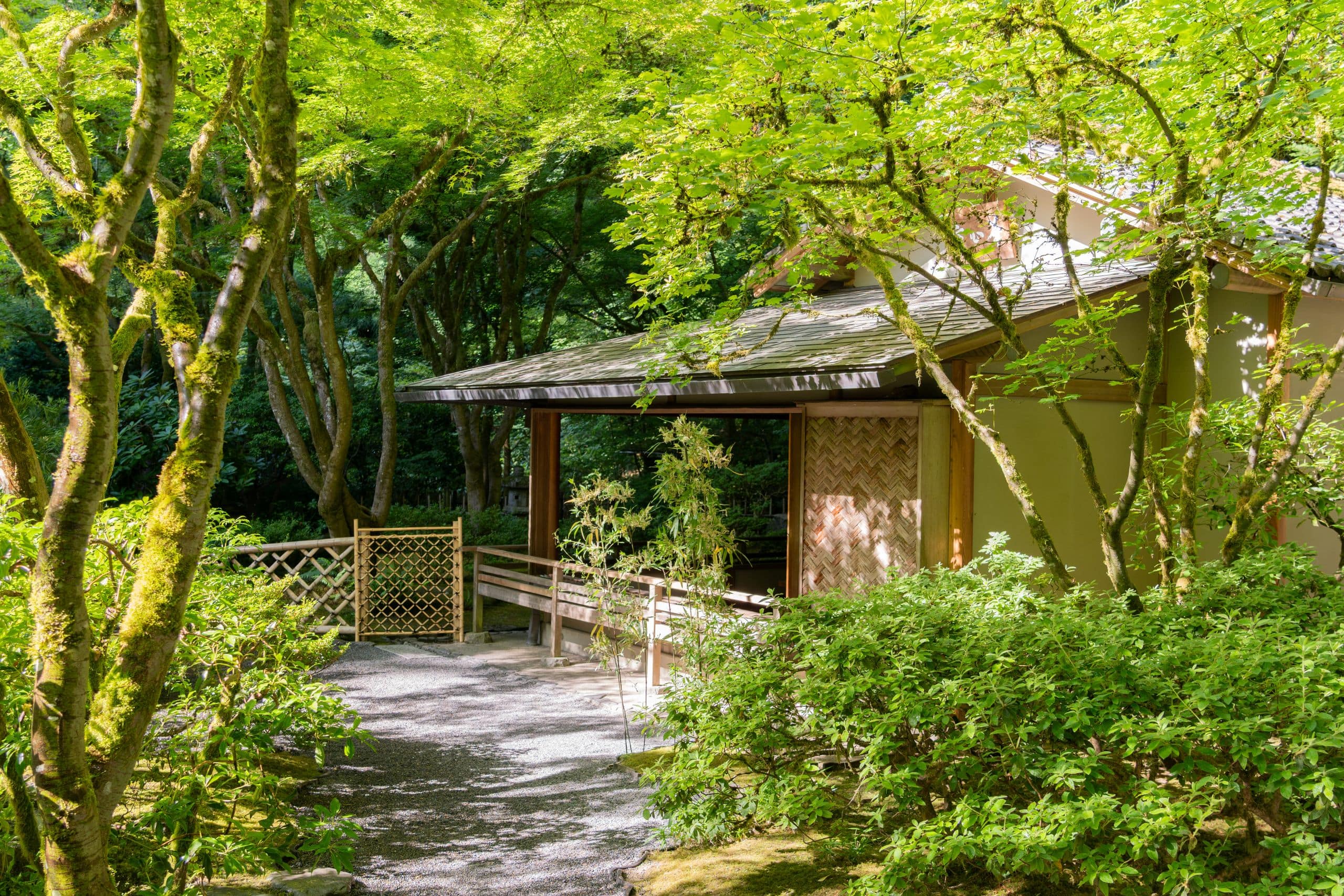
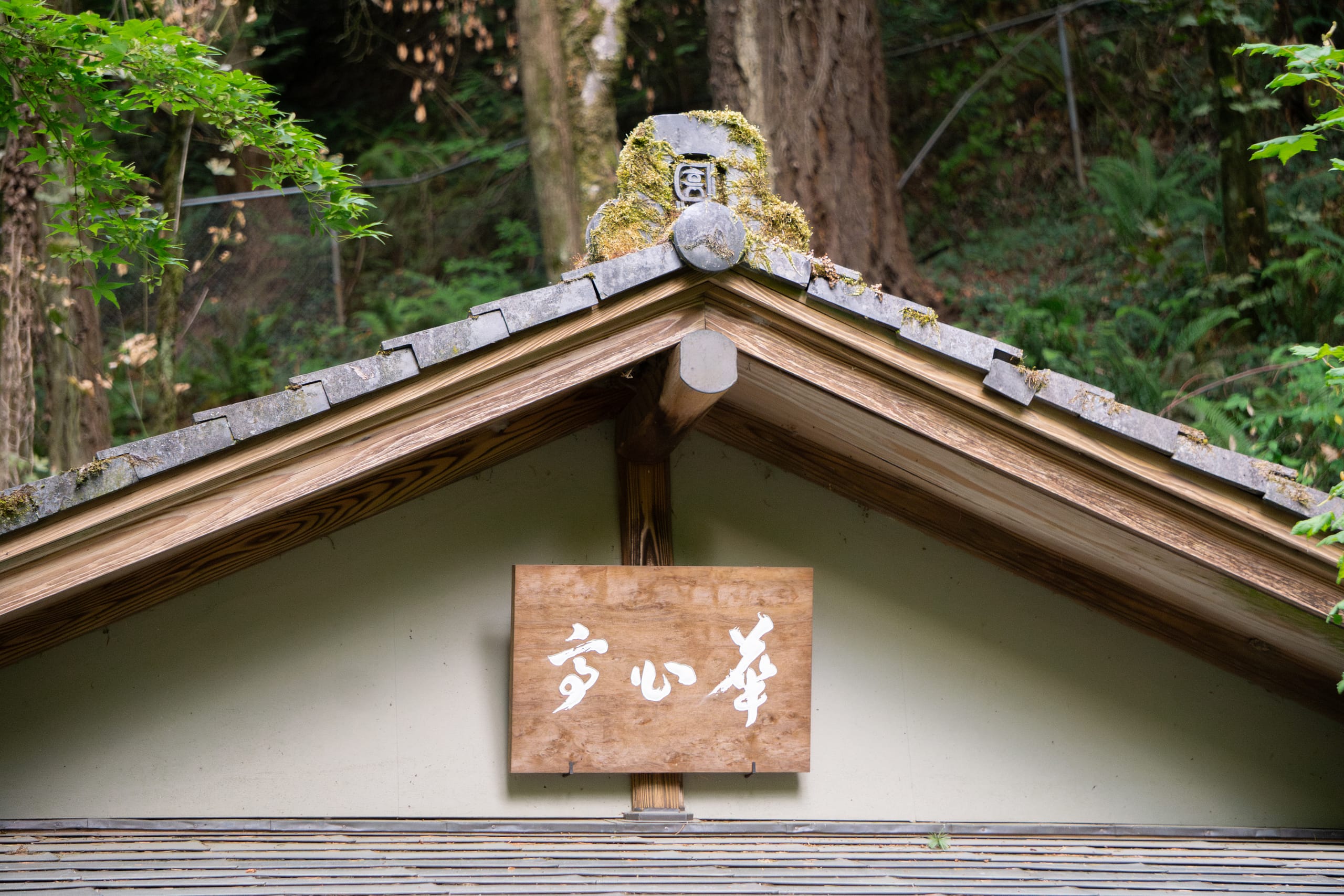
If you visit this article, you can learn how a small wooden tea house was built in the west hills of Portland, Oregon. But why something this small and unassuming? What was the inspiration behind its makeup? The legends would tell you that Kashintei, Portland Japanese Garden’s Tea House, looks the way it looks because some leaves fell into the cup of the Chinese Flame Emperor more than 5,000 years ago.
Related: The History of Kashintei, Portland Japanese Garden’s Tea House
According to the mythos, the regal Shennong, born after his mother was touched by a divine dragon, took to his yard following a large meal with a cup of boiling water in tow. Possibly a bit fuzzy on focus due to his full stomach, Shennong was unaware that a tree had shed itself into his cup. The sip he took next would be perhaps the most consequential one ever.
More easily plucked from the fog of history is that it appears Camellia sinensis, the evergreen plant from which all non-herbal tea is derived,began growing in southwest China approximately 60 million years ago and has been used as a source for medicine or beverage or both for nearly five millennia. It today ranks as the second most popular beverage in the world following water and is grown and enjoyed globally. Its importance has far exceeded beyond any limited thinking that would reduce it to mere drink. One only need look to Japan to see how it has entirely seeped into the fabric of the nation’s culture.
While it’s suspected that some varieties of Camellia sinensis may have grown naturally on the Japanese archipelago, the current academic consensus is that the tea derived from the plants was first brought back from China as early as the Nara period (710-794), eventually becoming a favored drink by Emperor Saga (786-842), who had some enthusiasm for Chinese exports. And yet, when the monarch passed away, with him went the burgeoning tea culture. It wouldn’t be until centuries later, at the dawn of the Kamakura period (1185-1333) that interest resumed and multiplied.
Tea Arrives in Japan
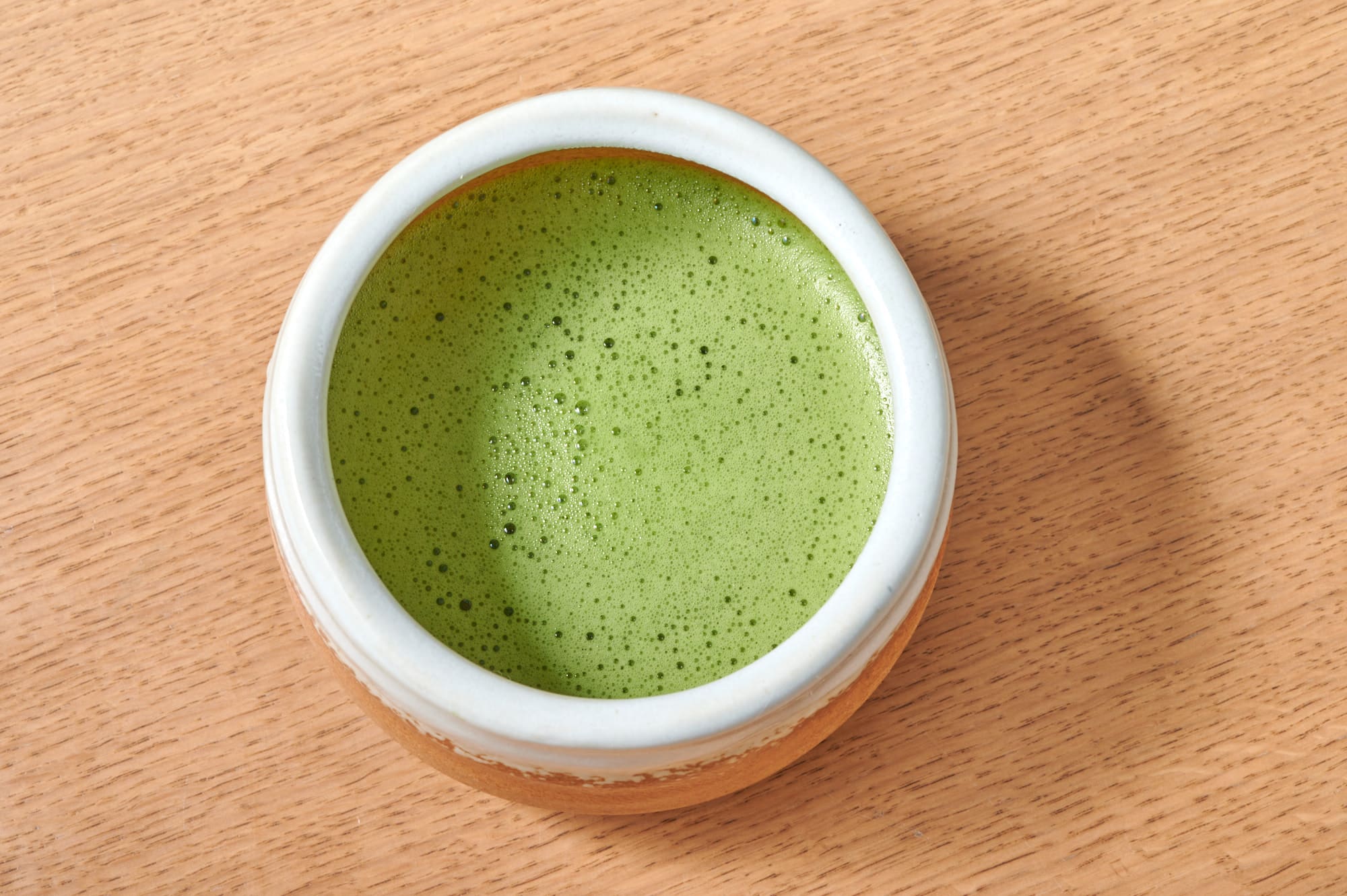
It was in 1187 that Eisai (1141-1215), one of the most consequential Buddhist priests in the nation’s history, made his return voyage to China (then under the Song Dynasty). Initially seeking to cross over the continent to find, for him, a more suitable take on the faith from its birthplace in India, he was met with enough bureaucratic red tape to keep him stuck in China. Eisai would then pivot to Zen, learning from the master Kian Esho on Mount Tientai. Among the aspects and activities within the Zen culture that he was taught was the consumption of powdered tea as a kind of medicine.
It is possible that what later became known as matcha in Japan had already been carried into Japan by others, however it was Eisai who captured the attention back home. Also credited as the person who introduced Rinzai Zen to Japan, Eisai’s endorsement of tea was less to do with spirituality and more health. “Whenever one is in poor spirits, one should drink tea,” the priest wrote in Kissa Yõjõki (Drinking Tea for Health). “This will put the heart in order and dispel all illness. When the heart is vigorous, then even if other organs are ailing, no great pain will be felt. … Drink lots of tea, and one’s energy and spirits will be restored to full strength.”
One can only imagine what must have been an electric feeling, to get this kind of concentrated dose of caffeine in a world yet unfamiliar with cold brews and canned energy drinks. Eventually, toward the end of the Kamakura period, tea was a quickly flourishing crop and something enjoyed beyond the walls of Zen Buddhist temples. Tōcha, or tasting contests, arose. Participants would attempt to guess what part of the country their swig had originated. However, as these tōcha grew, they became so increasingly extravagant that they were prohibited. The contests continued to decline as sarei (tea rules) arose in the Muromachi period (1336-1573). Established within Zen temples, sarei dictated how tea should be prepared, served, and consumed and were part of a broader set of communal rules known as shingi. Here, perhaps, it becomes easier to see tea ceremony as we know it today beginning to take its form.
The Letter of the Heart and Silver Pavilion
Chanoyu (The Way of Tea) was not derived from a singular “aha” moment of discovery, nor was its setting, the tea house. In addition to Zen and tea, new architectural styles began to emerge, including shoin. Translating to “library” or “study,” shoin became a model style for traditional Japanese architecture, including sliding doors and floors covered in tatami mats. Shoin also began to include tokonoma, alcoves. In these recesses one would see karamono, Chinese objects, that demonstrated the taste and discernment of their owners. These included tea utensils and scrolls of calligraphy.
And yet still, the evolution of tea ceremony still had many more decades to go before we got structures like Portland Japanese Garden’s Kashintei. In the late fifteenth century, two figures arose that moved the pastime closer to what we see today: Murata Jukō (1423-1502) and Ashikaga Yoshimasa (1436-1490). Jukō is often considered today as one of the three principal founders of tea ceremony and wrote one of the most important documents related to the practice, Letter of the Heart (Kokoro no Fumi). In it, he expresses some of the traits best associated with wabi sabi. Wabi sabi is an impressively complex Japanese aesthetic that eludes a simple translation but includes tranquil simplicity, rusticity, and the patina of time among its characteristics. It is an aesthetic nearly inextricable from most depictions of traditional tea ceremony today. From here, one can connect the dots to why Kashintei and other tea houses are decidedly humble in their makeup.
Related: Learn More about the Relationship Between Tea and Wabi Sabi.
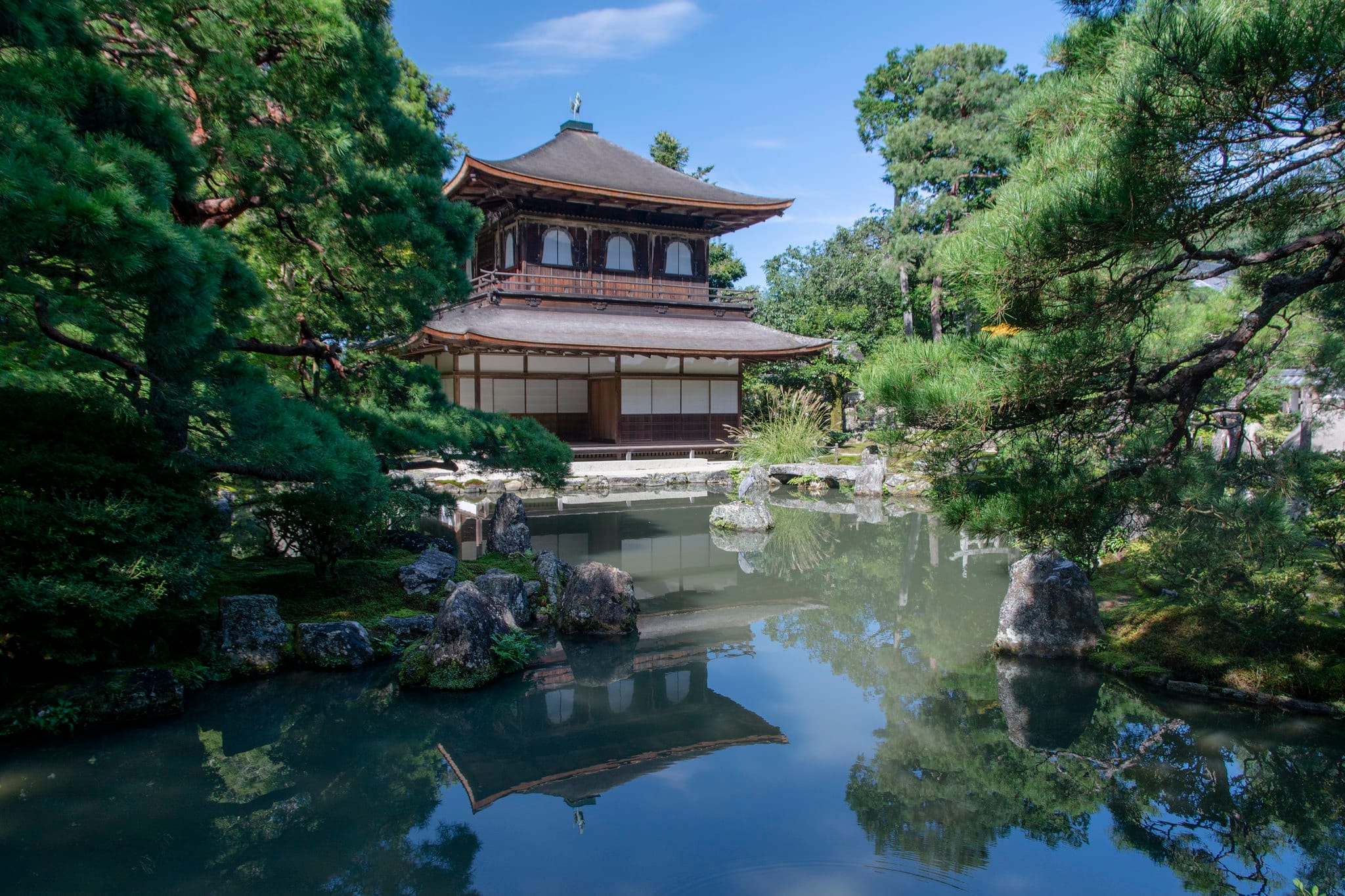
Yoshimasa, meanwhile, is a notable ruler in Japan’s history who, while often derided as a political leader, has been credited for advancing the exceptionally influential Higashiyama culture, a movement that valued sparseness and humility. In addition to his famous and relatively restrained Ginkaku-ji, the Temple of the Silver Pavilion, the shogun is one of the earliest progenitors of the now commonplace four-and-a-half tatami mat-sized tea room. On this smaller footprint within this famed Silver Pavilion, the shogun’s power influenced others, nudging us further along to why tea houses stay on the smaller side.
The Merchants of Sakai
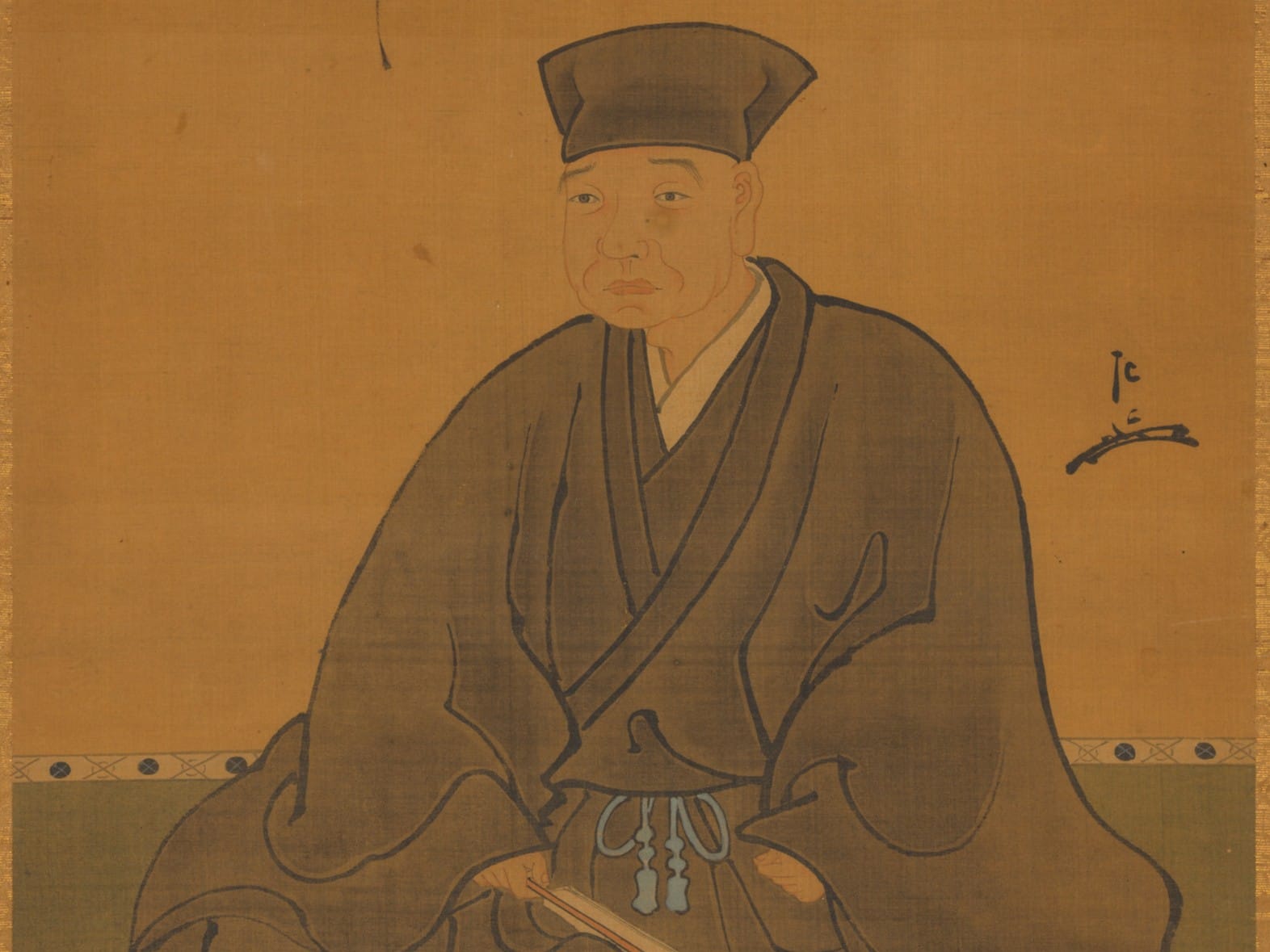
Though there are innumerous figures that have been essential to the development of tea ceremony and the structures it’s hosted in, following Jukō and Yoshimasa, the largest figures of all were Takeno Jō’ō (1502-1555) and his disciple, Sen no Rikyū (1522-1591). Jō’ō’s tea rooms veered into an even more rustic aesthetic than Jukō —dispatching white paper and lacquer for plain wood. An admirer and writer of renga (linked poetry written collaboratively by two or more people), Jō’ō found inspiration in the master Shinkei (1406-1475), who felt that renga should be “withered and cold,” one of the earliest meanings of wabi.
It was through Rikyū, widely considered the greatest master of tea ceremony in Japanese history, that the cultural practice’s egalitarian, humble, and subtle characteristics truly took root both in principle and in physical design. Rikyū came from an influential and wealthy merchant family of Sakai, a prosperous merchant city that rivaled Kyoto as a center of tea culture in his lifetime. He and his contemporaries became the chief arbiters of which tea-related utensils were of the utmost quality. When two of the three great unifiers of Japan, Oda Nobunaga and Toyotomi Hideyoshi conquered Sakai, they also conquered its most precious goods. Rikyū was retained as a tea master by both soldiers, marrying his reputation for a finer kind of discernment with empowerment and a greater reach from the most powerful political and military forces of the time.
Tea gardens and tea houses rounded into form in large part due to the context of Rikyū’s era. Leaders like Nobunaga and Hideyoshi did not accumulate land and power through pleases and thank yous—rather, violence ran rampant. Tea gardens were a form of retreat for the cultured classes—but how does one “escape” if a journey to the remote mountains nearby is a dangerous proposition? By recreating the experience at home. Merchants of the time often lived in long and narrow homes known as machiya. On these smaller plots of land, they would craft “dewy paths,” or roji, to symbolize the journey into the wild. They would lead to a small, detached structure.
Tai-an, a tea house at Myōki-an Temple, the only remaining tea house widely attributed to Rikyū, also demonstrates a defining characteristic conceived of by the master, the nijiriguchi, or crawling-in entrance. True to its name, it is a tiny entrance that speaks to humbling nature of tea ceremony as even the most powerful must stoop to enter. This concept is captured in spirit at Portland Japanese Garden if not in literal design—those performing the part of “guest” during the organization’s tea ceremony presentations will mimic the act of crawling in when they arrive to the tatami mat, which is immediately in view for visitors peering through Kashintei’s large windows.
Will Lerner serves as Marketing and Communications Manager for Portland Japanese Garden and Japan Institute. He joined the organizations in 2021.
References
Deane, A.R. (2015, December 10). Chapter 7: The tea garden. North American Japanese Garden Association. https://najga.org/the-tea-garden/
Eisai. Kissa yõjõki. Edited with an introduction and notes by W.T. de Bary, D. Keene, G. Tanabe, & P. Varley in Sources of Japanese tradition: From earliest times to 1600 (2001). Columbia of University Press.
Huda, H., Majid, N. B. A., Chen, Y., Adnan, M., Ashraf, S. A., Roszko, M., Bryła, M., Kieliszek, M., & Sasidharan, S. (2024). Exploring the ancient roots and modern global brews of tea and herbal beverages: A comprehensive review of origins, types, health benefits, market dynamics, and future trends. Food Science & Nutrition, 12(10), 6938-6955. https://doi.org/10.1002/fsn3.4346
Isao, K. (1989). Sen no Rikyu: Inquiries into his life and tea (P. Varley, Trans.). In P. Varley & K. Isao (Eds.), Tea in Japan: Essays on the history of chanoyu (pp. 33-69). University of Hawai’i Press.
Liang, Y., & Huang, Y. (2026). Shennong, the flame emperor. Journal of Traditional Chinese Medical Sciences, 13(1), 1-2. https://doi.org/10.1016/j.jtcms.2026.01.001
McDaniel, R.B. (2013) Zen masters of Japan: The second step east. Tuttle.
Okakura, K. (1997). The book of tea. Public Domain Books. (Original work published 1906). https://www.amazon.com/Book-Tea-Kakuzo-Okakura-ebook/dp/B000JQUVMC/r
Pan, S., Nie, Q., Tai, H., Song, X., Tong, Y., Zhang, L., Wu, X., Lin, Z., Zhang, Y., Ye, D., Zhang, Y., Wang, X., Zhu, P., Chu, Z., Yu, Z., & Liang, C. (2022). Tea and tea drinking: China’s outstanding contributions to the mankind. Chinese Medicine, 17(1), 27-40. https://doi.org/10.1186/s13020-022-00571-1
Sadler, A.L. (2019) The Japanese tea cermony: Cha-no-yu and the Zen art of mindfulness. Tuttle.
See, L. (2019, March 14). In search of the perfect cup of tea. National Geographic. https://www.nationalgeographic.com/travel/article/one-perfect-cup
Soshitsu Sen XV. (2003). Tea life, tea mind. Tankosha Publishing Company, Ltd.
Yasuhiko, M. (1989). The development of chanoyu: Before Rikyu (P. Varley, Trans.). In P. Varley & K. Isao (Eds.), Tea in Japan: Essays on the history of chanoyu (pp. 3-32). University of Hawai’i Press.