By Will Lerner
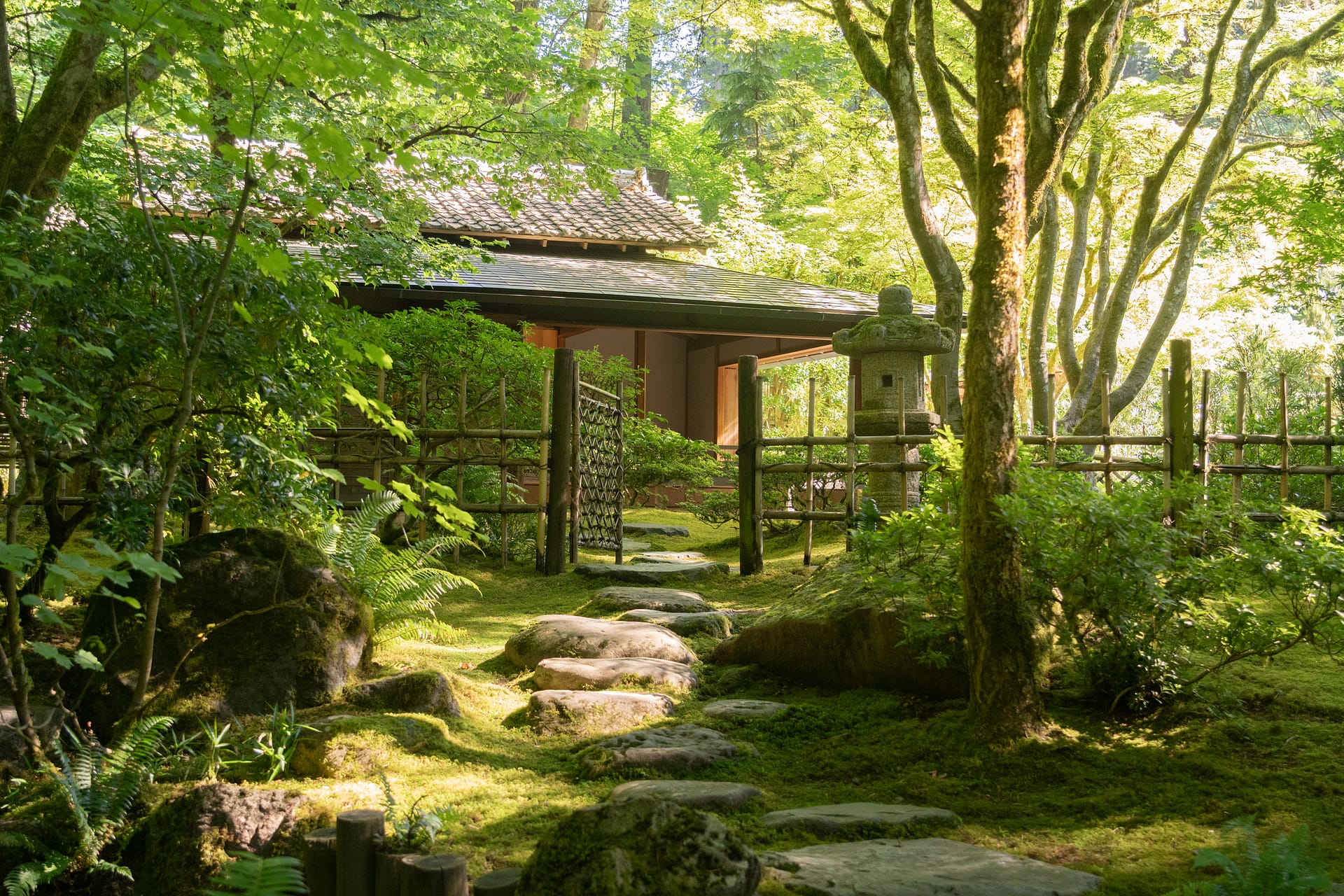
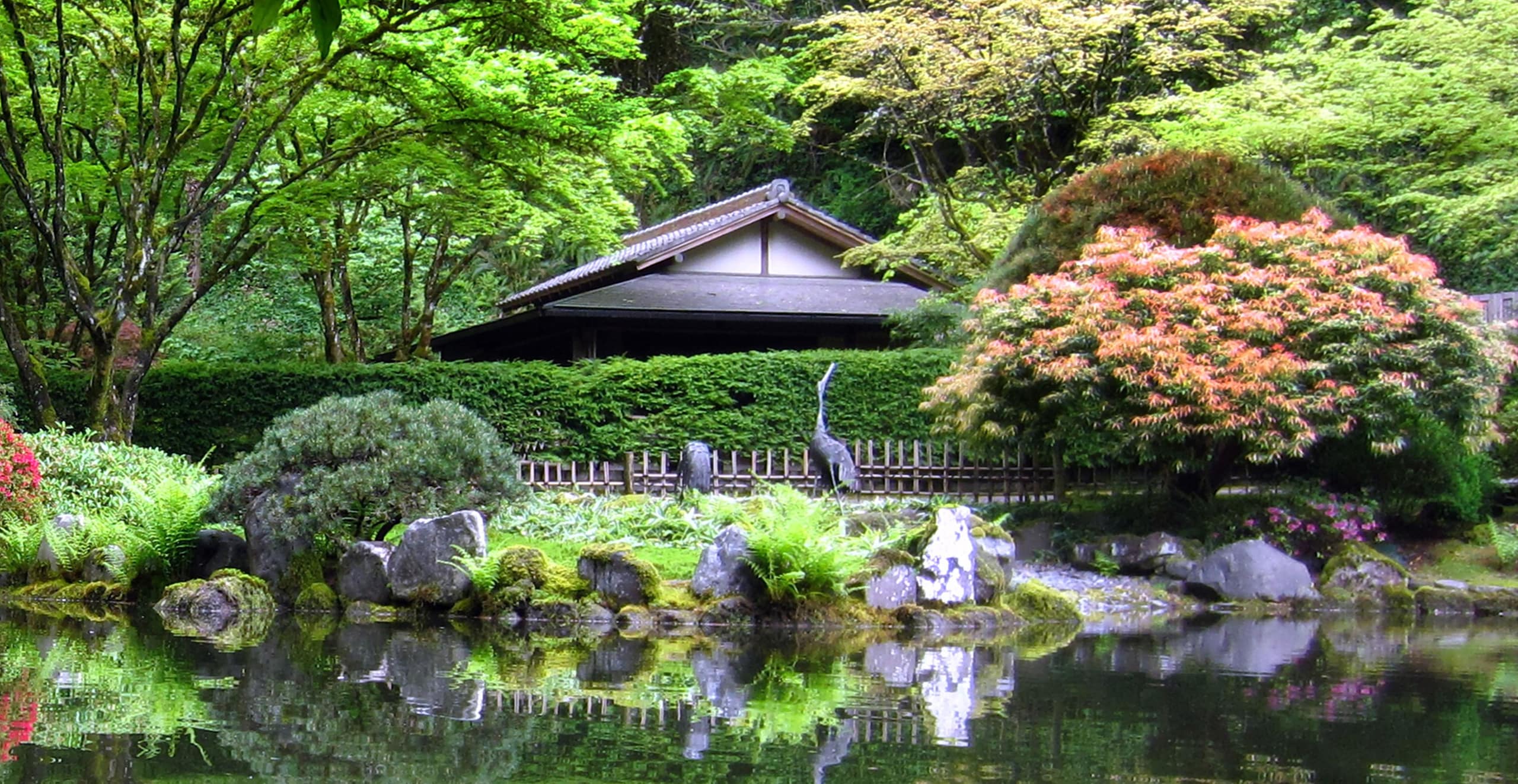
The next time you walk down to Portland Japanese Garden’s Tea House, tucked in against the hill, opposite a pond and wooden bridge and bronze cranes, just know that this visit will never happen again. There will be a tomorrow, tomorrow and yesterday will always be yesterday and the Tea House will be present for you across this spectrum of time. But this moment, this very moment you’re at the Tea House? It will never happen again.
Such is the philosophy of the Japanese phrase ichigo, ichie (“one time, one meeting”), a perspective that has become interwoven into tea ceremony, a traditional cultural pursuit that was the inspiration and reason behind the creation of tea gardens and tea houses.
A phrase dating back to the 16th century, ichigo, ichie was given its “classical definition” centuries later by Ii Naosuke (1815-1860), a daimyo, or feudal lord, of the Hikone Domain in Ōmi Province (modern-day Shiga Prefecture). In his book, Chanoyu Ichie Shū, Ii wrote: “Even though the host and guests may see each other often socially, one day’s gathering can never be repeated exactly. Viewed this way, the meeting is indeed a once-in-a-lifetime occasion.”
Related: Learn More About “Wabi Sabi.”
It is a beautiful notion because it encourages us to put aside our past, to pause looking into our future. If we’re together, embracing the “now” of it all, incapable of judging each other based on our experiences and unable to plot how our relationship might be of service in the future, we can see the most compelling reason we each have value: our existence. We made it to Earth, and that’s fantastic.
Wood, tile, and tatami mat aside, this inspiring spirit of finding comfort by simply being present in each other’s company in this vast and awesome universe is what Portland Japanese Garden’s Tea House is made of and togetherness was the catalyst. It has been a setting of tranquility and togetherness for almost 60 years in these tree-lined hills and the story of how it got here is pretty interesting.
You Can Not Understand Unless You Experience It Yourself
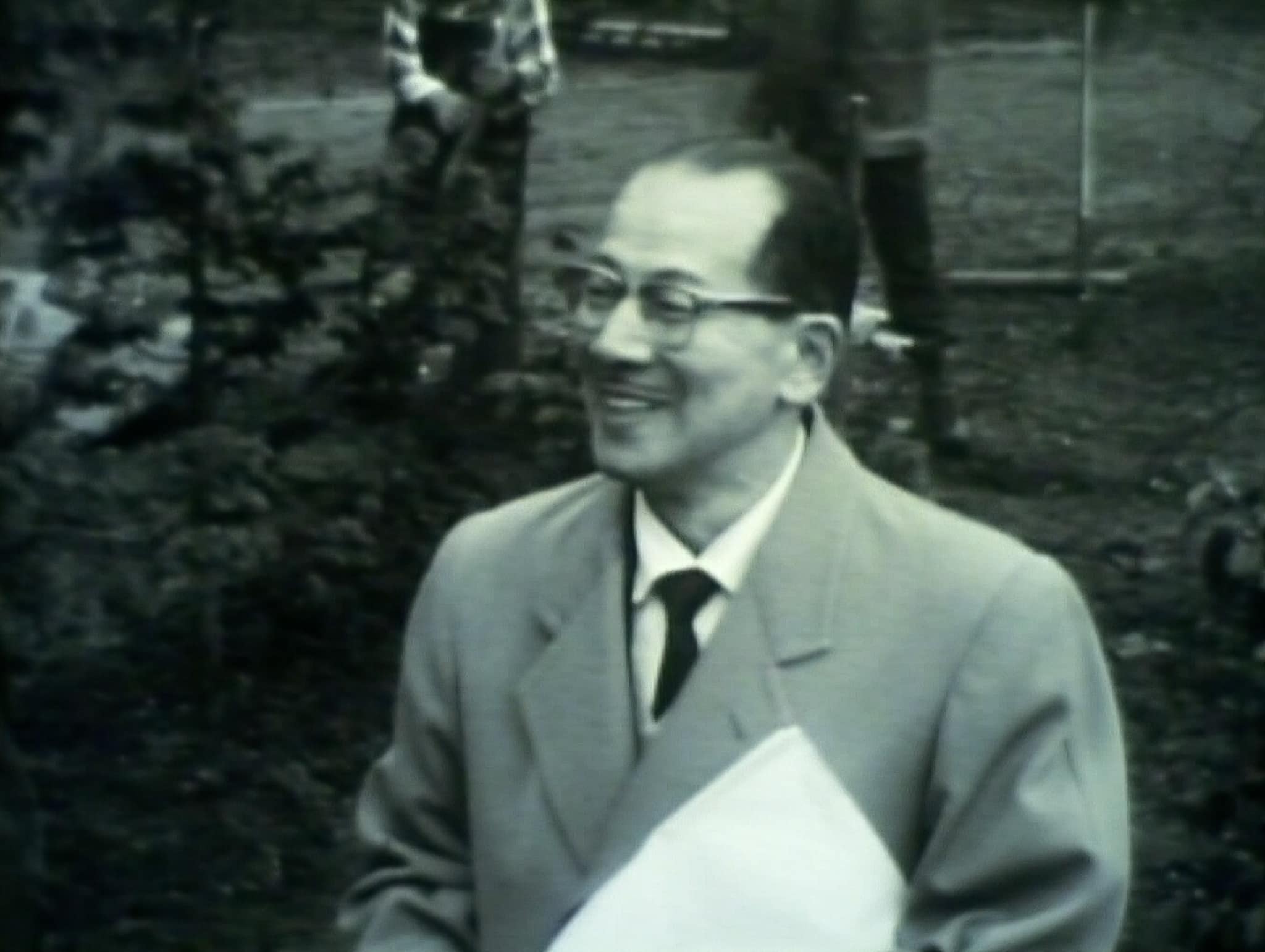
The original designer of Portland Japanese Garden, Professor Takuma Tono of the Tokyo University of Agriculture, always envisioned a tea garden, complete with tea house, being included in the attraction’s landscape. “The tea garden is intended to serve a practical purpose, but at the same time, it must be artistic in appearance, with the beauty of nature represented in it,” the academic wrote in a brief guide to Japanese garden styles in the early 1960s. “It is instructed that this beauty must be natural enough to make one forget all worry or troubles of this outer world.”
A master plan drawn by him in 1963 reveals that Tono initially intended to have the Tea Garden in the space that Sand and Stone Garden is today. However, in a letter to Philip Englehart, the organization’s first Board President, Tono recommended an adjustment, writing*, “I wonder if the suggested place of the tea house is a little bit too concealed. Why not put it on a slope, looking down at the [Strolling Pond Garden]?”
Following this recommendation, the Sand and Stone Garden shifted into this space from its originally intended location: the Natural Garden path that runs parallel to nearby Kingston Drive. Location settled, there was bit more of a push and pull on who would design it.
In correspondence between Professor Tono and various members of the Garden’s Board of Trustees, it is evident that the landscape architecture expert was adamant it be built authentically and harmonize with the landscape. Very much a pragmatist who was willing to bend away from strict tradition in favor of practicality, he was insistent that the Tea House’s design be handled only by those properly trained in Japanese woodworking.
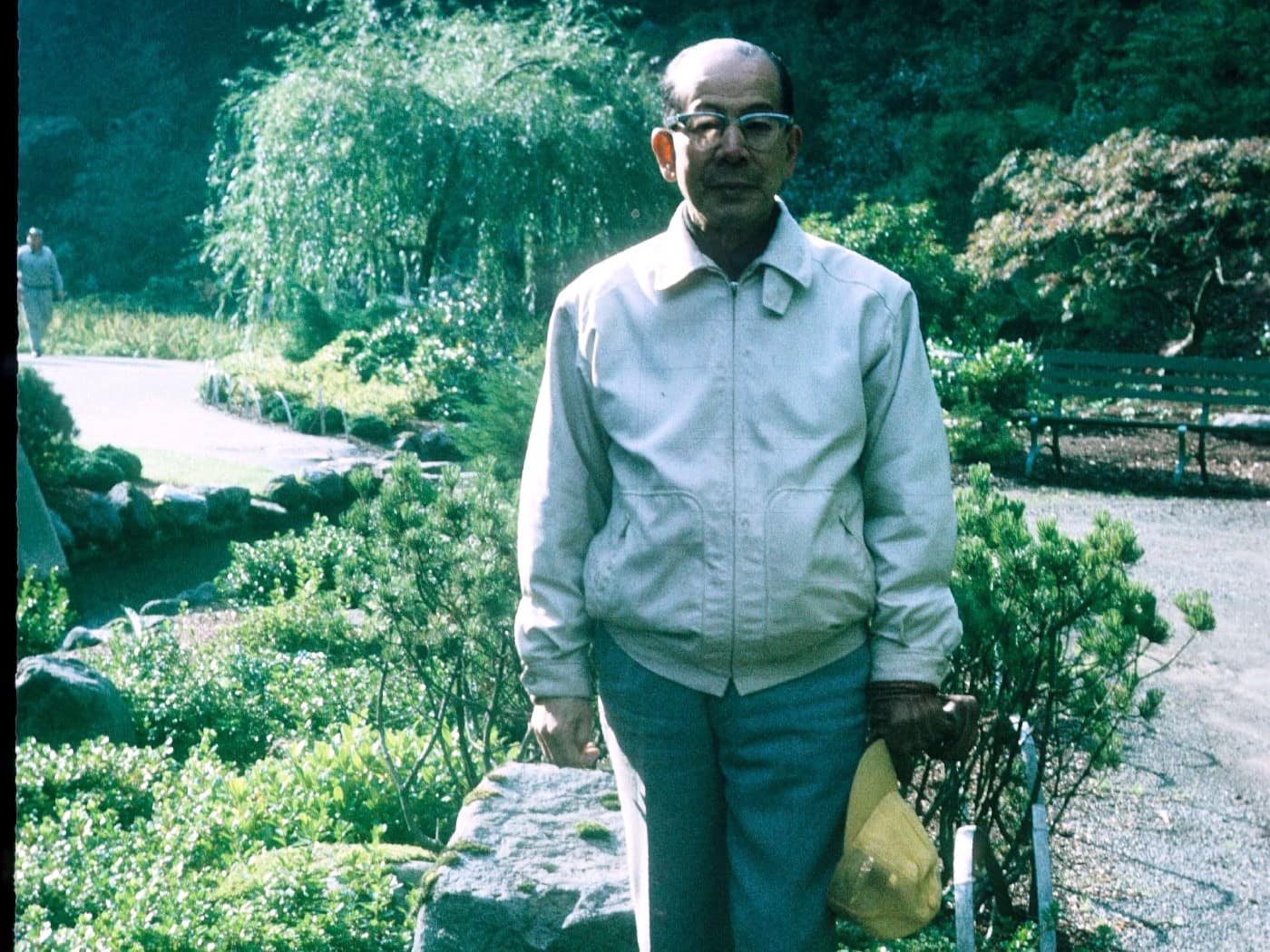
“The tea house … can never be built by an American builder,” Tono wrote to Thaddeus Bruno, Board Trustee, in 1965. “Even in Japan, there are very few who are able to finish them in an authentic way. We must send carpenters, rooftile layers, and mud wall men. Plaster can imitate mud walls, so don’t worry about that too much. But carpenters and tile men are absolutely needed.”
U.S.-based architecture firms would be contacted and some even came close to being retained for this important project, but Tono remained adamant that it must be a Japanese production. “A tea house looks so simple but in reality, we Japanese purposely try to make it look simple,” he wrote to Englehart in 1965. “But there are many special techniques and a high level of attention to details has to be paid.”
“I do sincerely hope that this tea house will be an authentic one and any Japanese guests will be satisfied with the interior and exterior,” he reiterated in a letter to Ed Erickson of the Portland Parks and Recreation Bureau in 1966. “Anything produced by the Japanese always looks simple, but it is not so. Our efforts to make it look simple are successful after long study and great efforts. I wish you would come to Japan and see yourself that my words are not untrue. It is not so easy to explain. You cannot understand, unless you experience it yourself.”
Tono eventually turned to Tokyo-based Kajima Construction Company, already one of Japan’s largest construction firms by the mid-1960s. “They are very careful and take a prudent attitude,” Tono wrote to F. Warren Munro, future Board President, in 1966. “I agree with their carefulness, it will help avoid troubles after they start their work.”
It is possible that Tono had learned of Kajima’s willingness to work with American organizations through the construction company’s work in California. A 1965 issue of Architecture/West notes that they helped build one of the largest traditional Japanese tea houses outside of Japan in San Diego. Tono often visited his daughter in Gardena, only two hours north and in some his correspondence noted he was going to check out Sea World.
Sending Out Signals

In the early days of Portland Japanese Garden, the cost of transforming a former zoo site into a lush and verdant oasis was weighty and so money had to be metered out efficiently to cover substantial and necessary costs. Certain items were either delayed (the Pavilion wouldn’t open until 1980) or scrapped altogether (proposals for a hillside funicular were dismissed early). Among the notable costs would be the Tea House. Initially, the Garden’s early leaders were hoping they might be able to have one built and installed for $6,000, or nearly $58,000 if adjusted for inflation. Professor Tono replied that the initial budget would in “no way” cover the cost.
In October 1966, Tono wrote to Munro with a more accurate estimate for costs, including labor, materials, and getting the building’s pieces to Yokohama for shipping: nearly $19,000. That, however, did not include the hundreds of dollars needed for roof tiles (eventually secured from or the more than $15,000 for building it back up in Portland. In total, the price tag wound up reaching nearly $280,000 when adjusted for inflation. At such a steep price, it is possible Portland Japanese Garden would have had to relegate a tea house to its wish list were it not for the outstanding generosity of two technology giants: Tektronix and Sony.
Tektronix, founded in Oregon in 1946, quickly rose to prominence through co-founder Howard Vollum’s invention of the first triggered oscilloscope, which the company notes is “an instrument that graphically displays electrical signals” that “scientists, engineers, physicists, repair technicians and educators use … to see signals change over time.” This discovery was of particular interest to Sony, itself a postwar company founded in 1946 in Japan. The two companies would partner on a joint venture in 1964, a process that would form a lasting and deep transpacific friendship between Vollum and Sony’s co-founder, Akio Morita.
Vollum, in addition to his inventiveness and technological mastery, was a community-minded leader. In 1952, he and his Tektronix colleagues founded a nonprofit foundation so as to “receive and administer funds for scientific, educational, and charitable purposes, all for the public welfare…” Dorie Vollum, Howard’s daughter-in-law and a Trustee of the Garden, shares that it was this philanthropic spirit and connection to Japan that likely inspired the organization’s leadership to seek support from him. Howard Vollum got on board and then got Morita to join in. In total, Tektronix and Sony would donate more than $28,000, split down the middle.
In 1968, Thaddeus Bruno, now President of the Board of Portland Japanese Garden, would write to Vollum, noting, “The Garden shows every indication of surpassing our greatest expectations, both in appearance and acceptance by the general public. It is rapidly becoming one of the foremost attractions in the Portland area, and of course, the Tea House is a focal item of interest. We are extremely grateful your support and interest in our endeavor.”
An often-overlooked bit of generosity also came from Garden patrons Jack and Mary Dant, who covered the cost of the shipping of the disassembled Tea House via their family business, the States Steamship Company. One of his ships departed from Yokohama carrying 14 crates, ranging from 326 to 3,404 pounds each, all arriving in Portland in the final few weeks of 1967.
The Family Hamada and Questions on Veneered Wood
It was well known back in Portland that Kajima was building the Tea House and that Tono, also based in Tokyo, was checking in periodically. “The Tea House is almost finished, on the first of the next month [September], I have to inspect at the spot,” he wrote in a late summer 1967 letter to Ed Erickson. “If everything is satisfactory, they will begin to knock it down and will put a number on each part…”
However, what was less known in the following decades was who was actually building the beloved Garden fixture. In 2012, new details came to light in the U.S. when Sadafumi Uchiyama, now Curator Emeritus and then-Garden Curator (2008-21), came across the name of Masahiro Hamada. Uchiyama, rivaled by few in his historical knowledge of the Garden, told The Oregonian that he knew there was a carpenter of great skill behind the building, sharing very few even in Japan are able to achieve the “delicate understatedness” seen in its makeup.
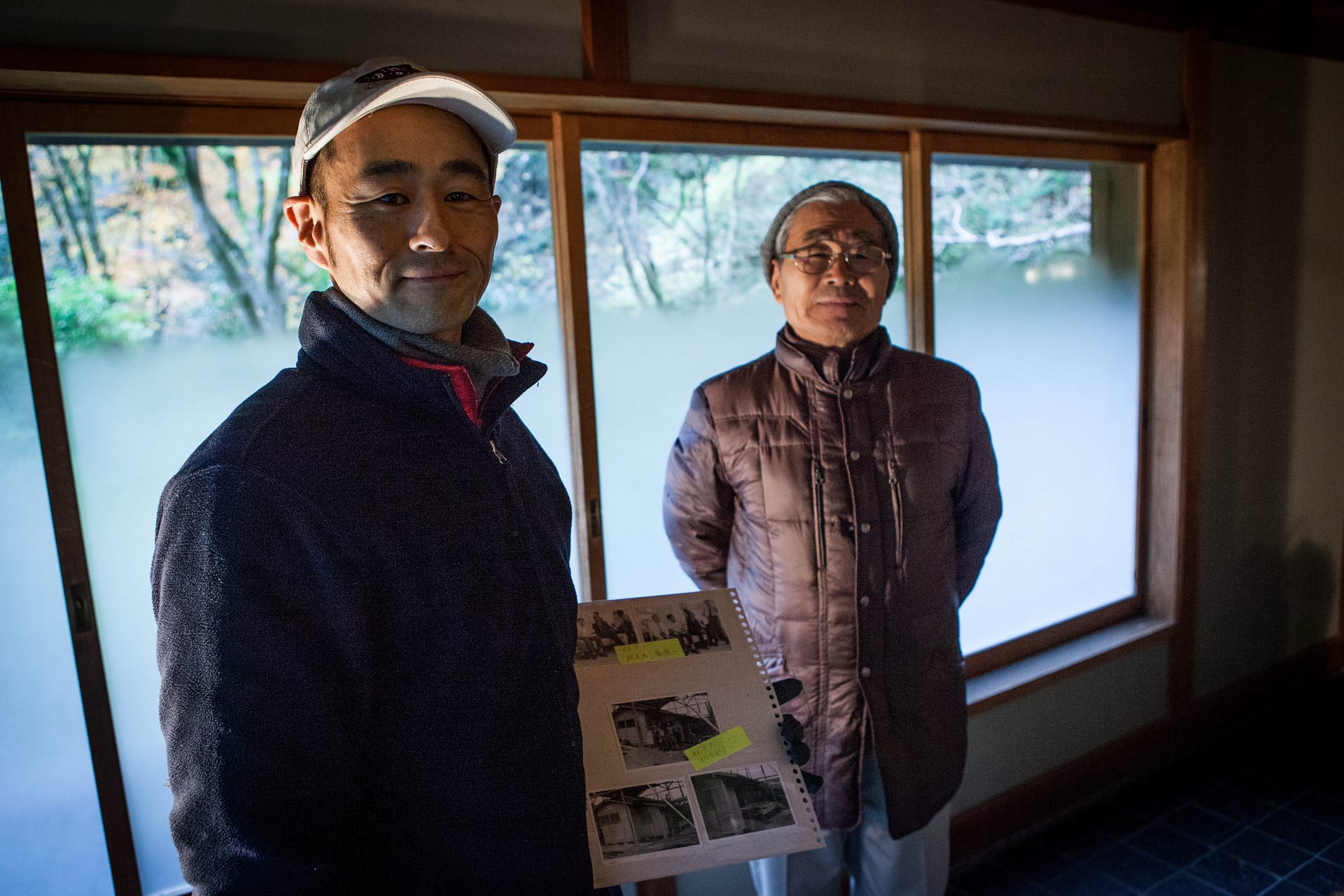
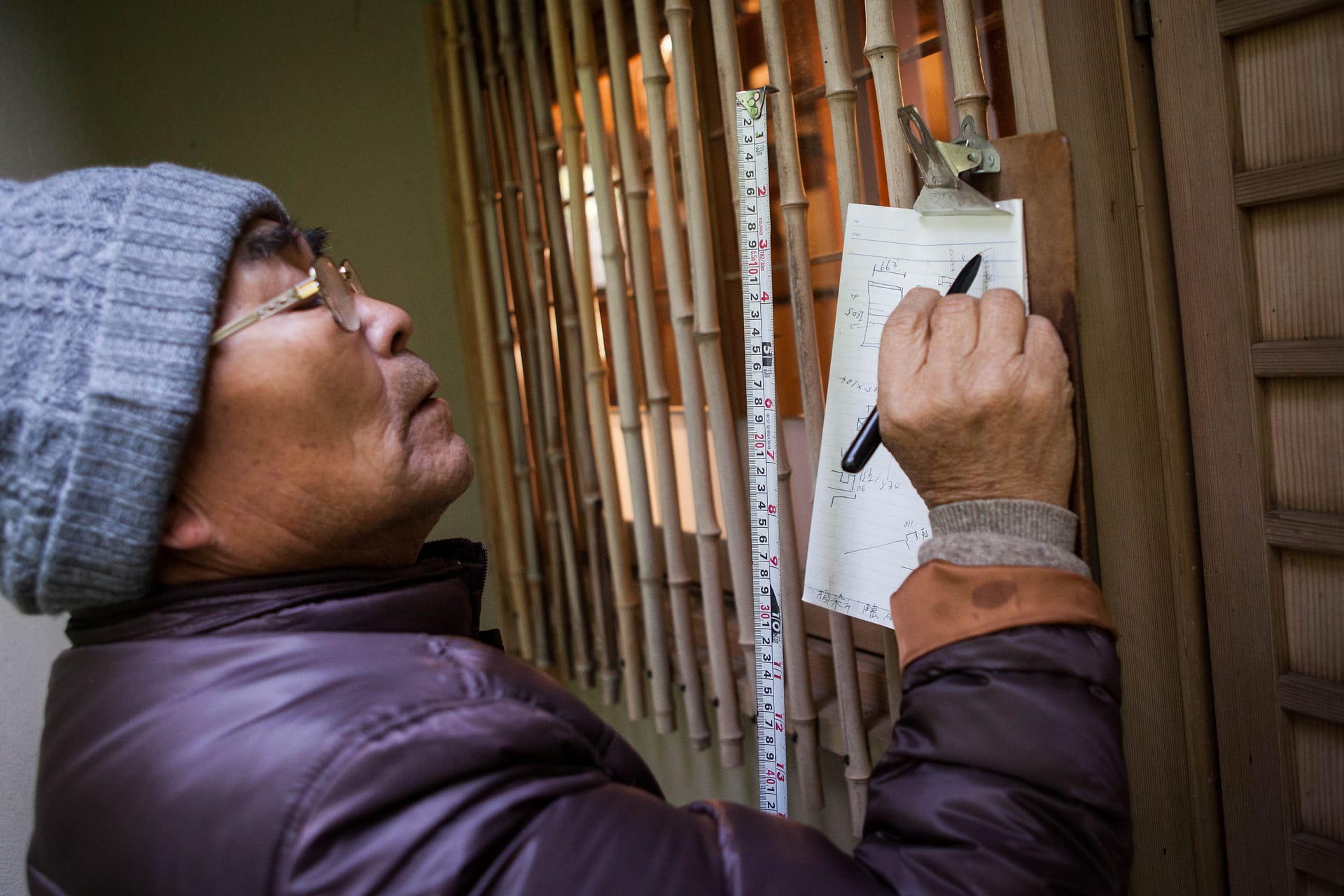
He was then “delighted” when he learned that Hamada and Hamada’s father had built the Tea House in the 1960s. Hamada, 77, returned to the Garden to inspect his creation alongside his son, Kenichiro, in December 2012. While looking it over, the elder Hamada was able to explain why he had used veneered wood, something Uchiyama had puzzled over for years. Hamada explained that at the time the Tea House was constructed, veneering was a technological advancement in woodworking and it was believed that it was the best possible material to use.
In a bit of a twist, however, it was revealed that this wasn’t Hamada’s first time seeing the Tea House: He had already visited it in 1979. “Hamada was visiting Washington state for work in 1979 when he heard that a new pavilion was being built at the Portland Japanese Garden and decided to visit,” reporter Rebecca Koffman wrote. “He laughs as he tells his story, perhaps remembering his surprise, when, as he walked through the gardens, he came upon the teahouse and realized it was his own work. He kept the discovery to himself.”
Freezing in the Back, Toasty at the Front
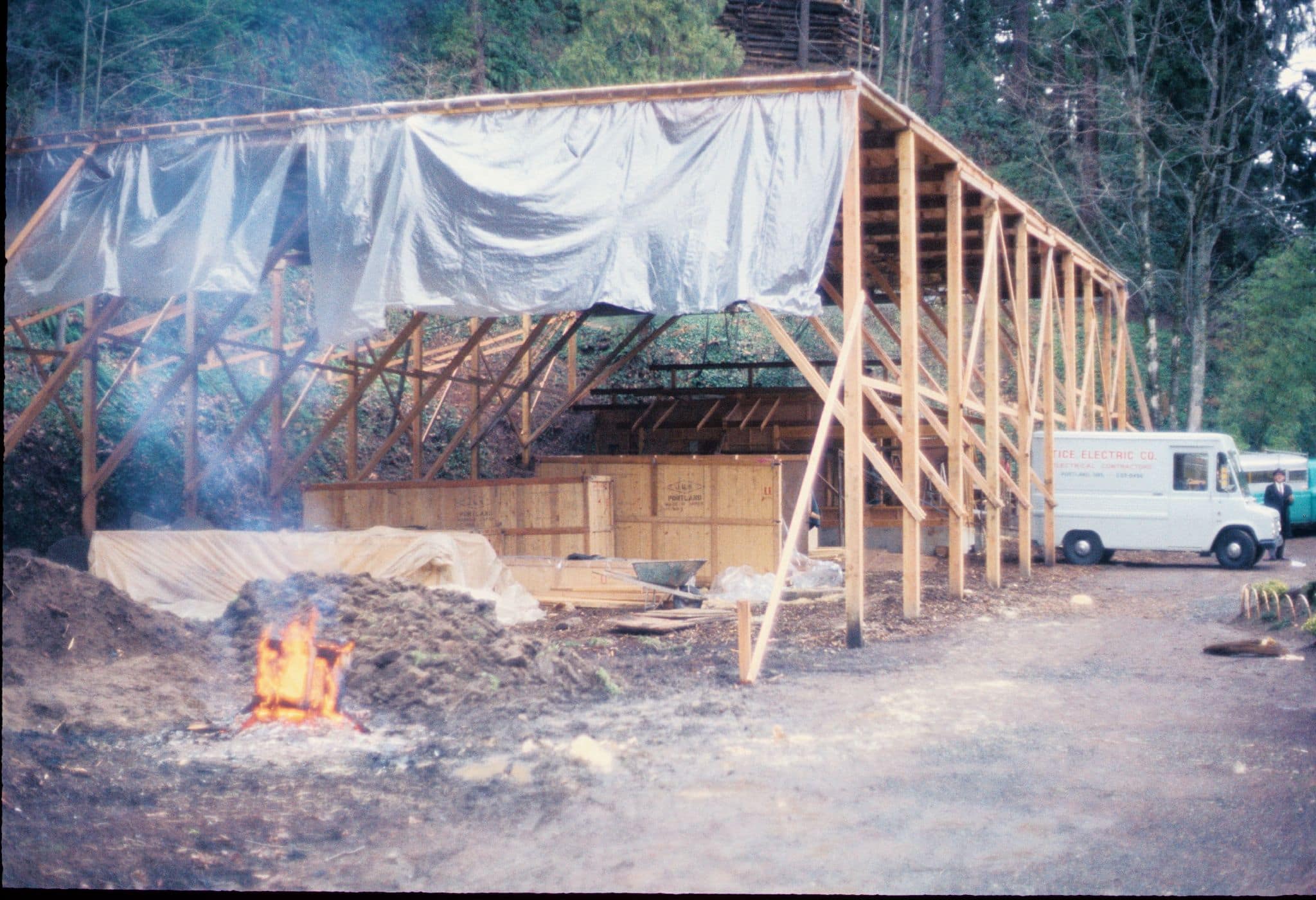
Before any construction could begin, the Garden’s leadership needed to make sure that they could build this structure in the first place. Following approval from the Portland Parks and Recreation Bureau, in an October 1967 meeting with the city’s Building Code Board of Appeal, they requested that it be granted an exemption from various codes a traditional building like this could not meet, such as door heights. Henry M. Mason, a member of the Board of Appeal, explained that the Tea House should “be considered an art exhibit and not generally subject to code…” and the motion was unanimously carried.
Putting the Tea House into the Tea Garden was not quite as simple as merely putting each piece together, as it also needed plumbing and wiring. George A. Moore & Associates were hired to build a foundation and to contract Kiyomitsu Miyake, a Japanese carpenter, who could oversee its construction onsite. The eponymous George Moore was also an early Board Trustee and its future President, whose company had been hired to build the original Moon Bridge before it was replaced in the early 1990s.
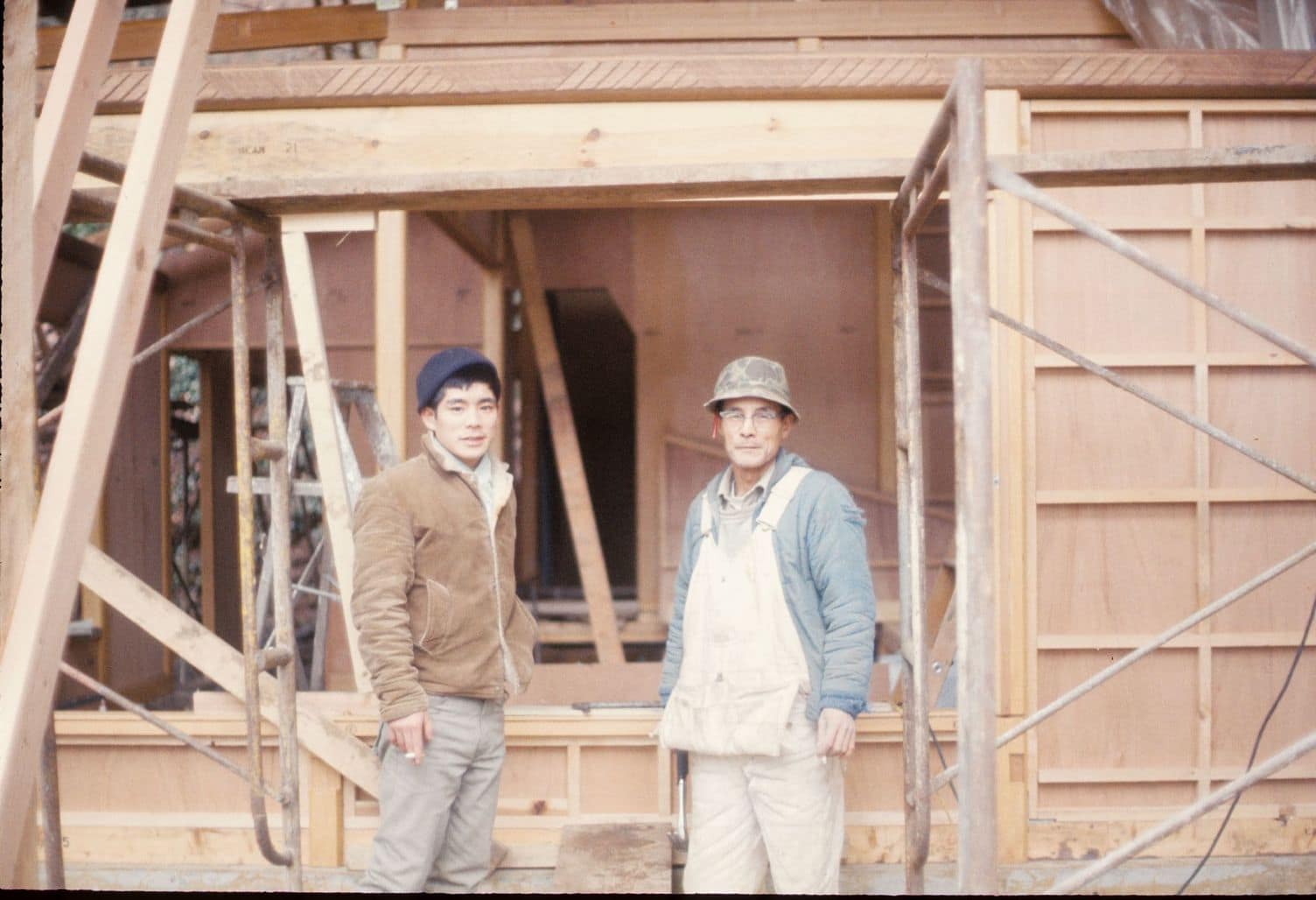
Construction on it began in the first weeks of 1968 underneath large plastic tent to shield the pieces and the people building it from Portland’s wet winter weather. “…[It] was snowing all the time,” William “Robbie” Robinson told Ed McVicker, former Board President (2009-11) in a 2010 interview. Robinson was the Head Gardener for Portland Parks and Recreation and an instrumental figure in the actual, physical construction of Portland Japanese Garden. “I went up there in the morning and I saw a lot of smoke coming from there. They had a barrel there, they had full of wood trying to keep warm, but you know, I wouldn’t use one trying to get warm against a hot stove or a barrel, you’re freezing in the back and you’re toasty at the front.”
Braving the wet and chilly Pacific Northwest weather, steady progress was made and on June 1, 1968, one exact year from the day Portland Japanese Garden first opened its doors to the public, the organization held a dedication for the building. Also commemorating the life of the late Philip Englehart, the organization’s first Board President, several notable guests arrived, including Professor Tono, Portland Mayor Terry Schrunk, and Yamada Sohen X, Headmaster of Sohen-ryu Fushin-an, a tea ceremony school, in Kamakura, Japan.
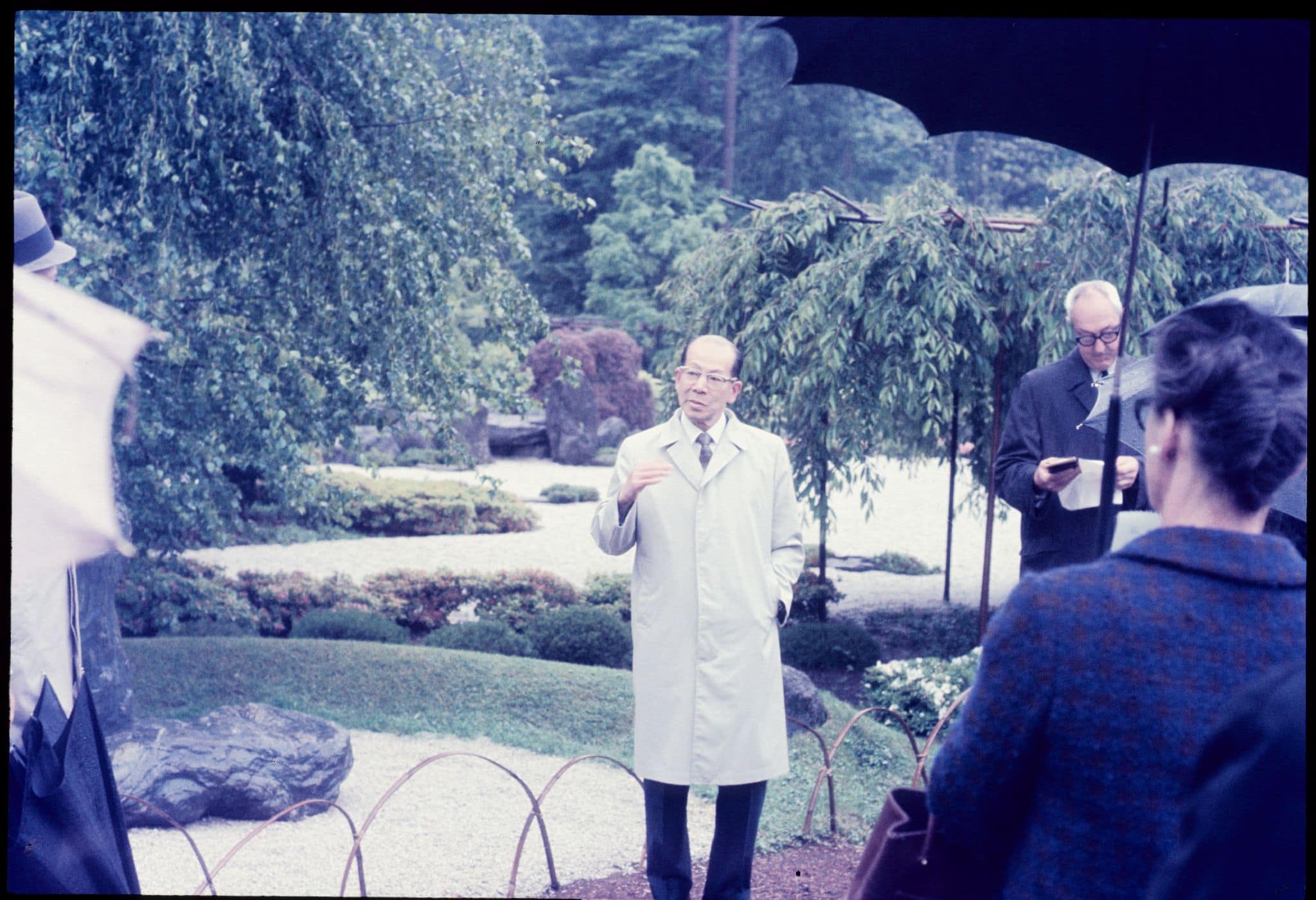
The Tea House would be bestowed the name Kashintei. In a 1993 issue of The Garden Path, the organization’s member magazine, June Moriyasu explained the meaning behind the name. As co-founder of Chado Urasenke Tankokai Portland Wakai Association (“Wakai Tea Association”), Moriyasu was a pivotal and important teacher in the Pacific Northwest and among the first cultural partners of Portland Japanese Garden.
“The name Kashintei means ‘flower-heart room,’” Moriyasu explained. “It has the further meaning of “heart of Washington Park” in that ka is the character used to write Washington (D.C.) and our Garden is located in Washington Park.”
A Book that Remains Shut Is but a Block
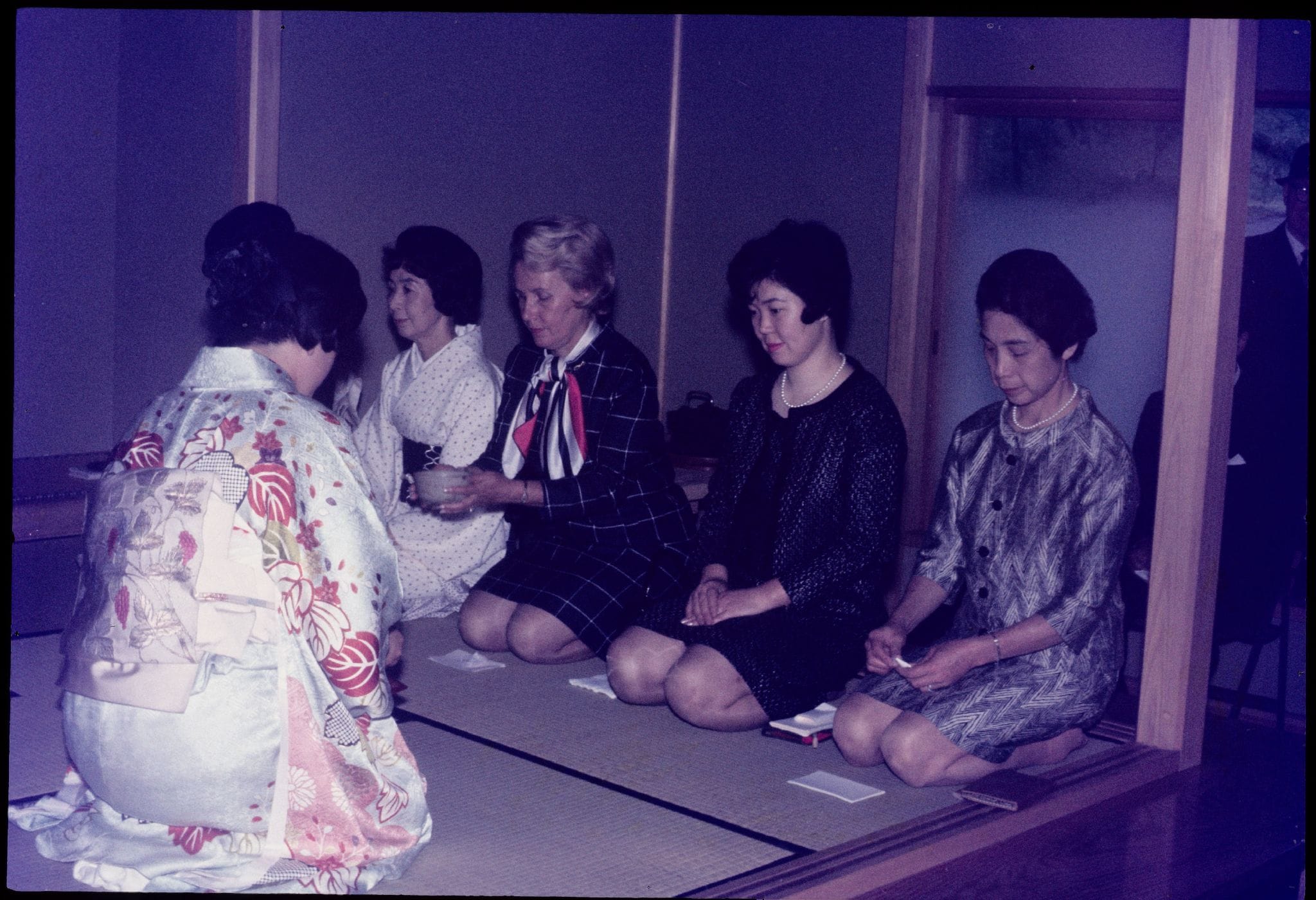
After its construction was completed and ceremonies celebrating it had concluded, there was a stretch where the Tea House was often unused. In keeping with the trials and tribulations faced by early Garden leaders, it was subject to the same kind of racist vandalism other parts of the grounds were. “There were other incidents where all the windows in the Tea House were broken and the tatami mats destroyed,” recalled Kinya Hira, first Garden Director for the organization (1964-69) in a conversation with Ed McVicker. Otherwise, available records indicate that its potential as an educational space wasn’t being met.
In 1976, Professor Tono would write a letter to then-Board President Thomas Kerr. Tono’s involvement in the organization had greatly diminished, but he still had a deep level of care for the Garden and the Tea House in particular. He hoped it would be used in some kind of fashion. “’A book that remains shut is but a block,’” he noted. “I know that [tea practitioners] Mrs. Henjyoji and Ms. Kanai are always looking for a place to do formal lessons of ceremonial Tea culture. …In Japan we must get air through a house and drive humidity away, otherwise the wooden structures will easily rot. …Give these teachers the use of the Tea House and at the same time you will prevent the house from decaying. Your kind consideration would be my great joy.”
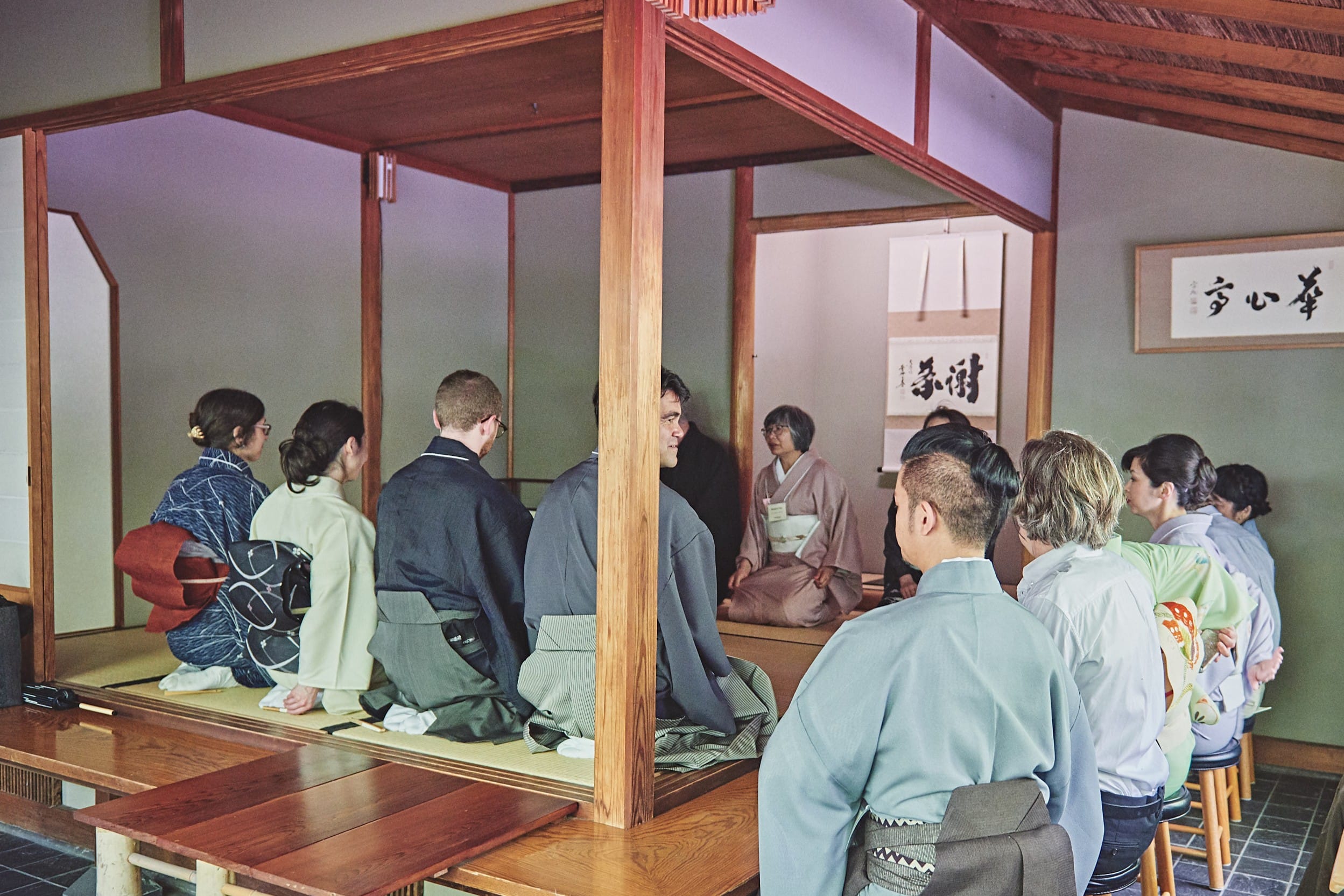
Writing back to Tono, Kerr shared, “Your comments in reference to better utilization of our Japanese Tea House are timely and will be carefully considered. In fact, we have already started working on a program for the teaching of the tea ceremony in the Tea House by the Moriyasu family later this spring on a regular basis.”
As Kerr noted, Tono’s timing was spot on. In a March 1976 issue of The Garden Path, it was shared that, “…Mrs. Hiro Moriyasu [known as June], is liaison with her mother-in-law, Madame Soju Moriyasu, is offering tea ceremony lessons to Garden members.. Although plans have not been finalized, there appears to be a strong possibility that the Tea House will be used for these lessons in warm weather. This will benefit the Garden monetarily, as well as aesthetically. There will be added interest for Garden visitors who stroll by the Tea House when lessons are in progress. The performance of the tea ceremony in the Tea House will provide a further note of serenity to the Garden.”
To help utilize, maintain, and care for the space, the group Kashintei Kai was formed and announced by the Garden’s Board of Trustees in January of 1981. “It has been a dream of the Japanese Garden Society and local tea students that the tea house be used to promote the understanding of Chanoyu [The Way of Tea] by the general public,” a letter to the public read. “The use of this facility also enables tea students the opportunity to study in authentic surroundings.”
“Our purpose was to not only help foster the care of the Tea House and its utensils but to offer Tea to the public,” wrote Jan Waldmann, a Kashintei Kai member and longtime cultural partner of Portland Japanese Garden, in a 2013 issue of The Garden Path. “Kashintei Kai continues to be a vital group; currently our membership is uniquely comprised of people who study various traditional Japanese lineages of Chado.”
The use of Kashintei as a space for educational and cultural programming continues to this day, one only needs look at the Garden’s event calendar to find a time to see it in action.
The Planned Repairs for Kashintei
Dale Brotherton, a master carpenter trained in the Japanese tradition and owner of Takumi Company in Seattle, has been lending his skills and assessments to Portland Japanese Garden for decades. Among the most recent examples of his work was the stunning rehabilitation of the Natural Garden’s machiai (sheltered waiting arbor) in 2023. Now a few years later, he’ll once again be partnering with the Garden to make some needed repairs to the Tea House.
Subject to decades of Portland’s famously rainy weather, deterioration has begun to affect parts of the roof with some leaking starting to occur. Protective tarps have been installed but to remedy the problem properly, the full extent of the damage can only be understood through dismantling of the roof.
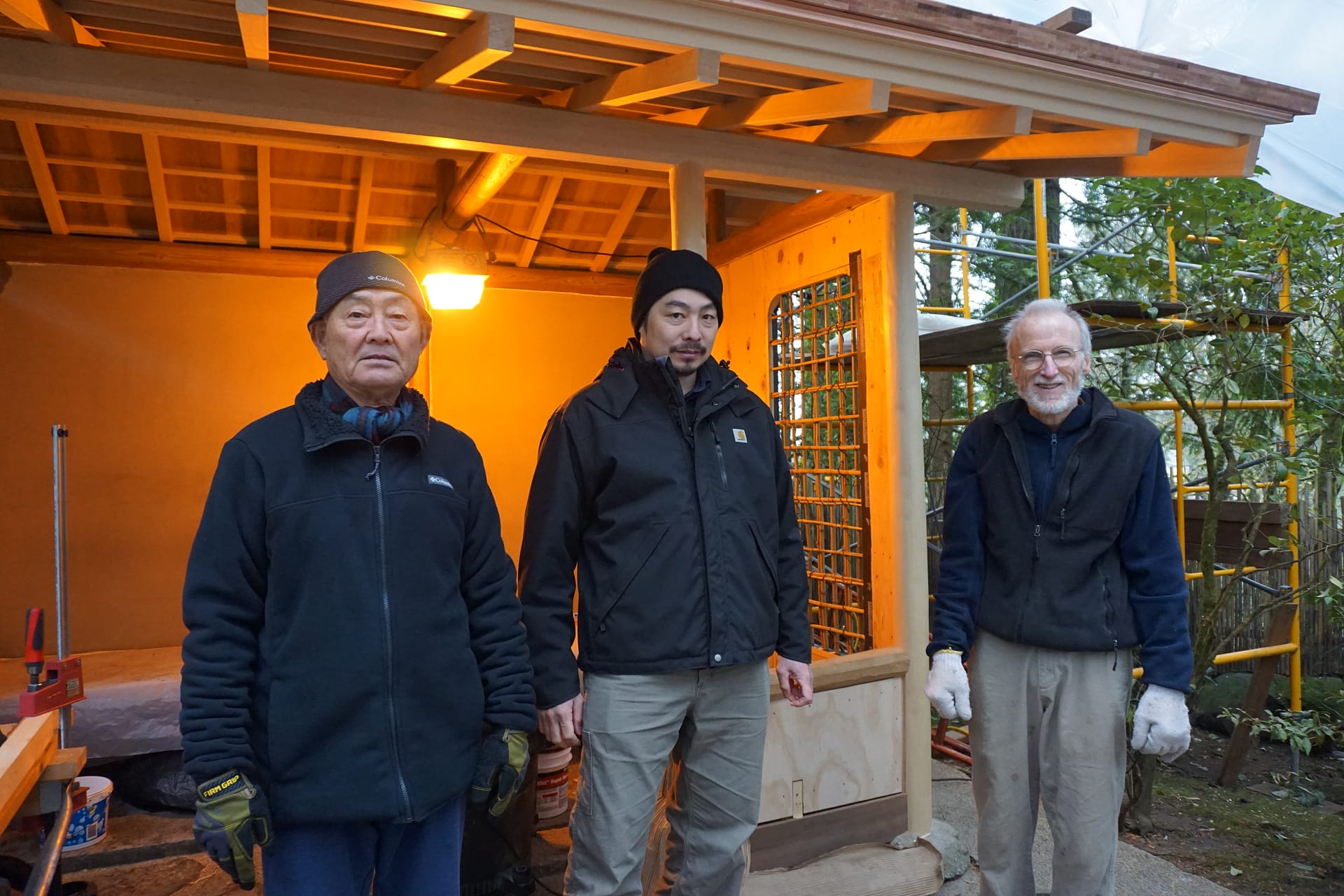
From there, it’s likely that Brotherton will have to replace shingles, roof sheathing, and gutters. For an approximate two months, he and his team will prefabricate wood and copper components in his shop in Washington before traveling down to Portland to remove the existing lower roof and rebuild it. This portion of the work in the Garden will take an estimated additional two months. After that’s completed, Hugo Torii, Garden Curator, and his team will have to likely do some landscaping to correct some minor disturbances this construction project may incur.
If you’re interested in contributing to the repairs of this treasured Portland Japanese Garden building, please contact Hilary Blakemore, Chief Development Officer for the organization at hblakemore@japanesegarden.org.
Will Lerner is Marketing and Communications Manager for Portland Japanese Garden and Japan Institute. He joined the organizations in 2021.