Generous Donor Sees the Garden “As Such a Home for Me”
By Will Lerner
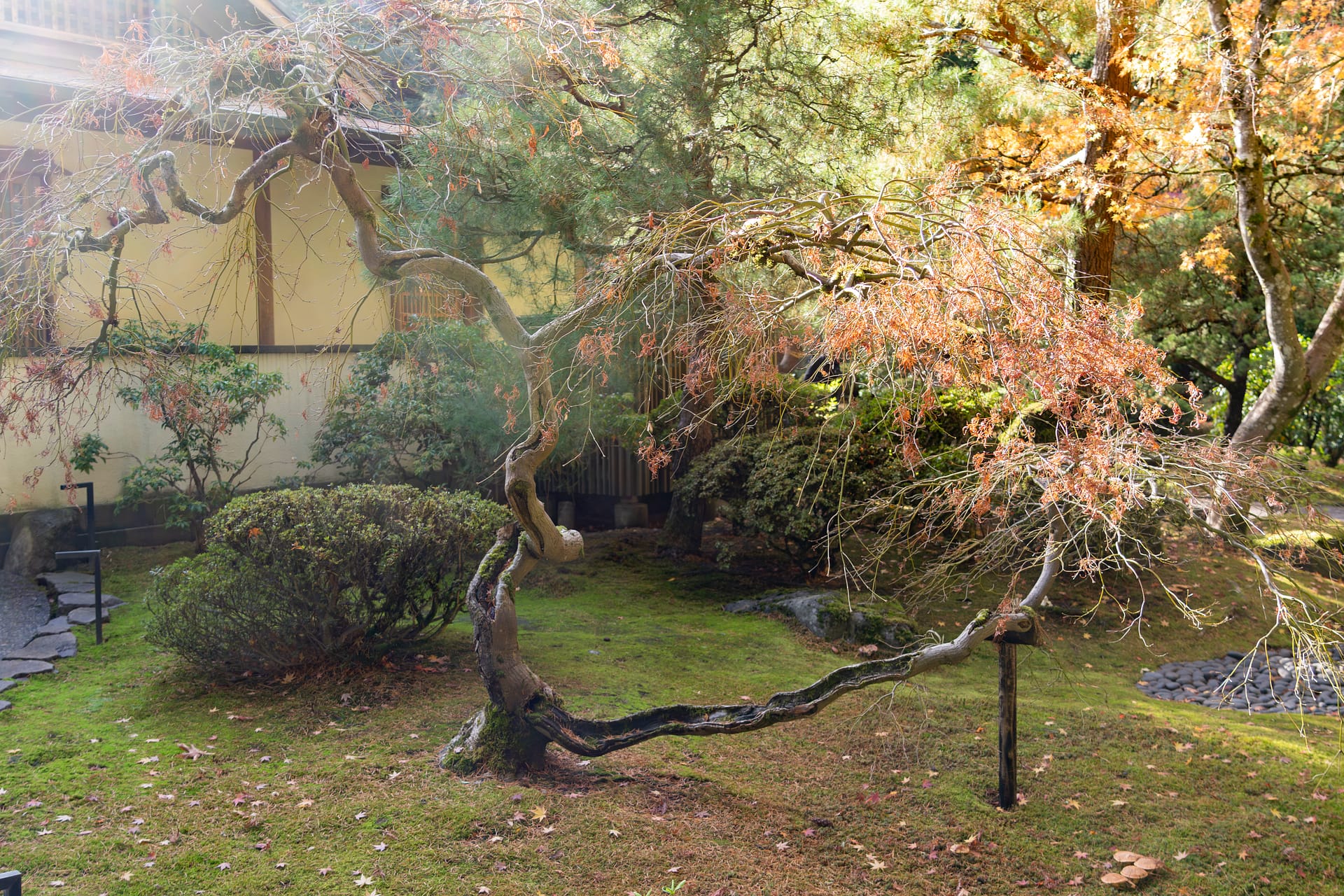
On the northern side of the Pavilion is a lace leaf maple tree on a stretch of moss alongside a narrow path lined with a boxwood hedge. Planted between a majestic view of Mt. Hood to the east and the draw of the Cultural Village and its tea and treats and merchandise further north, this humble plant might escape notice at first. But once your eyes lock on it, its strange beauty is inescapable. Near the base is a sprawling limb. Reflecting the touch of time and the elements, this limb has been hollowed out to the point where it resembles a trough for rainwater and moss more than a branch. And yet, near its end, the branch comes to rest on a hozue (support beam) where suddenly, like magic, a flourish of growth begins with leaves to boot.
How is it that this tree keeps reaching out, how does it keep growing? Certainly because of the care of gardeners and volunteers, that’s to be certain. But we shouldn’t discount the fact there is, intrinsic to this tree, its own qualities that keep it reaching out. Why does this tree grow? Because it can and that means something.
These thoughts are coming to mind because of a conversation with Carol Frankel, a retired educator and generous patron of Portland Japanese Garden. Frankel, a member of the Golden Crane Society welcomed me to her charming suburban home for a conversation. After a tour of art she purchased in Japan and a glimpse of her Japanese-style garden that radiated charm even on a blustery and rainy autumn day, she mentioned the tree near the Pavilion with its special trough was a favorite.
Related: Learn more about the Golden Crane Society and how to join here.
It’s a fitting choice. As we talked, Frankel mentioned that she got into Stanford University but that it was a “surprise to everyone including me.” She shared that she got a good job at the University of Puget Sound in Tacoma, but that she had to ask, “How did this happen?” I had to stop her—she got into school, she got the job, she’s enjoyed a good life because of the qualities intrinsic to her. Circumstance can only go so far to explain one’s accomplishments. Sometimes the tree grows because it can. After spending some time with Frankel and chatting with those who know her, she has earned her achievements through wit, intelligence, and a welcoming nature.
Early Days North and South of Portland
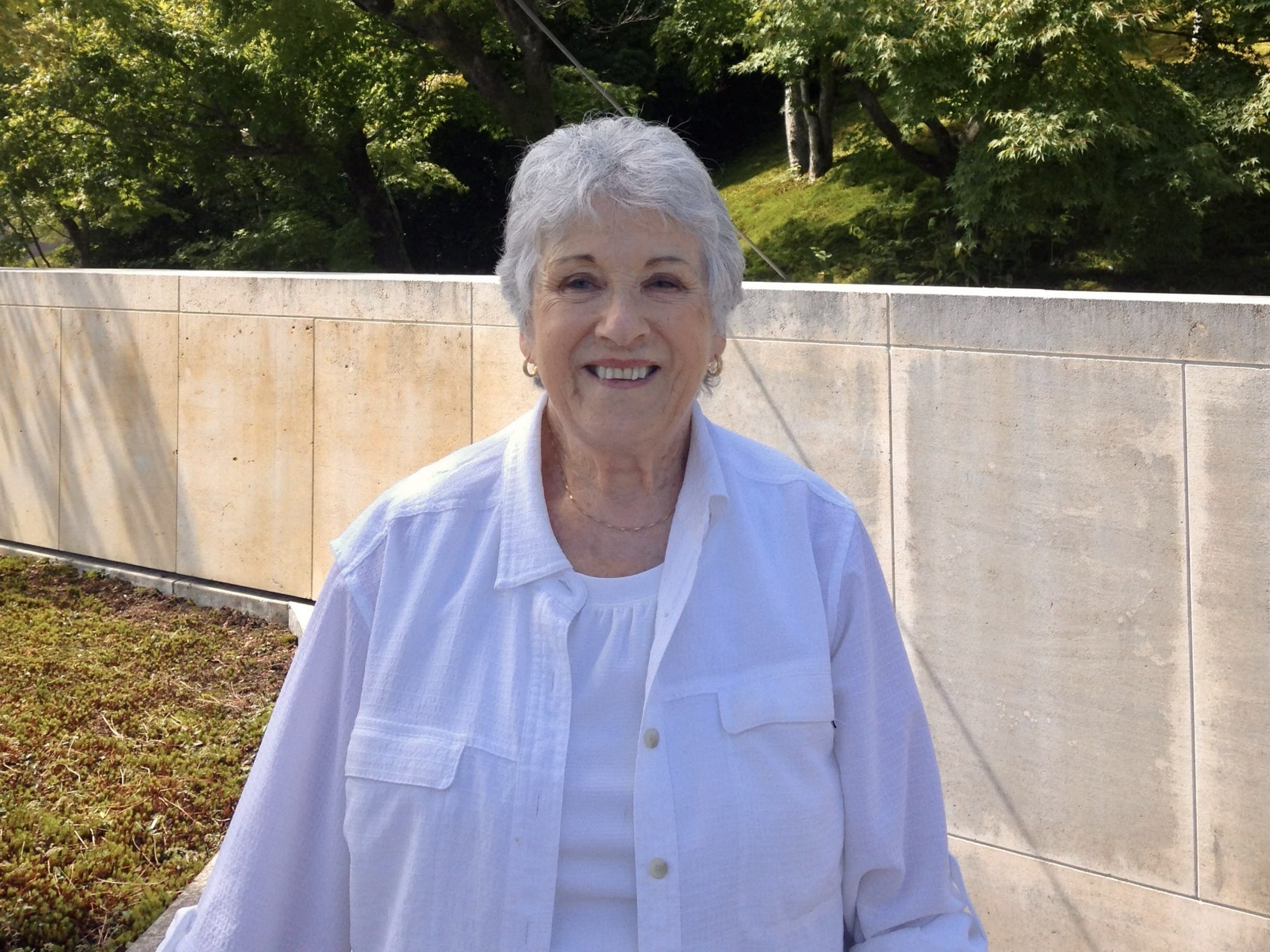
Carol Frankel was raised in Des Moines, Washington on Puget Sound and south of Seattle. In those days it was still very rural, where chickens were kept without the novelty of urban quirkiness. Her interests though would lead her indoors and the burgeoning field of computer science.
“When I was in high school I went to a computer workshop at UCLA,” she recalls. “This was when computers would take up four rooms. There were 20 of us and most of the kids said they were going to go to Stanford and I thought, ‘Whoa that sounds like a good idea, maybe I will too.’ So I decided to apply and I got in.”
“I started majoring in chemistry, which I didn’t like at all,” Frankel says of her Stanford days. “I switched immediately to undeclared and was taking a whole bunch of stuff. I took a lot of art classes. My parents had a fit because they thought I wasn’t going to earn any money. It was a concern of mine too. So, I decided I’d be a teacher and stayed in California for a while. My husband was working on a doctorate at Stanford. We hung out in that area until he finished.”
“He was in weapons,” Frankel shares of her first husband. “We moved to Hanford and he worked in plutonium there and I worked for schools in Pasco. It was really interesting, very rural.”
Eventually, Frankel wanted to return to the western half of Washington and applied for a job as Dean of the School of Education at the University of Puget Sound. “It was kind of amazing, like how did these things happen? You know? I was reading this little job ad and thought, ‘That sounds like me.’ And so I applied and I guess they thought it sounded like me too. So I went in as the Dean of the School of Education and I had that job for 20 years before I retired. After my husband died, I moved to the Portland area because I have a daughter here. I had been coming here a lot before the move.”
An Appreciation for Japan
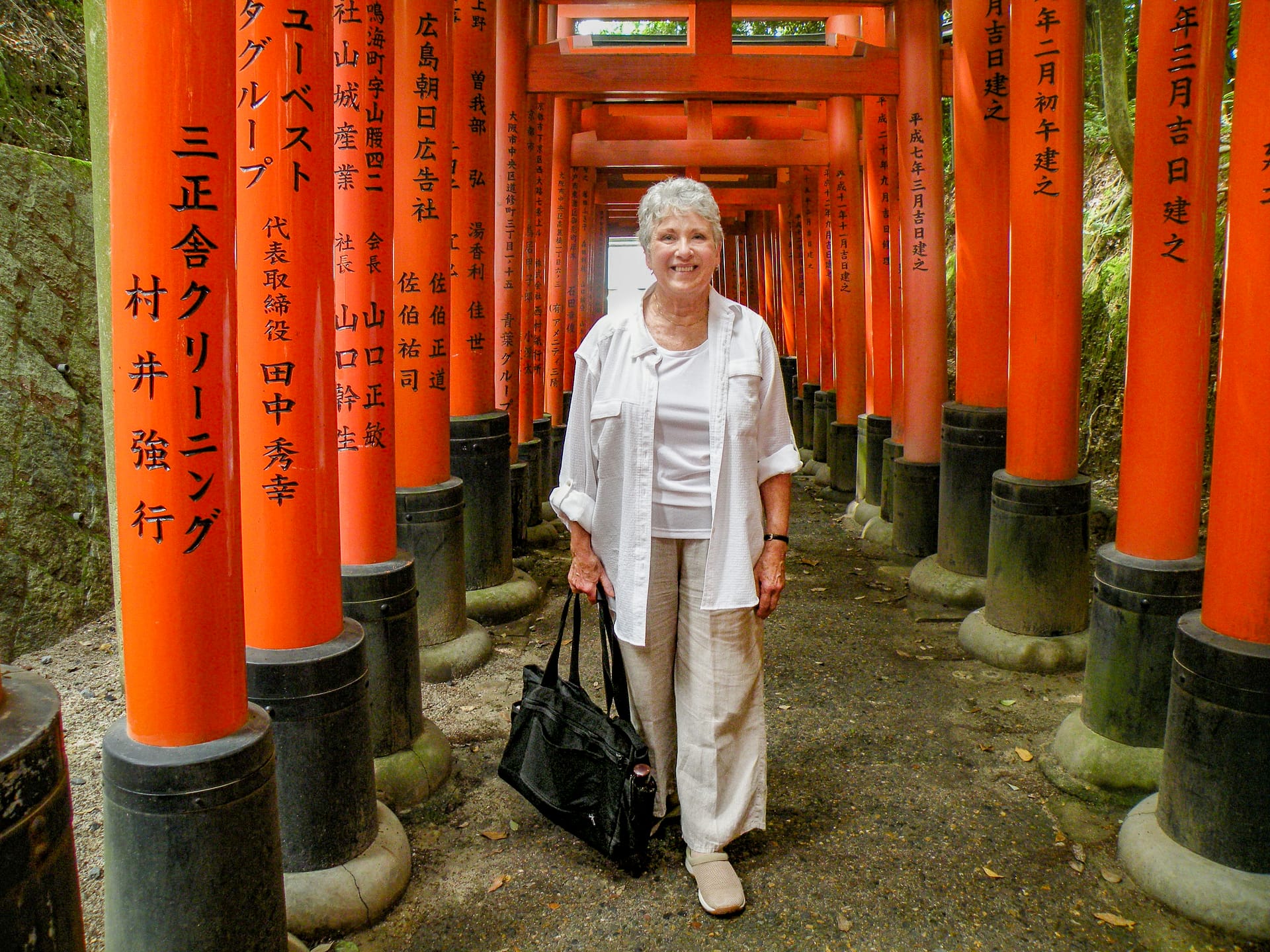
So often we think of the ways parents influence the interests of their children but often it’s a two-way street. That was how Frankel, already passionate about art, became deeply interested in Japan. “My daughter got me into Japanese culture because she had majored in Japanese and moved over there to teach,” Frankel recalls. “I went to visit her and even though I couldn’t speak a word or understand anything, I thought, ‘This is a cool place, I’m going to come back.’”
And go back she did, several times and more to come in the future. A traveling companion of hers has been Mona Ozaki, a volunteer at the Garden and, during exhibitions, a gallery attendant in the Pavilion.
Related: Read About Mona Ozaki, Longtime Volunteer at Portland Japanese Garden
“I met Carol when she volunteered as a docent in the gallery and liked her immediately,” Ozaki recalls. “Over several shifts, I learned about her annual trips to Japan and all the places she likes to visit. She mentioned that she has taken a number of people along with her on these trips, and I immediately began lobbying to be one of those lucky people. I got my chance last year. Carol made all the arrangements and they were fabulous. She is so generous, sharing her knowledge and her friends in Japan. We share interests in many things, ceramics, textiles, Japanese gardens, as well as the Japanese sensibility to appreciate what we were seeing. That made our shared experiences even richer. I am forever grateful that Carol shared ‘her’ Japan with me.”
Frankel would even go as far as to return to the classroom there. “I went to teach at the Naruto University of Education after I had retired.”
A Japanese Garden in Portland
Frankel’s first trips to Portland Japanese Garden would be in 2004. “By then, I had been to Japan a lot, so I had a sense of familiarity and at-homeness,” she recalls when asked to reflect on her first visit.
“I like the Flat Garden,” Frankel continues. “I enjoy its definition, with the depth that extends out and the elements that are more immediately in view. And then it has these spectacular trees that change through the seasons, such as the weeping cherry tree. I also like to go down to the Zig-Zag Bridge—the irises and the koi are always great.”
And, of course, her favorite tree, the one that looks like it’s wearing a long trough, the one next to the Pavilion. “I can never figure that thing out. When I take somebody up there, that’s the first thing we have to go look at.”
Beyond the landscape, Frankel’s affinity for art quickly led her to be appreciative of the art exhibitions started by Diane Durston, Curator Emerita, and carried on today under the oversight of Aki Nakanishi, who in addition to being co-Chief Executive Officer, continues to serve as the Arlene Schnitzer Curator of Culture, Art, and Education.
“I really like the exhibitions,” she shares. “When I introduced myself to Steve Bloom [CEO of the Garden, 2005-24], I mentioned I was a docent at the Seattle Art Museum and that I went to Japan all the time. And he just said, ‘Oh, then you need to volunteer with Diane and that’s what you need to do.’ He gave me my assignment and I said, ‘Ok, I’ll do that.’ It was really funny because it was the first time I had met him.”
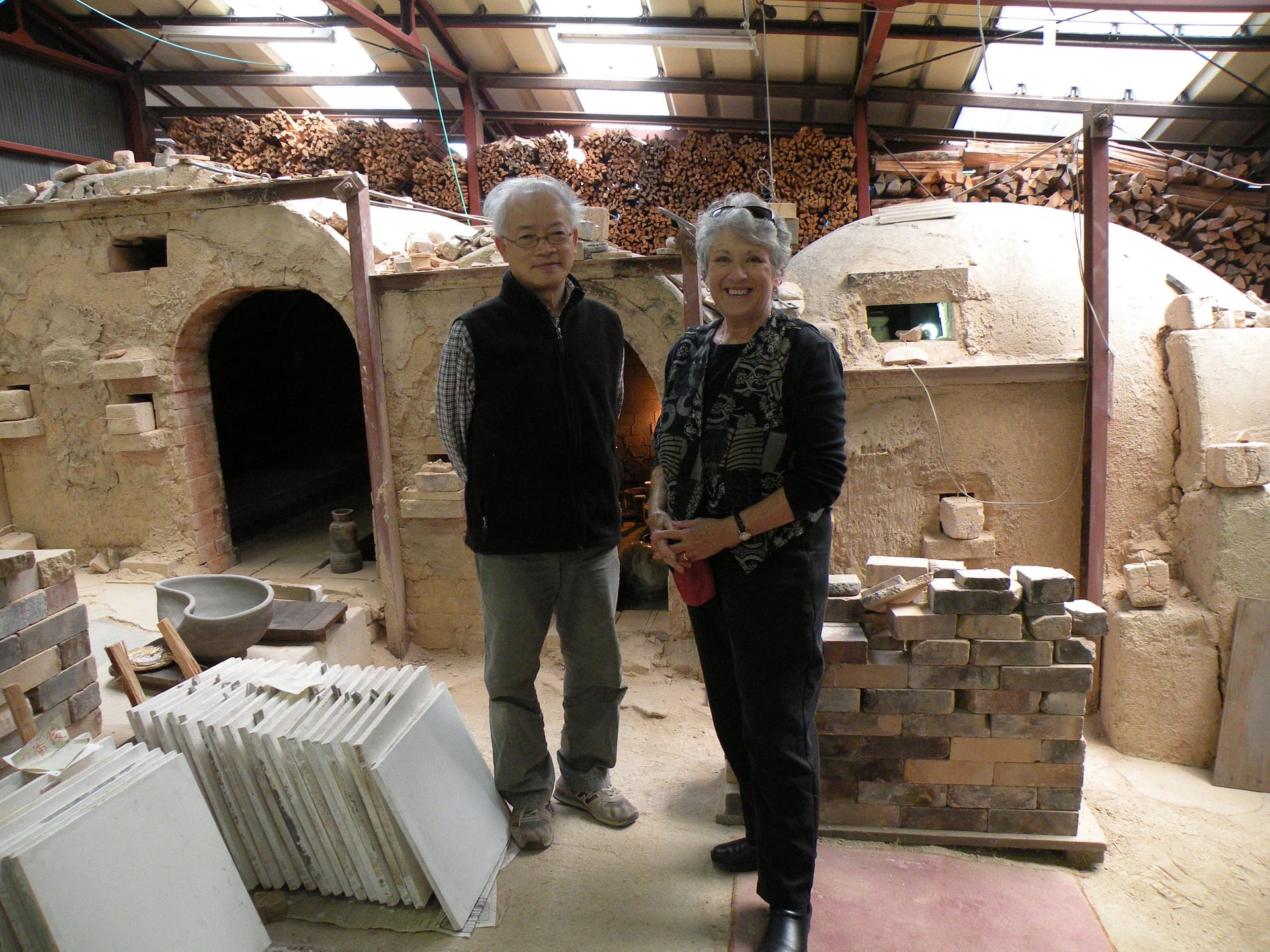
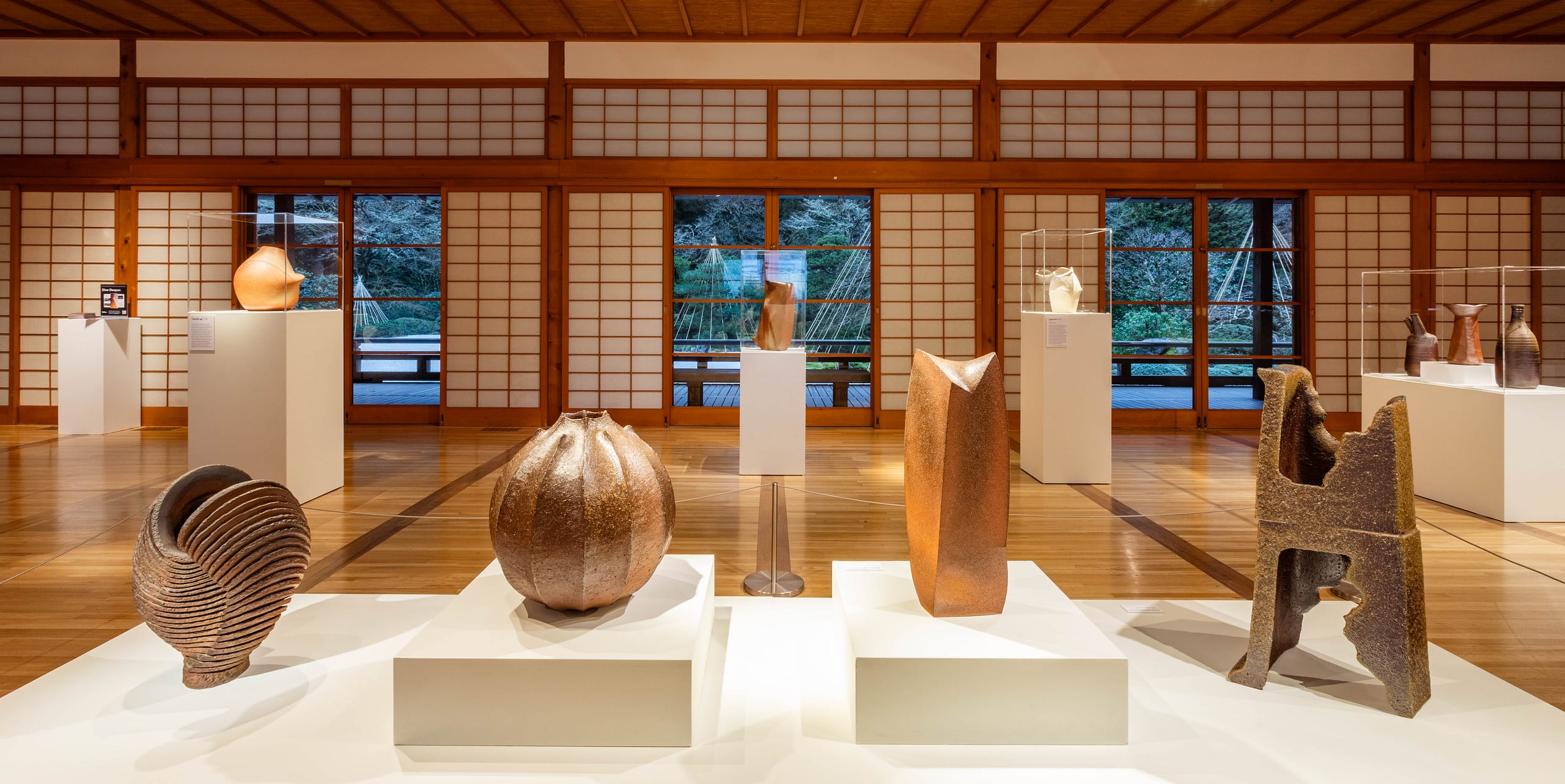
When asked of a favorite show, she pointed to the Garden’s 2025 exhibition, Earthen Elegance: The Ceramic Art of Bizen. For Frankel, it was a pleasant surprise to see that there would be an exhibition covering an output she had long loved. “When I was teaching in Japan, I went to Imbe [a township in Okayama Prefecture known for its production of Bizen ware] specifically to look at Bizen pottery. I saw this great little shop and walked in. They offered me some tea and it was just wonderful. I’ve always gone back there, every single time over 16 years. By the time the Bizen exhibition was approaching here in Portland, I thought I knew a whole bunch. Well, it turns out I know about a quarter of what I thought I knew. I learned a lot.”
On the Golden Crane Society
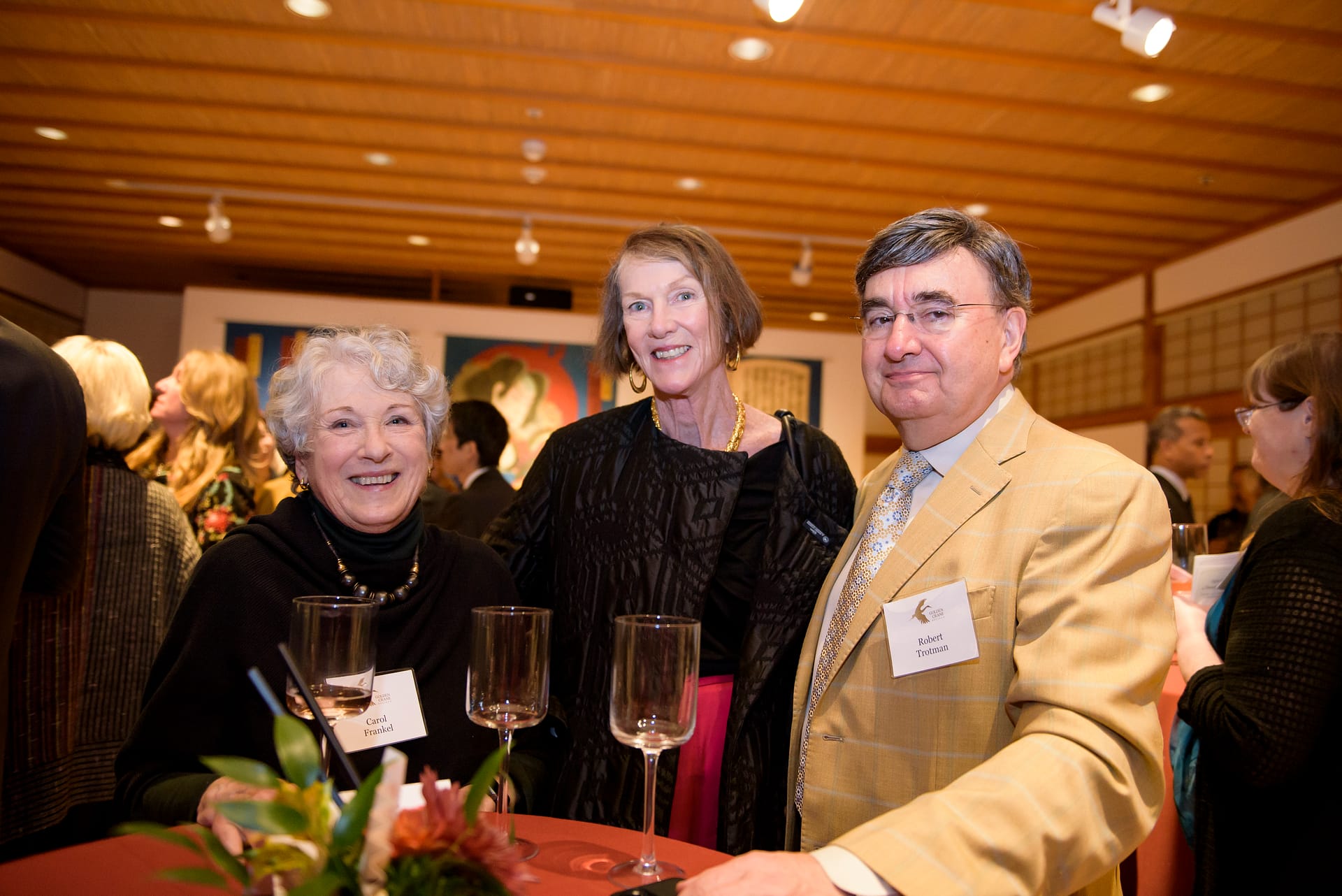
The Golden Crane Society is a cohort of donors who give a total of $1,500 or more annually through membership dues, tribute gifts, general donations, in-kind donations, and more. These gifts ensure Portland Japanese Garden’s immediate and long-term vitality. As a nonprofit, these contributions have an extraordinarily positive impact on the Garden’s holistic operations. Frankel is proud to be a supporter of the Garden and recognizes its incredible capacity for cultivating cross-cultural understanding.
“When the Garden was being built, it was unwanted by many,” she notes. “And now, I mean, I can’t believe it. I was up in the Garden a few weeks ago. It was just an ordinary day, and it was so busy. There were just tons of people everywhere—all different kinds from all different places. It’s just amazing.”
The COVID-19 pandemic was a clarifying moment for Frankel. As she, like so many others, grappled with the anxieties of the time, she further realized how much Portland Japanese Garden meant to her.
“During COVID, the Garden started putting up short videos of walks through the landscape and those meant more to me than just about anything else,” she remembers. “That time was difficult for me. I’d been going to classes every day, seeing my grandkids play sports, and all sorts of things and then suddenly I was doing nothing. Seeing those videos was really important.”
Frankel shares that her philanthropy with the Garden has made her feel more connected to it and its mission while also being appreciative of the socializing it offers through the several in-person gatherings the Society offers throughout the year. “I see the Garden as such a home for me,” she notes.
“Carol’s love of art and her gift for sharing that passion really stands out to me,” remarks Claire Eisenfeld, Director of Development. “I am so grateful for her generous support as both a member of the Golden Crane Society and as a volunteer exhibition docent. Carol is a wonderful example of how people can find community at the Garden, and I hope her story inspires others to engage with their passion at Portland Japanese Garden.”
While Frankel recognizes donating is ultimately a personal decision, she encourages people considering philanthropy to make a modest gift if they are uncertain about a larger commitment. “One of my friends has been thinking about making some major contributions,” Frankel shares. “I told her that she should give some money and then think about how it makes her feel. Does she feel more invested? Is it something she’d like to continue doing?”
In the meantime, Frankel is grateful to be part of an organization that is a place that welcomes all, where beauty and kindness can be revealed in many different shapes, be it plant, person, or painting.
“I saw these young adults looking at a painting,” Frankel concludes. “They had ripped jeans and tattoos and piercings. I walked by and overheard one of them say, ‘Look at that weird green color.’ And I said, ‘It’s because it’s painted on velum, which is an animal skin so it stays shiny because it doesn’t soak in like it would with paper. That’s a perceptive observation! Who noticed that?’ And then all three of them said, ‘I did!’ As I was walking off, I could hear them arguing about who noticed it first. What did I have in common with these kids? At first glance, nothing, really, but we had a conversation. I love how the Garden says, ‘Come in and be who you are in our context and let’s see what happens.’”

For more information on the Golden Crane Recognition Society, contact Claire Eisenfeld, Director of Development, at ceisenfeld@ japanesegarden.org or (503) 542-0281.
Will Lerner serves as Marketing and Communications Manager for Portland Japanese Garden and Japan Institute.