Cultural Performance: Koto and Piano

Demonstrations & Performances

When
October 31, 2026 | 1:15 PM - 2:15 PM
Where
Cathy Rudd Cultural Corner

Event Audience
Public and All Members
This event is included with daily admission or a membership to the Garden.
Purchase Admission for This Day Become a Member

Event Information

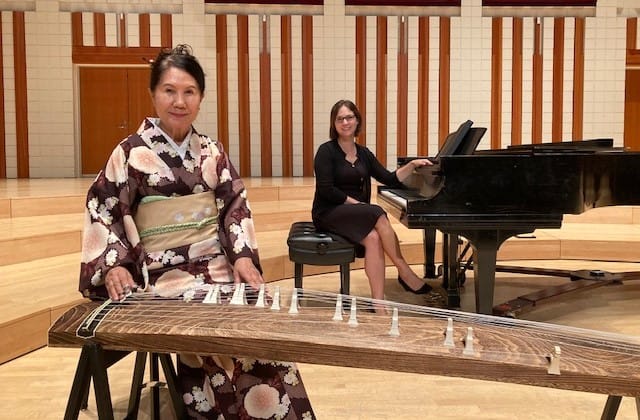
Enjoy a free koto and piano performance by Masumi Timson and Crystal Zimmerman at 1:15pm at the Cathy Rudd Cultural Corner in the Jordan Schnitzer Japanese Arts Learning Center. They will be performing a special Halloween set to celebrate the holiday.


Artist Bios

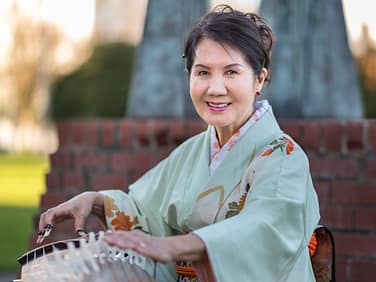
Masumi Timson

Masumi Timson is a performer and instructor of the Koto and Shamisen – traditional musical instruments of Japan. She holds a Master’s Degree in Music with a specialization in the Koto and Shamisen from Seiha Conservatory of Japanese Traditional Music, one of the most prestigious Koto schools in Japan. Masumi plays both classical and contemporary Koto music, and also sings Japanese classical songs with Koto and Shamisen accompaniment. She also enjoys collaborating with various western musical instruments to explore a wide range of musical genres, from jazz and tango, to western classical compositions by Bach and Mozart. Masumi has participated in many recordings of Pink Martini, and has performed with the band at various venues around the world, including Carnegie Hall, the Hollywood Bowl, and the Grand Rex Theatre in Paris. Masumi is also a Japanese language professor and currently teaches Japanese language and culture at Chemeketa Community College in Salem, Oregon.
Crystal Zimmerman

Crystal Zimmerman teaches piano classes and individual piano lessons, as well as courses in music technology at Willamette University. Throughout her studies she has been the recipient of several awards and scholarships, receiving the University of Oregon Outstanding Scholar in Musicology and the University Outstanding Scholar in Music in 2010. She maintains an active performance schedule, frequently performing in collaborative, chamber music, and solo recitals. She also regularly provides preconcert lectures for the Oregon Symphony and lectures for Oregon Music Teachers Association.


About the Koto Harp

The standard Koto harp is a thirteen-string plucked zither. It was introduced to Japan from China through the Korean Peninsula in the 7th century. The instrument has been part of the Gagaku court ensemble for over one thousand years, gradually becoming popular among the merchant classes of the Edo period (1600-1868). An important member of the traditional Sankyoku ensemble, along with the three-string Shamisen and Shakuhachi (bamboo flute), the Koto developed further in a solo capacity, eventually gaining its place as one of Japan’s most prominent musical instruments. Today a varied repertoire along with a wide range of playing techniques provides a wonderful palette of sound textures, making the Koto appealing to audiences the world over.


Thank You to Our Sponsors

Portland Japanese Garden would like to thank James F. and Marion L. The Miller Foundation and Toshiba International Foundation for their support of arts and culture programming.