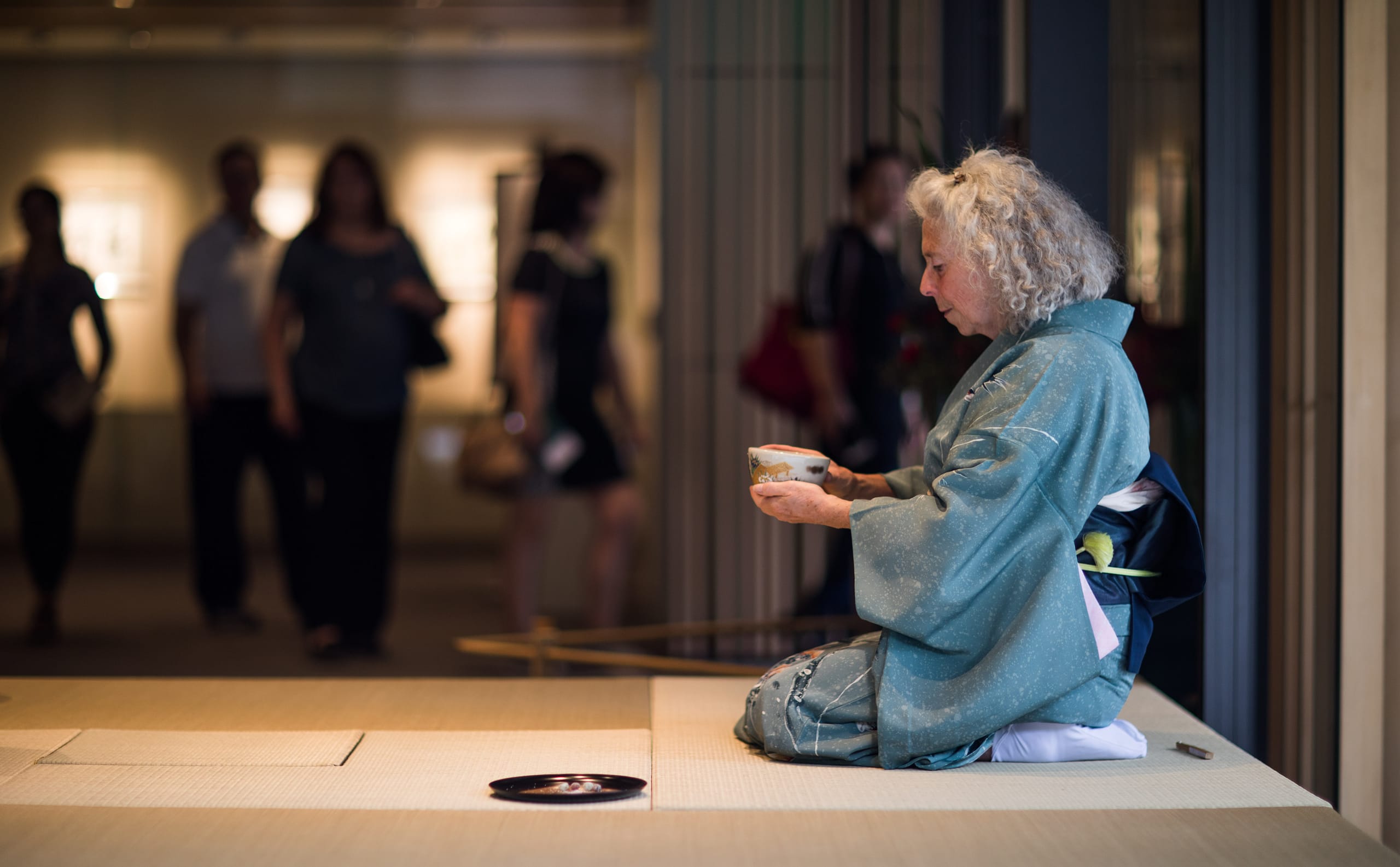
Portland Japanese Garden’s Tea Ceremony Workshop offers a unique opportunity to immerse yourself in the traditional practice of Chanoyu, or the Way of Tea. Experience the art of tranquility, mindfulness, and omotenashi, whole-hearted hospitality.
It is not an exaggeration to say that through tea, one can understand much of Japanese culture. Tea’s influence can be found in many of the nation’s most beloved artforms, including arranging flowers, calligraphy, incense, ceramics and lacquerware. Japanese gardens are also deeply intertwined with tea ceremony. The four principles of tea, wa (harmony), kei (respect), sei (purity), and jaku (tranquility), are explored by the gardeners of Portland Japanese Garden in their work every day.
Guided by skilled instructor Jan Waldmann, Sosui, the focus of this workshop is to learn to be a guest in the tea ceremony, an important aspect to this historic tradition. Participants will learn the proper etiquette for attending a tea ceremony, including how to receive and take sweets and matcha, and most importantly, the reasons behind each of the steps. Additionally, you will gain insight into what it entails to be a host— understanding the occasion and seasonality, attention to aesthetics, careful preparation, and the thoughtful gestures made toward the guests.
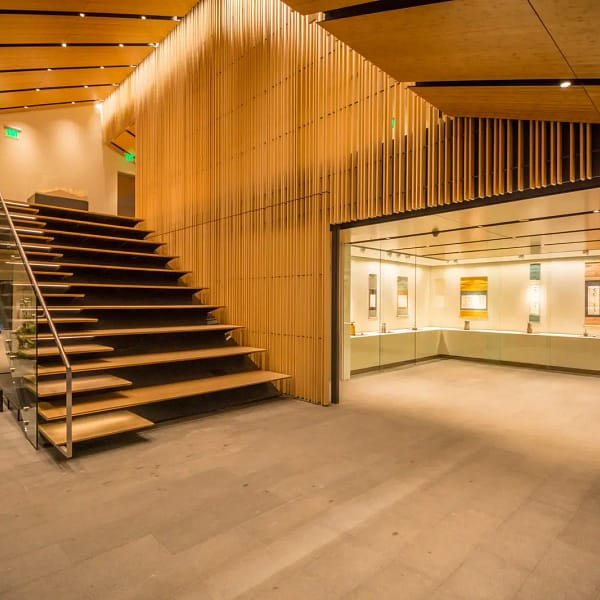
Participants will first attend a presentation of tea ceremony in our Cathy Rudd Cultural Corner alongside visitors to the Garden before they are taken into their exclusive workshop in the Yanai Classroom.
No previous experience is needed. Students will sit in a chair at a table, not kneeling on a tatami mat.
About Jan Waldmann, Sosui
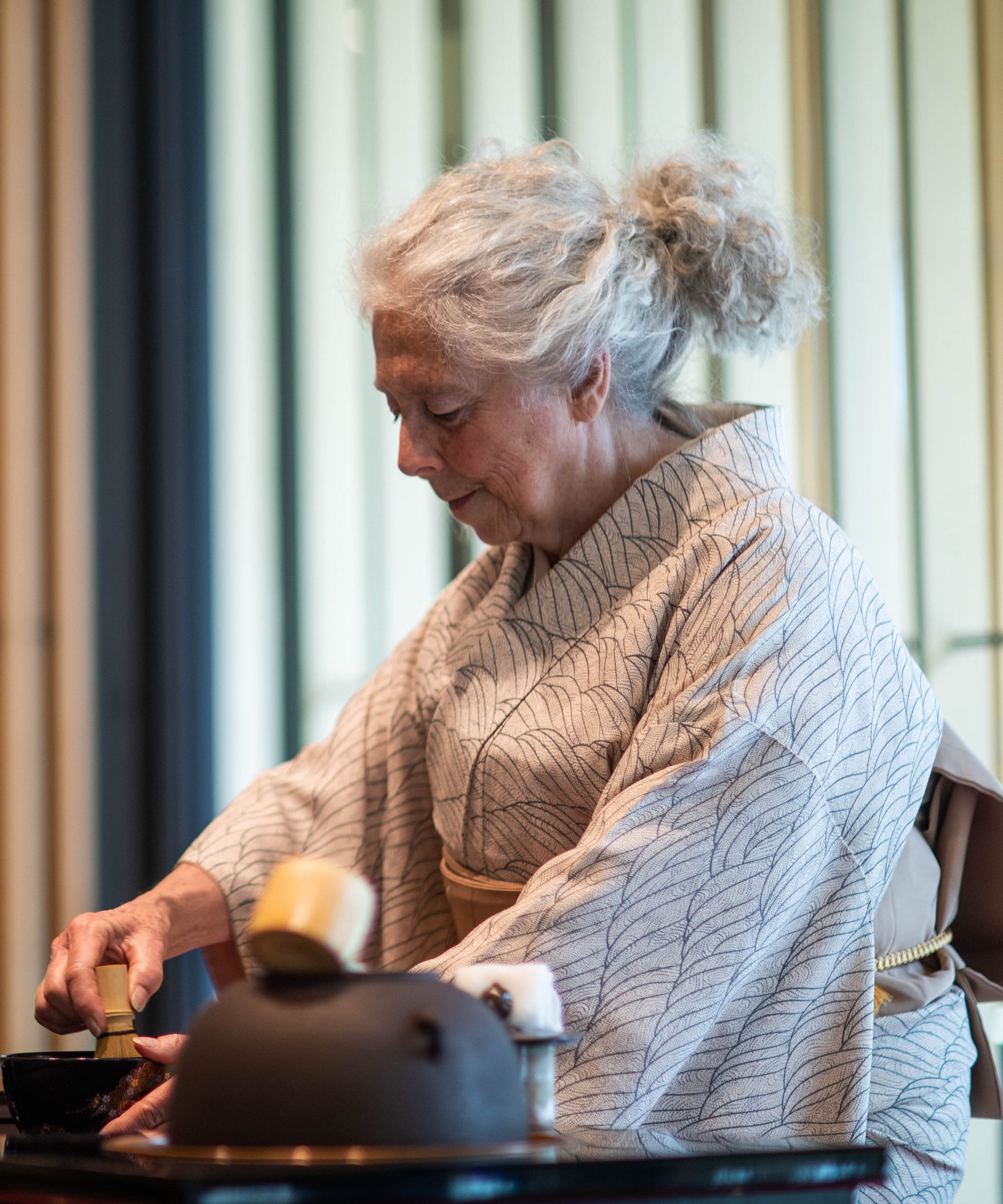
Jan Waldmann began the study of Chado, the Way of Tea in 1971, while living in Japan. Over the years, she studied in both Japan and America, receiving her teaching degree from Urasenke Foundation in Kyoto, Japan, in 1989. She specializes in blending the traditional philosophy and movements of Chado with contemporary views of the Ceremony itself. Jan is the President of the Urasenke Wakai Tankokai Association and is currently teaching the Way of Tea privately as well as at Lewis & Clark College.
About Urasenke
Urasenke Konnichian of Kyoto is one of the major establishments within Japan that has preserved the tradition of Chado or the Way of Tea. From the first Urasenke generation, Sen no Rikyu (1522-91) to the current headmaster Zabosai Genmoku Soshitsu XVI (b.1956 -), the Sen family lineage has devoted great effort to fostering the philosophy of Tea through the simple words of Wa – Harmony, Kei -Repect, Sei – Purity & Jaku – Tranquility. Over the years Urasenke has established connections in over 21 cities worldwide.
Feedback from Past Students
Jan was a wonderful teacher. She really unfurled the tea leaves to reveal more of the complexity of flavors and aromas within. So much beautiful complexity and thoughtfulness lies just below the surface of the experience and now I have a sense of how much there is to learn and appreciate.
It was just right for an introduction focused on the role of a guest.
I feel like I can passably take part in a tea ceremony without causing unintentional offense.
Portland Japanese Garden would like to thank James F. and Marion L. The Miller Foundation for their support of arts and culture programming.