Inside a studio in Kyoto, an artisan carefully uses tweezers to arrange pieces of glowing silver leaf onto washi, traditional handmade plant-fiber paper. Using heat from an iron, the artisan applies sulfur to trigger a chemical reaction—a traditional process known as yaku (sulfurization), widely used in Japanese painting to create subtle, iridescent shifts in the silver’s tone. The paper is then cut into razor-thin strips and woven entirely by hand into a gleaming cloth of silk. This painstaking process, known as hikibaku (flat foil weaving), is a traditional handcraft unique to the Tango textile region in Kyoto—one of the many artisan communities NUNO collaborates with. NUNO is known for pioneering new textile innovations, but their works begins with a deep reverence for these pure, traditional handcrafts.
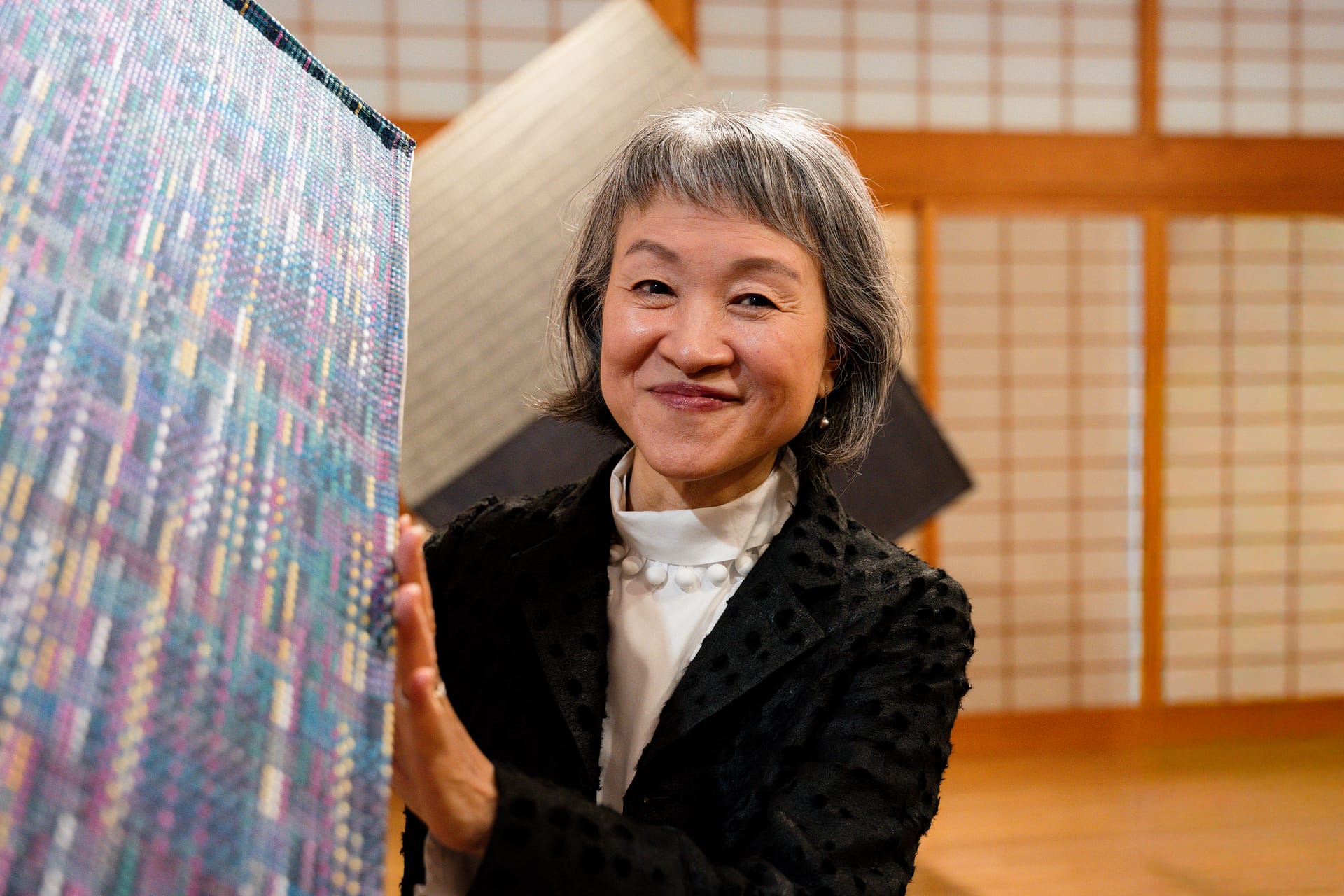
This is just a glimpse of one of the processes used to create the over 50 types of textiles on display in Weaving Time: NUNO – Textiles of Tradition and Transformation, on view in the Pavilion and Calvin and Mayho Tanabe Galleries through February 14, 2027. Named after nuno, 布 , the Japanese word for “cloth”, NUNO is the world-renowned Tokyo design studio that has pioneered new innovations in textile production since their founding in 1984. Led by acclaimed textile designer Reiko Sudō, NUNO has created several thousand original textiles through partnering with artisans, small mills, and factories in approximately 120 different communities throughout Japan. Their work uniquely prioritizes both preserving the traditions of these artisans while introducing new technologies. NUNO’s design approach celebrates creativity and technical skill, while also blending handmade and machine processes. In addition to preserving cultural heritage through their designs, NUNO values sustainability: a spirit of mottainai —repurposing materials and minimizing waste—is infused throughout their work.
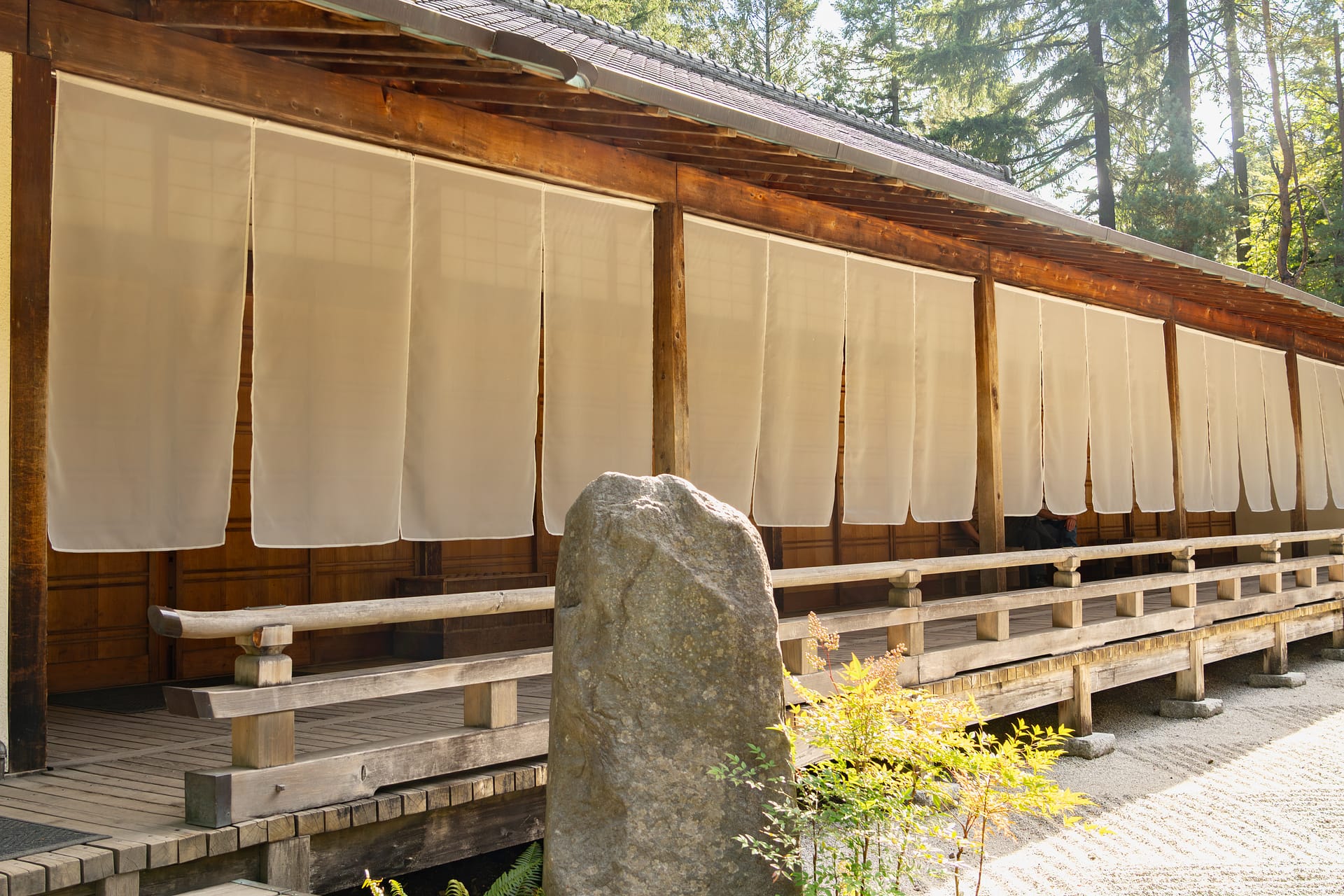
Portland Japanese Garden is honored host NUNO’s work, which has has been exhibited at world class museums like the Museum of Modern Art and Los Angeles County Museum of Art. For this exhibition, NUNO has created unique installations specifically for the Garden’s own space, beginning outside of the Pavilion Gallery itself. A line of white glass satin organza flutters in the breeze from under the wooden eaves of the building.
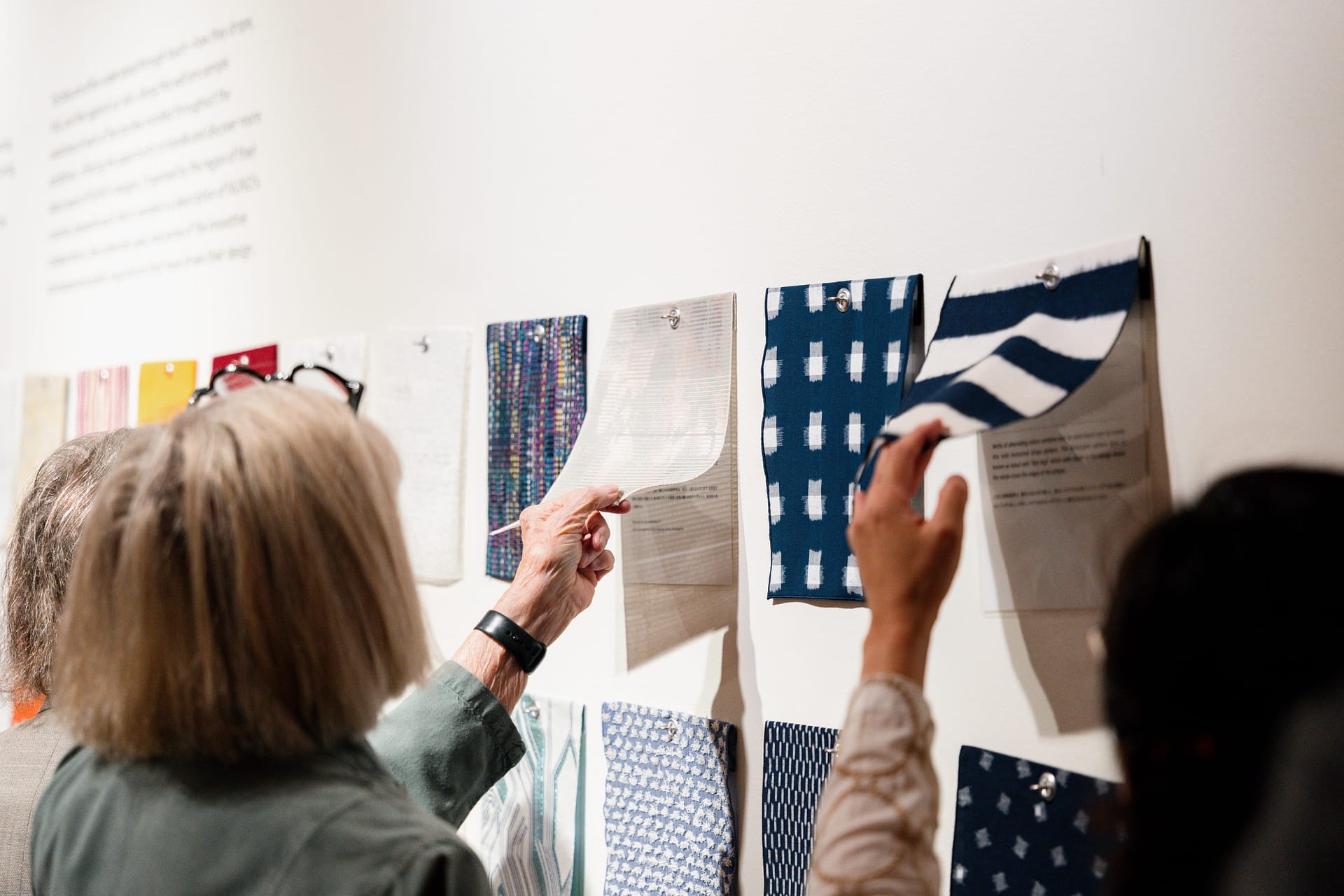
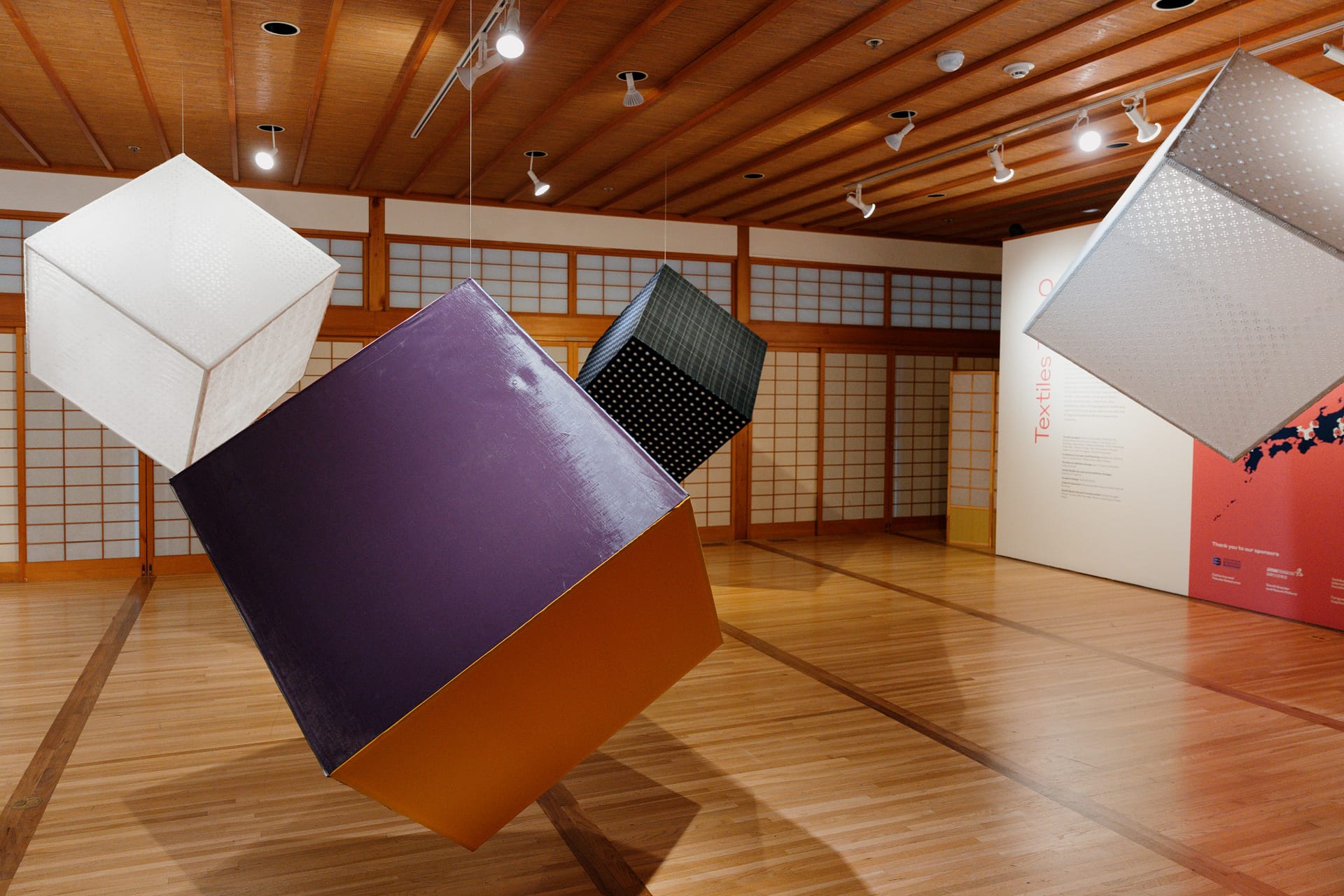
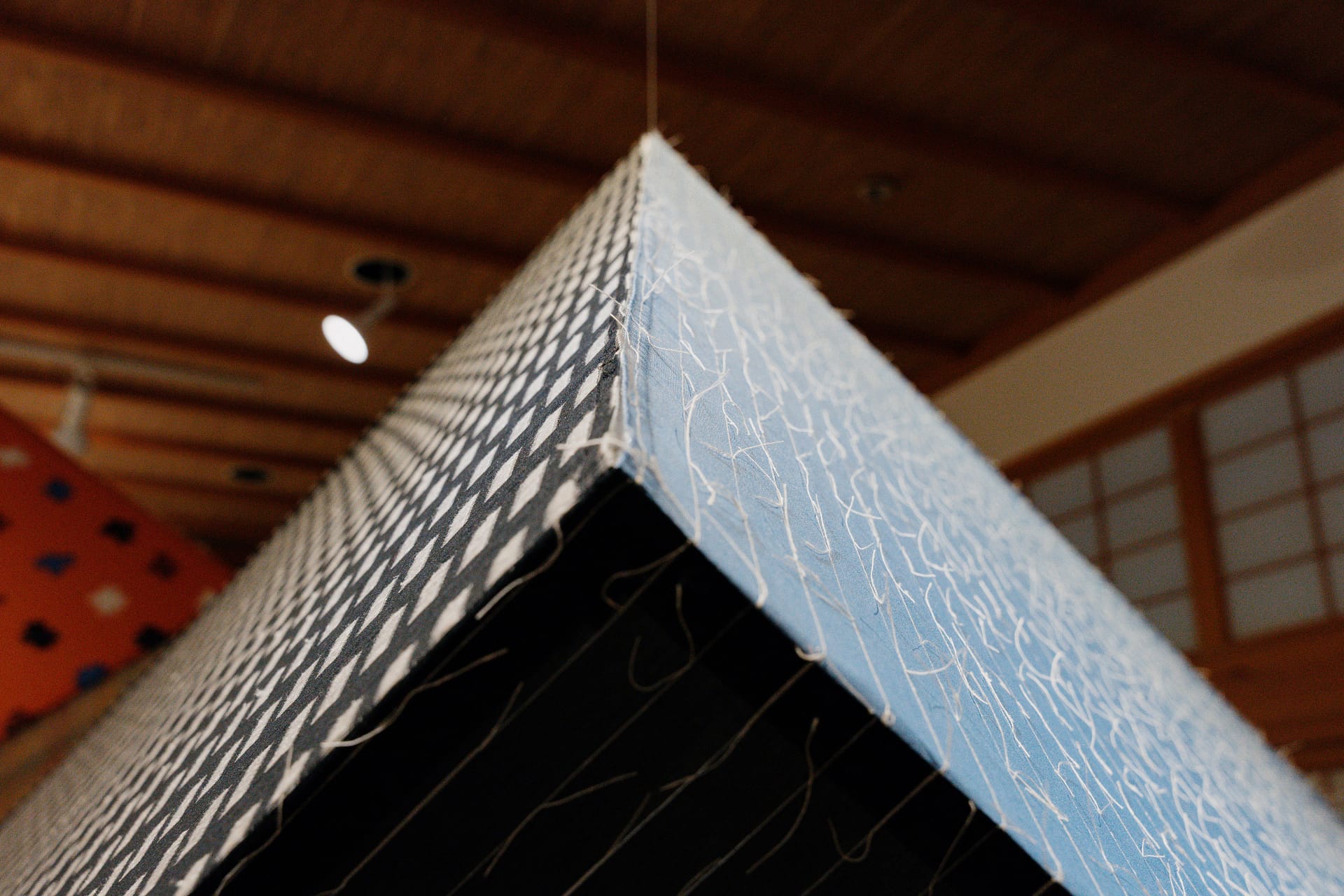
This noren, a traditional Japanese fabric divider, transforms the surface of the architecture and filters the view of the Flat Garden through the semitransparent texture. Inside the gallery, eight fabric cubes are suspended and rotate gently from the ceiling, each featuring fabrics that represent a different textile production region in Japan. Visitors may walk among the cubes, experiencing their alternating surfaces, while also taking the opportunity to touch the unique texture of each textile on a special interactive display.
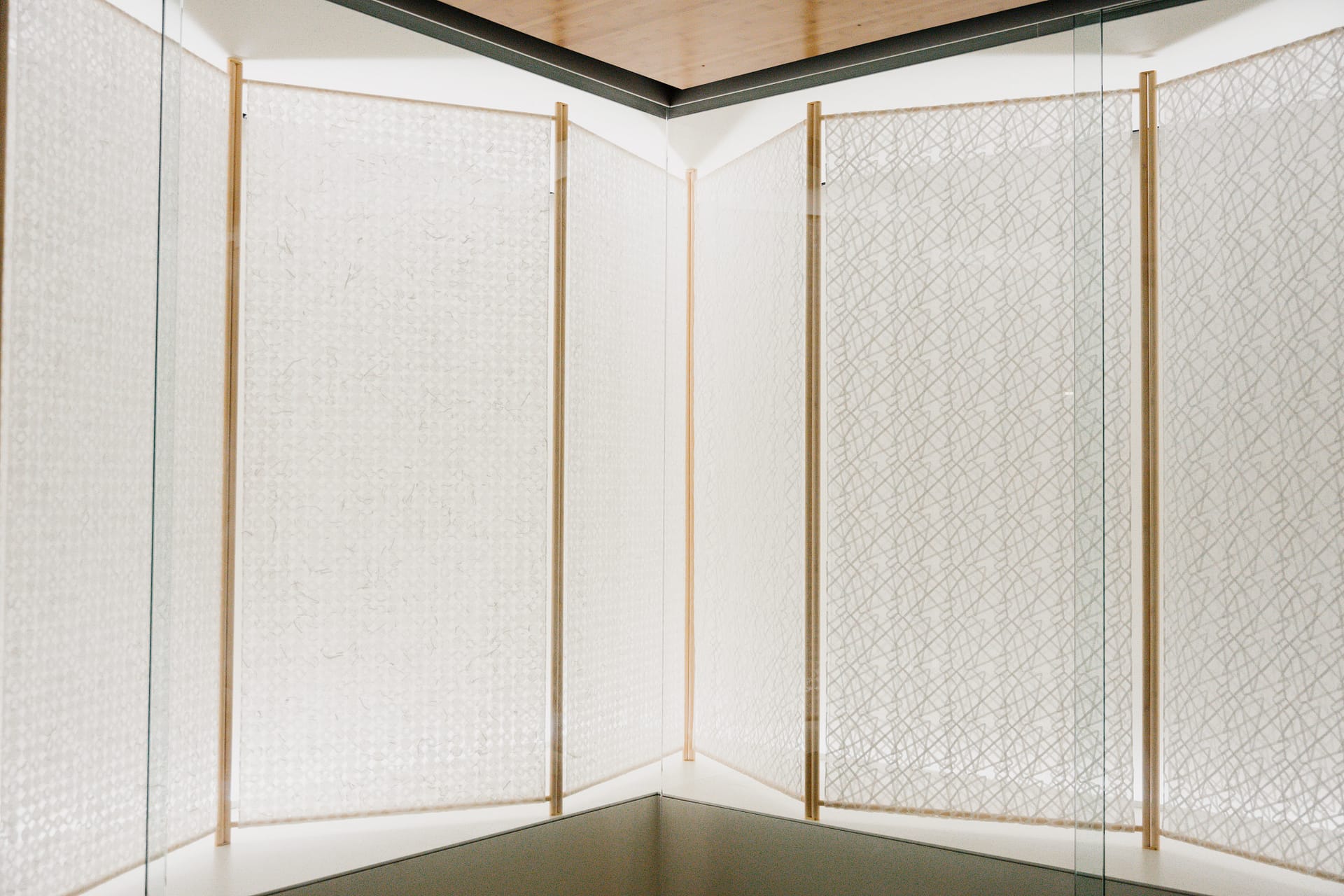
The exhibition continues in the Calvin and Mayho Tanabe Gallery, where a row of byōbu, traditional Japanese folding screens, are illuminated with a soft glow. Created in collaboration between NUNO and Chūzō Tozawa, a master bamboo woodworker, these woven and printed textile screens are inspired by a seasonal motif familiar to many both in Japan as well as the Pacific Northwest: the pattern of rainfall and condensation on windows.
As industrial processes worldwide continue to transform traditional systems of making, NUNO’s work is a powerful invitation to consider an approach to innovation that still prioritizes community, heritage, and the handmade. Through an immersive experience, technical mastery, and creative design, NUNO’s artistry offers an unforgettable experience in the medium of textiles.
Weaving Time: NUNO – Textiles of Tradition and Transformation is open through February 14, 2027.