
In summer of 2026, Portland Japanese Garden welcomed two college interns, Yuto Stratton (University of Oregon ’27) and Hayden Eberwein (Chapman University ’27), to the organization’s Marketing and Communications Department. For their capstone project, they designed and conducted an intercept survey exploring how the Garden shifts the way visitors feel.
By Yuto Stratton, University of Oregon ’27
Over the years, we have had guests share a common experience after visiting the Garden. Whether it was feeling calmer, more grounded, or more restored, guests left the Garden in a state different to when they entered: they experienced an emotional shift. This summer, we set out to capture that shift in data for the first time.
We learned the data was only part of the story. What surprised us the most was how personal some of the survey responses were. They revealed that every visitor arrives at the Garden at a different moment in their life, and each experiences something unique to their circumstances. The Garden meets them where they are.
Our Methodology

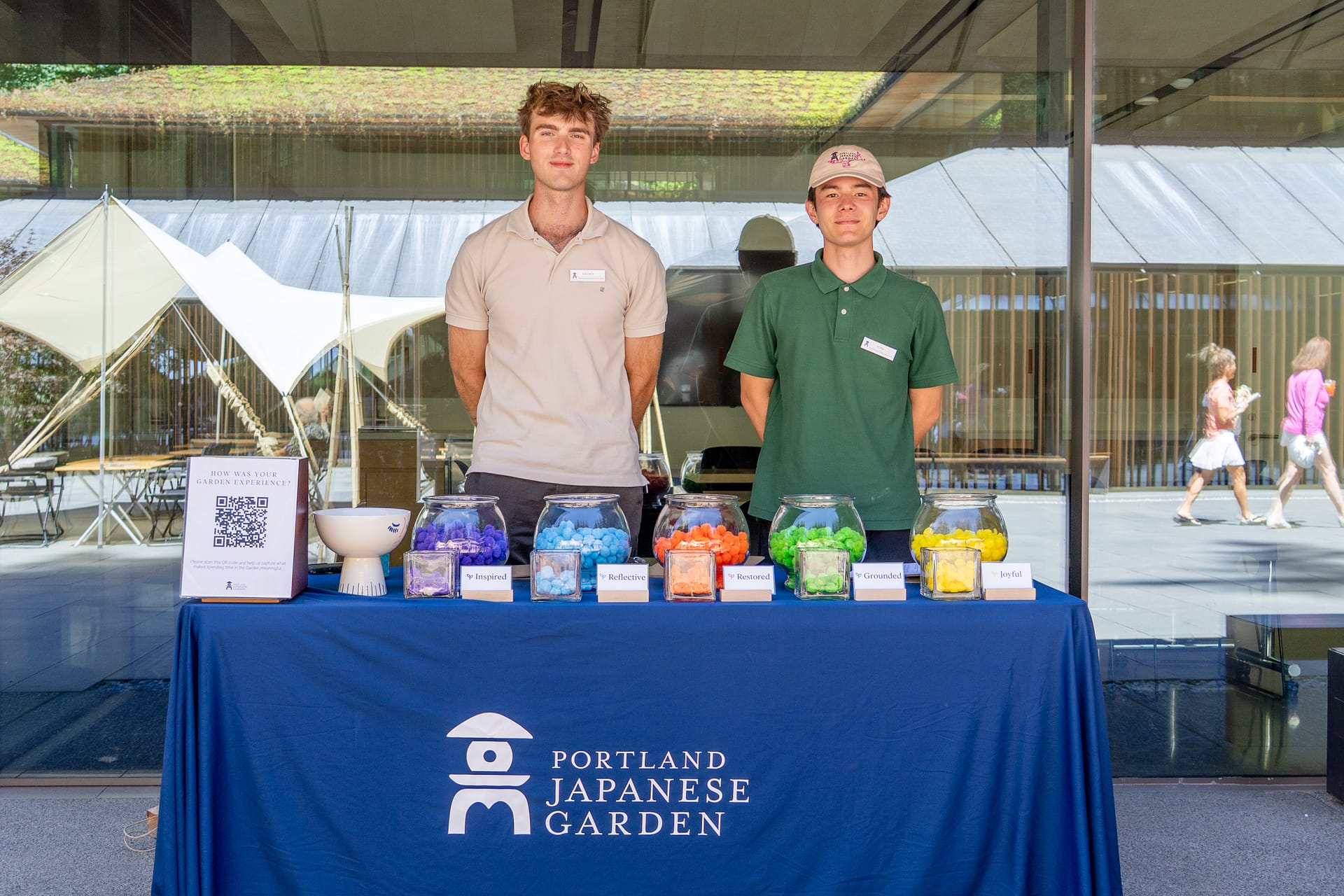
From July 27 through 31, we set up in front of the Lemelson Studio in the Cultural Village and conducted a short survey that guests could take to help us articulate how the Garden affects visitors. We sampled during peak hours from 10:00 am – 2:00 pm, approaching visitors as they exited the Nezu Gate, and invited them to participate by either scanning a QR code or completing the survey on paper. Our survey used the Restoration Outcome Scale, a validated and commonly used method that identifies the restorative effects of natural environments. Visitors were given five simple statements and rated them based on how strongly they correspond to their experience in the Garden. Our target responses were 616 to ensure a 99% confidence interval (±5% margin of error), which was based on the total estimated visitation during this period. We successfully reached this goal, collecting over 650 responses.
Above All, Visitors Leave Calmer
The results were clear — visitors experienced a consistent positive change after their visit. Across all five statements, the average score was 4.27 – 4.61 out of 5, indicating a strong positive outcome from visiting the Garden. The highest scoring statement was “I feel calmer after my visit,” suggesting that, above all else, Portland Japanese Garden is a place that evokes peace, calmness, and restoration. Visitors also reported feeling mentally clearer and more at ease.
Related: Learn More About the Health Benefits of Gardens
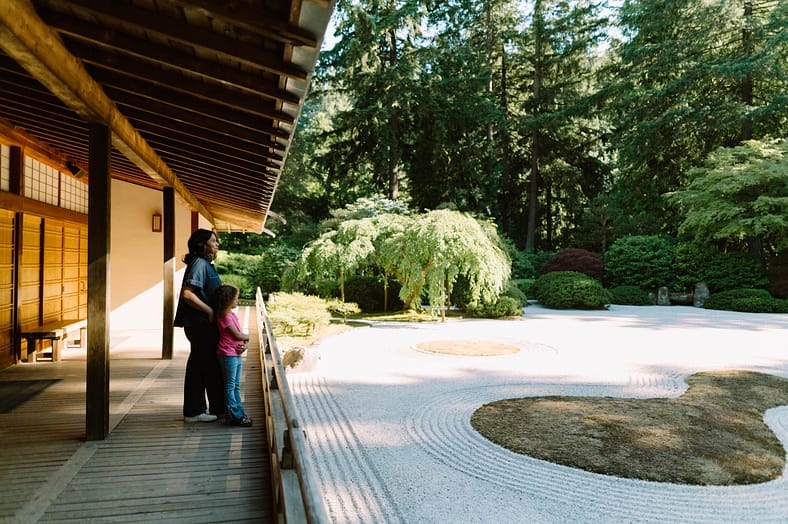
But most scores had a story behind them. At the end of the survey, there was a space for visitors to describe their experiences in their own words. Nearly half of those who completed the survey decided to do so. One person shared how they experienced an emotionally disruptive text in the Garden. However, being in the Garden allowed them to handle it calmly, stating, “Being here helped me feel that emotion and process it. Now I feel peaceful.” Another person explained the Garden was a great place to slow down, saying, “It was nice to escape the city and feel fully immersed in the Garden.”
“It gives me a space to appreciate things in my life that bring quiet joys and reflections on how I can slow down and bring the feelings from the Garden into my daily life.”
Drawing Visitors in Through Play
We were also curious to understand more about visitors’ emotional state — so we created a simple visual activity using five colored pom-poms, each representing a different feeling: grounded, inspired, joyful, restored, and reflective. Visitors were invited to choose the pom-poms that represented how they felt and placed them in the corresponding bowl. Designed to draw people in, the activity became a natural conversation starter, encouraging visitors to share more about their experience. Both adults and kids loved it, with some taking photos of the activity to use in their own research.
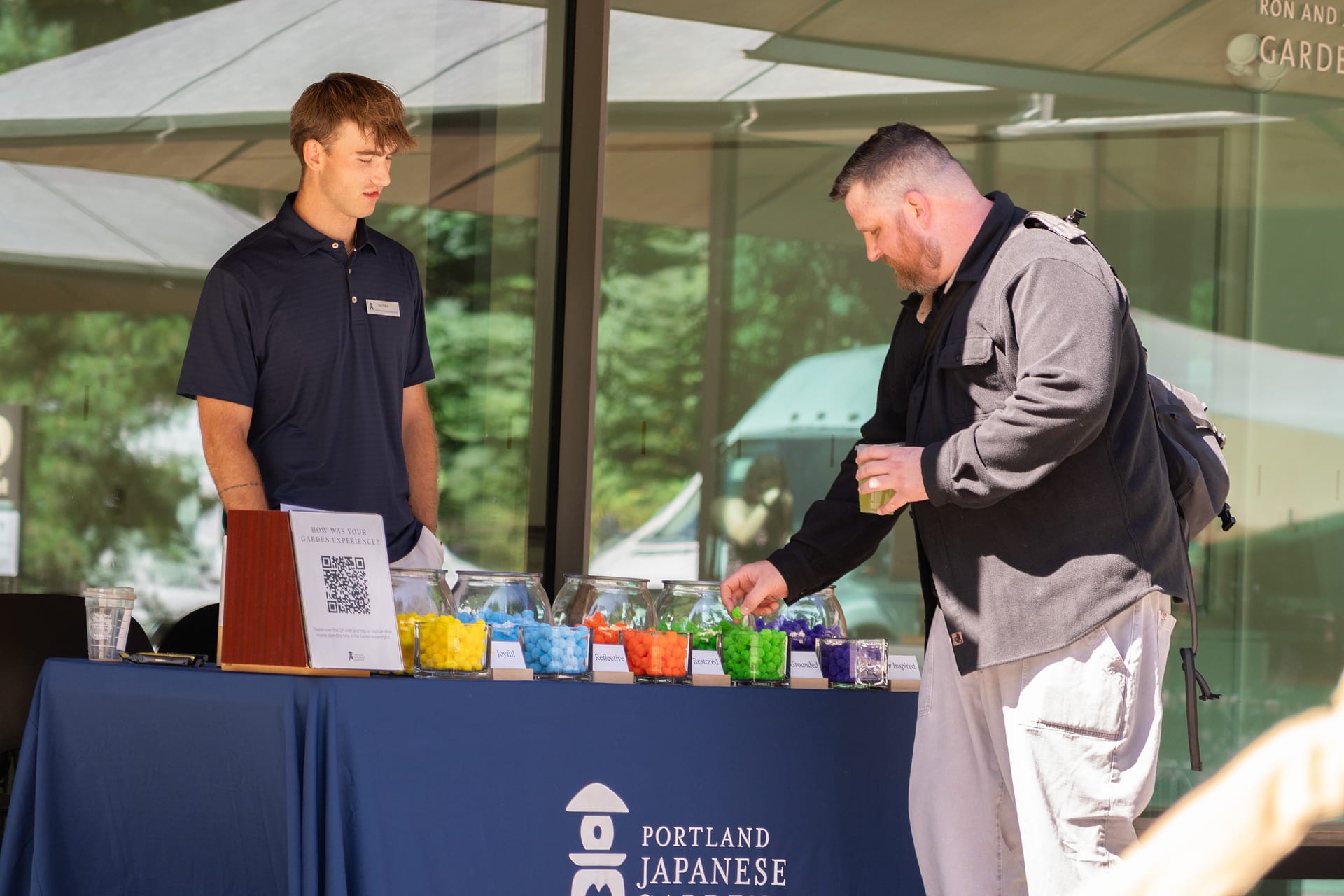
Many guests used words like “calm” or “relaxed” when sharing their experience, but some chose words that we didn’t expect. For example, we had a few guests explain how they felt a physical shift, using words like “lighter” or “cooler [in temperature]” after their visit. Although these are personal perceptions, it shows how deeply the Garden can be felt. Guests’ body language also changed after their visit. Because we were stationed outside of the Lemelson Studio, near the shuttle stop, many visitors stopped by before entering the Garden. These guests often seemed excited and slightly hurried, eager to get into the Garden. But those leaving were visibly different — calmer, unhurried, and willing to stop and talk. Those we saw on the way in who returned to take the survey had lighter facial expressions, with warm smiles while talking about their experience. One visitor explained, “The Garden is a lifesaver in the chaotic, turbulent sea that is currently my life. It gives me a rowboat and oars to escape a sinking raft and the waiting sharks. It is a healing salve.”
Related: How to Go For a Walk in Portland Japanese Garden
“I feel very calm. If I was water in the ocean right now, there would be no currents. I somehow controlled all my anger and my worries sailed away.”
The Garden’s Power
As an intern myself, the Garden met me in a way I did not expect. Being originally from Japan, I have been going back every summer since starting college to spend time with my family. This year, my internship has kept me in Portland, and though I am grateful for this wonderful opportunity, I was worried I would become homesick. What I didn’t anticipate was how welcoming and familiar Portland Japanese Garden would feel. When I first stepped into the Garden, I instantly felt like I was back in my grandparent’s backyard. Small details, like the way the moss covers the rocks, transport me back to old memories from my childhood in Japan. Having a place that felt this familiar in Portland was the last thing I expected, and now the Garden has become a safe space for me to visit when I miss home.
This is what the Garden does. These stories and data confirmed the restorative powers this place holds. Portland Japanese Garden is something more than a beautiful landscape: it is an oasis for many people. Now that we have solid evidence on how the Garden affects visitors, our approach to wellbeing has been further validated. The Garden will use what we found from this research and continue to do what it has always done for the community: meet them where they are.
Yuto Stratton is in the class of 2027 at the University of Oregon, majoring in Business Administration and minoring in Global Studies. Originally from Niigata, Japan, he joined Portland Japanese Garden through the U of O’s 2026 Portland Internship Experience as a community outreach intern, working closely with the Garden’s Marketing and Communications Department.