By Kelsey Cleveland
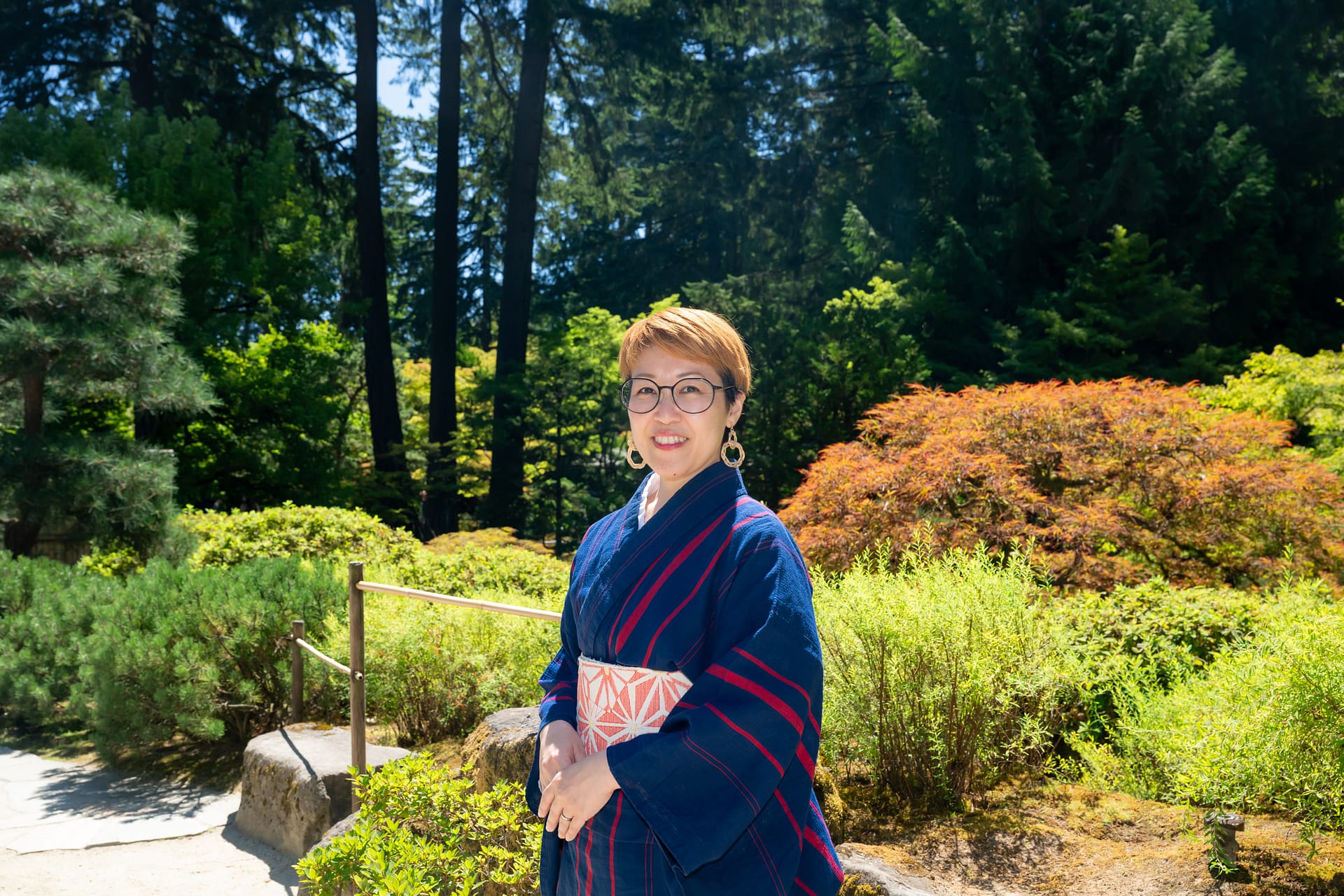
Portland Japanese Garden is honored to have the dedicated support of local artists, musicians, and practitioners who share their expertise and talents with our guests at cultural demonstrations and performances. They help us pursue our mission of Inspiring Harmony and Peace by shining light on Japanese culture as a form of cultural diplomacy. One such individual is Kaori Funaki, an internationally recognized mizuhiki artist based in Tokyo, Japan.
Unlike origami, mizuhiki is a Japanese tradition not well known outside of Japan. Mizuhiki (水引 lit. “water pull”) is the centuries-old Japanese art of decorative paper cord knotting that is a deeply rooted element of gift-giving culture in Japan. The knots are made of twisted washi paper cords. The culture team at Portland Japanese Garden connects people across cultures by introducing members and guests to aspects of Japanese culture. On July 29, Kaori Funaki, an internationally recognized mizuhiki artist, pursued the same mission using cords made into colorful knots.
Mizuhiki’s unique characteristics have since inspired artists such as Kaori Funaki to craft new and complex patterns to create intricate sculptures, accessories, and decorations. Funaki fell in love with mizuhiki at her engagement ceremony while admiring the wide variety of beautifully tied mizuhiki, from simple to gorgeous, tied on gift envelopes for the happy couple. This inspired her to begin training in 2010 to master the techniques.
In 2015, she founded 喜結 (Kimusubi) to elevate mizuhiki into the realm of contemporary fine art. After realizing the art form had been cherished for centuries, she felt sad to see that in modern times it had transformed into a mere formality. She aims to both globalize the art form and pass it down to the next generation through live demonstrations for prestigious European luxury brands, as well as exhibitions and cultural exchange workshops worldwide.
Last June, Takeshi Tamura, of Monko LLC, a trading company aiming to be a doorway of Japan to the world, contacted Portland Japanese Garden asking if we would be interested in having Kaori Funaki demonstrate mizuhiki to our members and guests. He found us while researching Japan connected organizations in the United States. Mayuko Sasanuma, Director of Cultural Programs, had long wanted to host a mizuhiki demonstration at the Garden. “I have always been fascinated by the culture of mizuhiki. It is woven into so many moments in Japanese life, from major milestones to seasonal and thank-you gifts, yet it remains relatively unknown outside of Japan,” said Sasanuma. We scheduled an online meeting with Funaki to learn more and see if she could come demonstrate at the Garden in 2026.
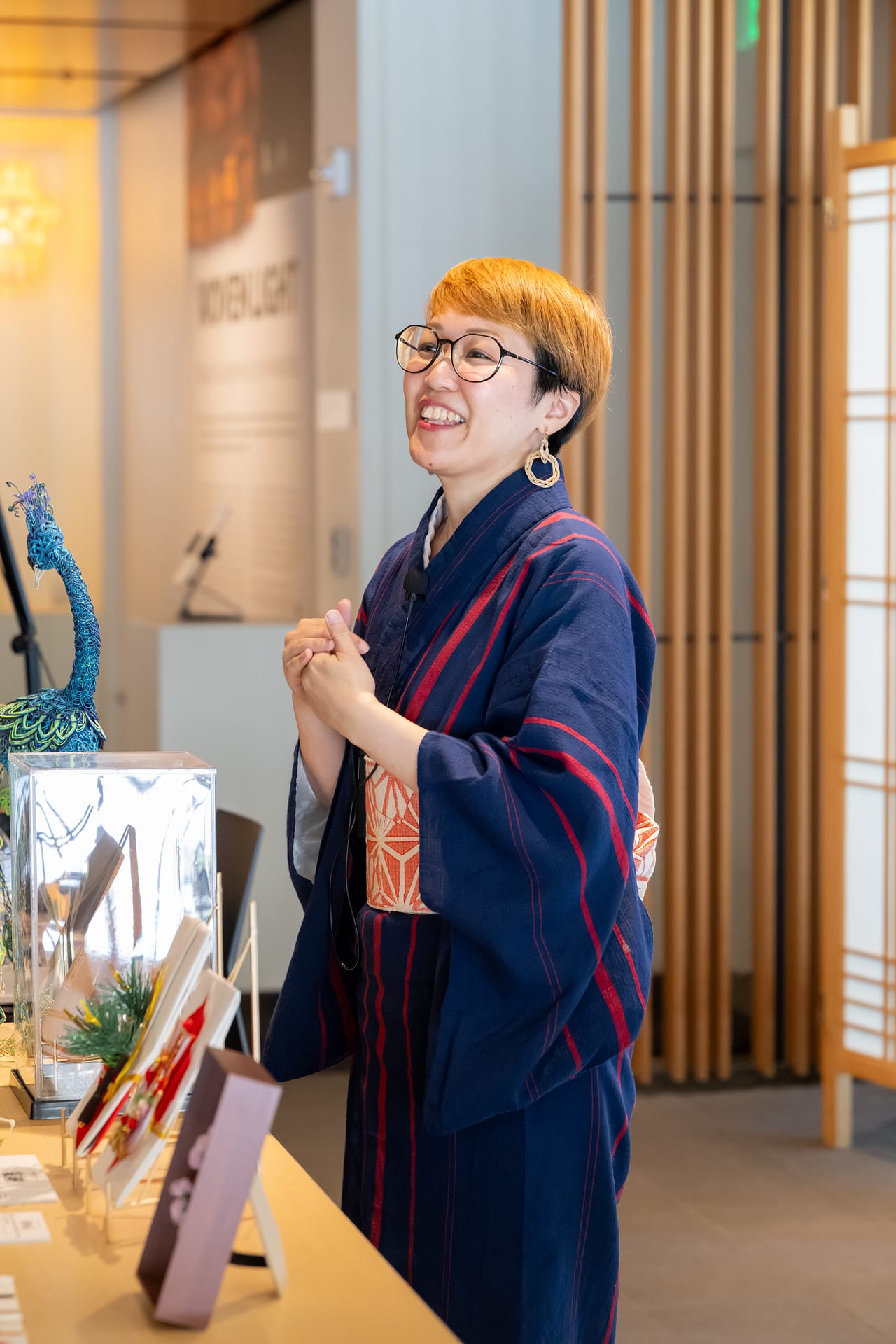
On July 29, 2026, more than a year after the initial contact, Funaki gave a presentation on mizuhiki at Portland Japanese Garden as the initial stop of a U.S. tour promoting the traditional Japanese art form. Guests watched as she began her talk by creating first a crane, then an ume-musubi, or plum knot, which symbolizes good fortune because plums announce the arrival of spring during the cold winter season.
Funaki spoke about how this artform dates to the seventh century, when envoys to China during the Sui Dynasty (581- 618) brought back gifts to Japan that were wrapped in red and white hemp strings. Following this exchange, offerings to the Imperial Palace began to be wrapped in red and white threads, and mizuhiki soon developed into a deeply rooted element of Japanese gift-giving culture. Mizuhiki were also used as hair accessories for women and to tie samurais’ top knots. She explained how mizuhiki are used to decorate gift envelopes filled with money during special occasions, including weddings, funerals, graduations, moves, etc.
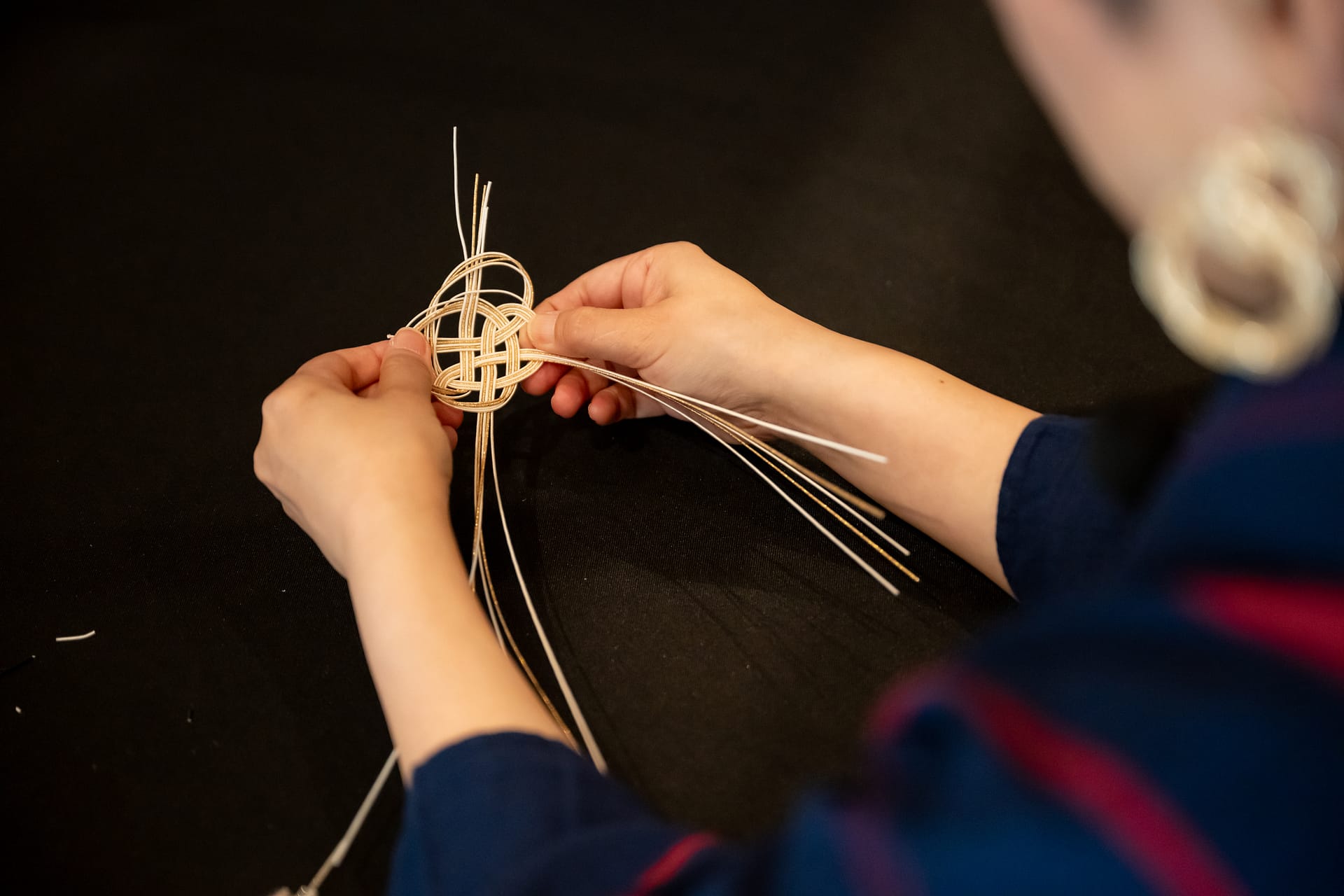
Each style of knot, color of thread, and number of strands carry significant meaning and ultimately symbolizes the connections between people. The knot is tied to convey feelings of prayer, wishes or celebration. Funaki taught guests how to tie an awajimusubi, or awaji knot, using two strands of cord. The shape of the knot resembles an abalone shell. Guests found the opportunity to try the craft themselves a highlight. We also learned that the craft looks easy but is more challenging than it appears.

The presentation also included a video about the fabrication of mizuhiki cords at Shinmeido, a manufacturer in Iida City, Nagano Prefecture. The cores are from a washi paper string called motoyui which are then wrapped in silk thread, foil, or mylar.
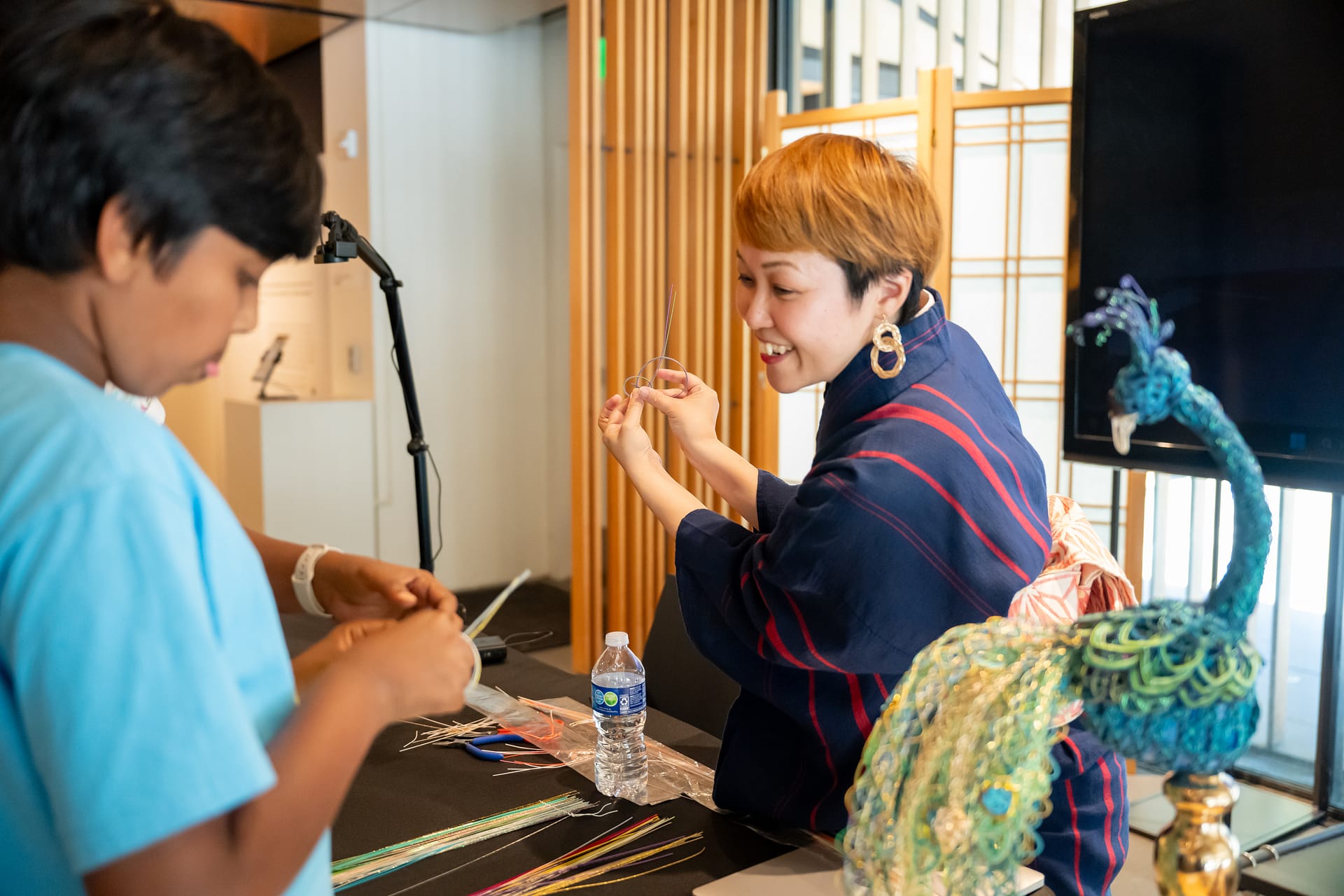
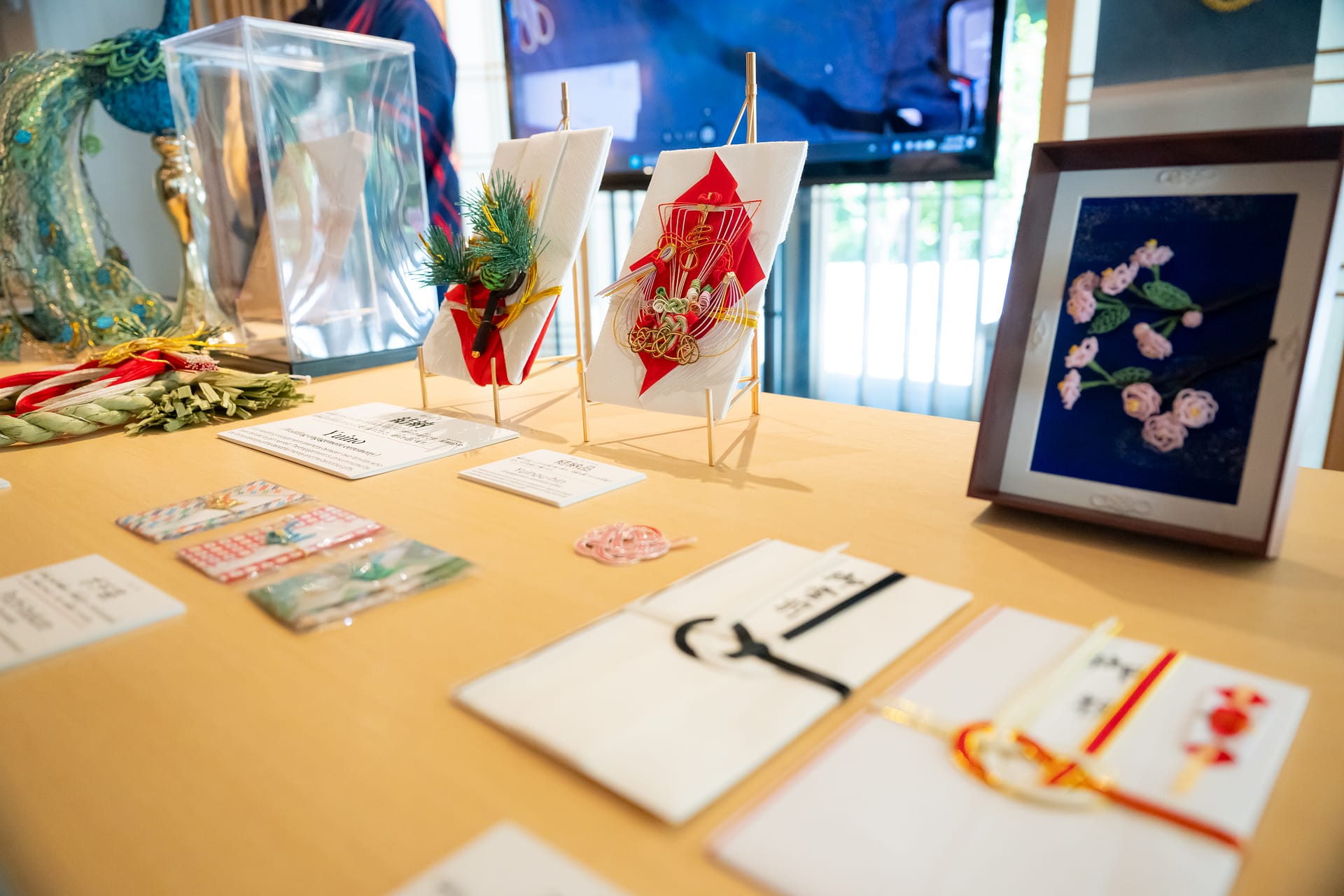
At the end, guests gathered close to watch her create a turtle and admire a display of Funaki’s work which included New Year’s decorations, various styles of gift envelopes enclosed with mizuhiki, a framed cherry blossom piece, and a spectacular peacock. The gift shop featured more of her work for sale. The display also featured a mizuhiki textbook from 1938, a time when students in schools learned 20-30 knots as part of their education.
“At a time when pre-made mizuhiki and printed designs have become a norm in Japan, Kaori-san’s demonstration of handmade mizuhiki reminded us of the timeless value of creating something by hand with the recipient in mind,” Sasanuma added. Prior to her demonstration, the culture team gave Kaori Tanaka and Takeshi Tamura a tour of Portland Japanese Garden. When asked her impressions of the garden following her visit, she wrote, “The refreshing scent of the fir trees that filled the path from the [Calvin and Mayho Tanabe] Welcome Center to the Cultural Village was an incredible experience that I will cherish for the rest of my life!” She remarked during the tour that it was her first time experiencing that scent. Funaki found “the Garden itself was absolutely breathtaking, showing how much it is loved and meticulously cared for in every single corner.” She also remarked on the trees surrounding the Sand and Stone Garden, which makes the karesansui (Japanese dry landscape garden) so different from those found in Japan.
Portland Japanese Garden is honored to have the incredible support of artists who share their talents with our guests at Cultural Demonstrations and Performances. Most of our artists are local, but we are also very fortunate to welcome visiting artists from Japan. To learn more about our slate of upcoming programs, visit our events page here.
Kelsey Cleveland serves as Cultural Programs Manager for Portland Japanese Garden. After studying Japanese at Smith College and Nanzan University, she worked for eight years in the nonprofit sector in Osaka and Kobe, Japan.