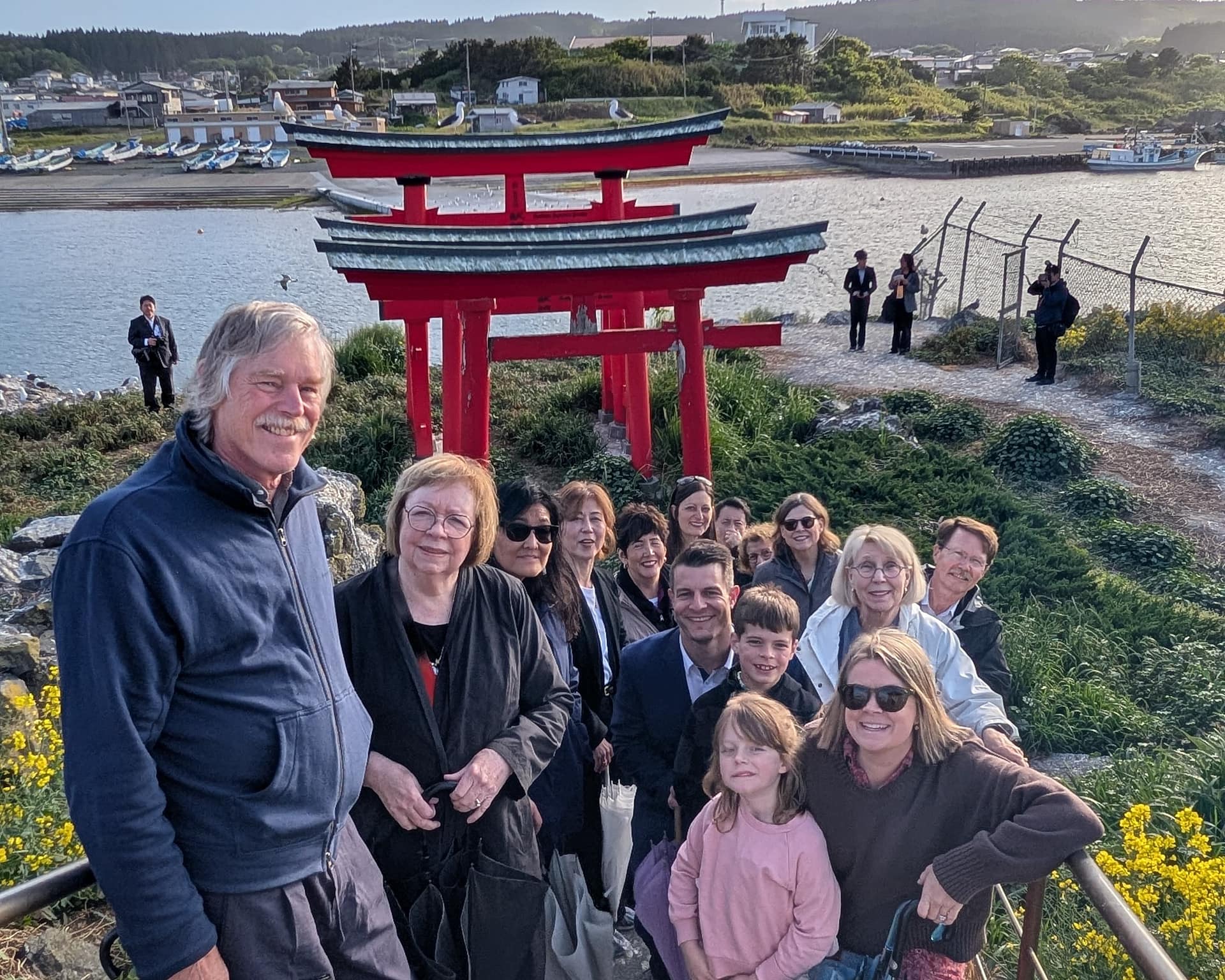
In May, a delegation from Portland Japanese Garden returned to the northern Japanese city of Hachinohe to commemorate the tenth anniversary of the return of torii gate beams at Itsukushima Shrine. As part of the ceremony, Yukito Sasamori, a student at Sanjo Junior High School and Honoka Nishimura, a student at Hachinohe Kodai Junior High School, delivered these heartwarming speeches, which we are honored to share here.
More about the return of the kasagi to Hachinohe can be read here.
Yukito Sasamori
“If you lose something precious and don’t find it in the next few years but suddenly, one day, out of nowhere, it comes back to you. Would you believe that’s [nothing] short of a miracle?
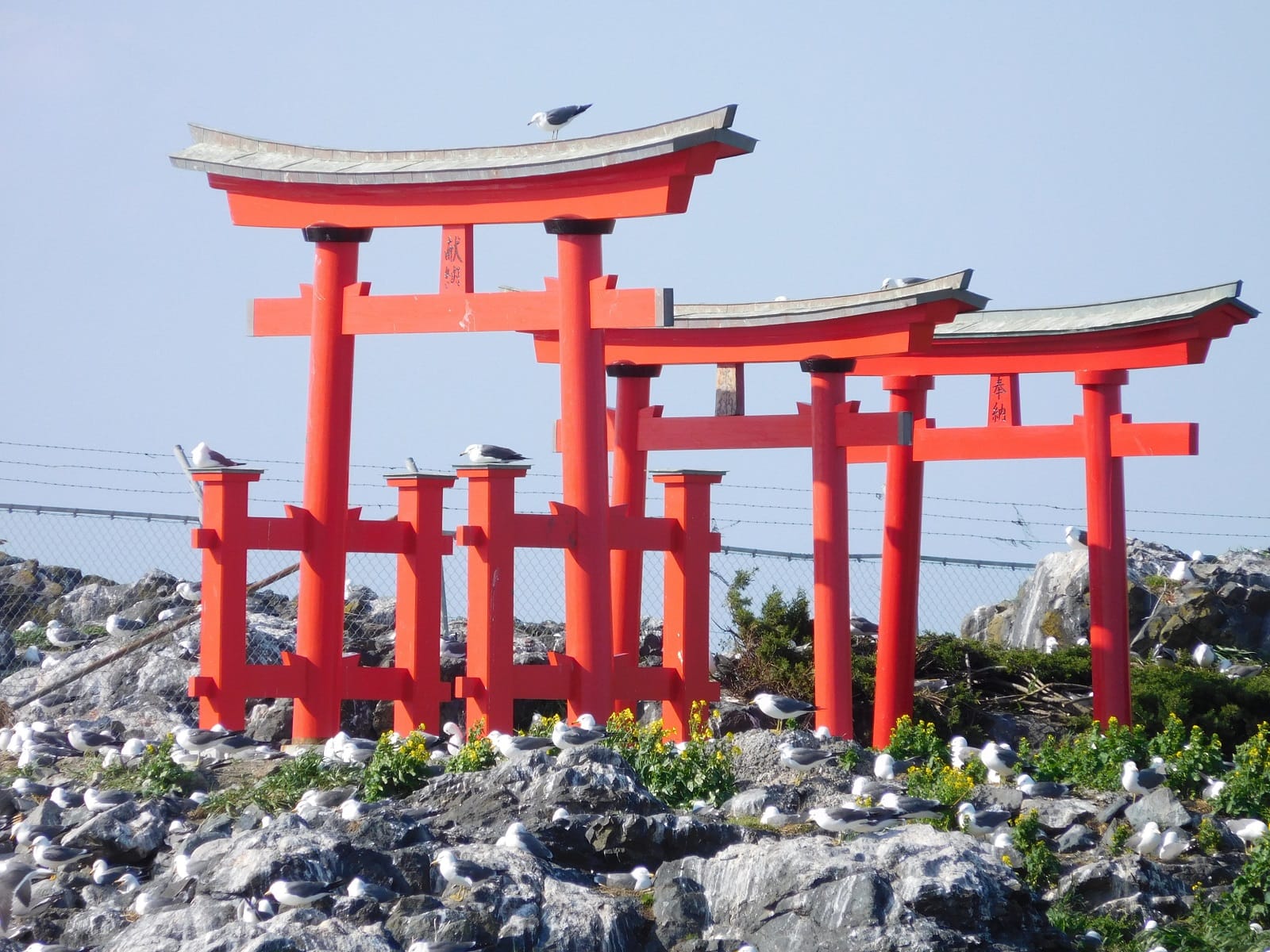
I’m sure most of you have heard about the incident where a section of the torii gate at Itsukushima Shrine here in Hachinohe City was swept away by the tsunami following the Great East Japan Earthquake. It travelled across the vast Pacific Ocean, and ended up in Portland, Oregon—7,000 kilometers [>4,000 miles] away.
When I first heard this story, I couldn’t believe my ears—I wondered if such a miracle could really happen. But after visiting the U.S., listening to the accounts of those who got involved in this extraordinary story, and conducting my own research, I came to believe that what happened was not merely a series of coincidences.
That’s because the lost part of the gate was brought back to its true home because of the collaborative efforts of people who decided to take action. To begin with, if the person who discovered the capstone that washed ashore in the U.S. had simply thought it was just a piece of driftwood, this story would never have come to be. It was precisely because the people who found the capstone didn’t dismiss it as mere flotsam but sought to return it to where it originally came from that this story continued.
Of course, when we randomly see driftwood floating by the sea, I don’t think it’s usual to wonder, “Where did this piece of wood come from?” and try to find where it came from. I realized that this torii gate homecoming miracle was born from the interest and courageous initiatives of countless people—those who discovered the log, those who examined it, those who searched for its original owner, and those who shared the information.
This shows that even in distant places, human involvement bridges the gap between national borders and cultures. We don’t often experience such moments in our daily lives, but this story—and the accounts I heard firsthand while visiting the United States—made me feel this connection deeply.
My understanding of the word ‘miracle’ has shifted slightly since learning the details of this story. I now believe that miracles are not simply the result of a series of coincidences but rather are born from people’s awareness, concern and actions.
That is why I do not want to dismiss this event as merely a ‘miracle.’ Instead, I want to view it as the result of human compassion and the desire to build connections across the globe. I want to pass this on to the next generation, along with the memories of the Great East Japan Earthquake. Lastly, I want to become someone who has the courage to build those connections myself.”
- Yukito Sasamori, Student at Sanjo Junior High School
Honoka Nishimura
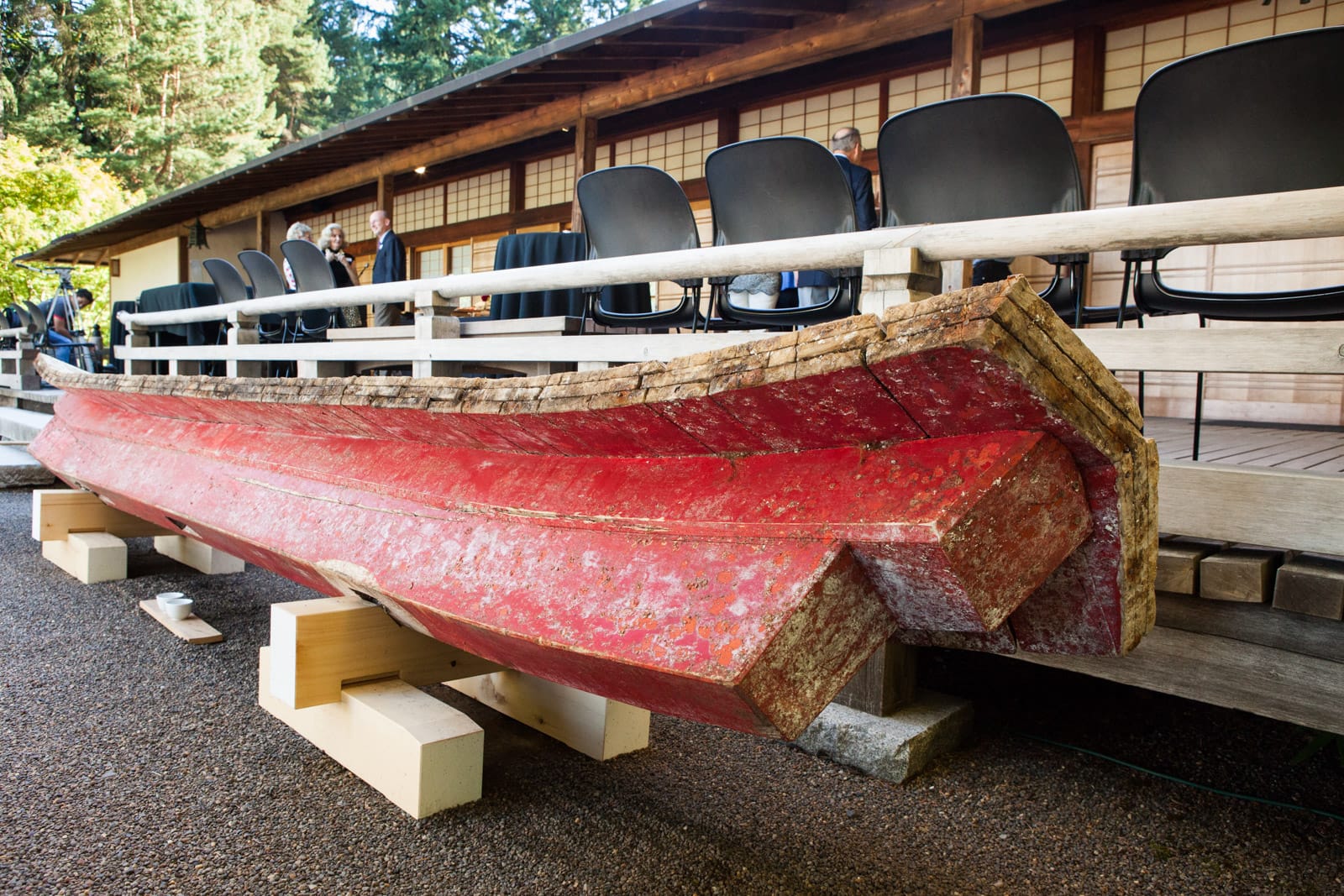
“On March 11, 2011, the day of the East Japan Earthquake, a huge tsunami swept away three torii gates from Okuki Itsukusima Shrine. Two of the torii crossbeams, called kasagi, washed ashore on the coast in Oregon, USA, two years later in 2013. After that, members of Portland Japanese Garden took care of the crossbeams and searched for their rightful owner. Once it was discovered that they belonged to Okuki Shrine, discussions were held and preparations were made for their return.
In 2015, the two crossbeams finally returned to Japan for the first time in four years. This is truly a story of a miracle. Why did this miracle happen? I think it’s because the people in Portland had a respectful mind for culture and consideration for others. We have a word: Omonpakaru. It means being considerate and thoughtful of others.
If I had been a person who had found them, I probably would have left them there without the owner’s feeling. But people in Portland did not consider them as mere driftwood but as an important part of Japanese culture.
Moreover, they took care of them and searched for their owner. This miracle was caused by “omonpakaru” and the respect for the culture. Today, the kasagi, which drifted ashore in Oregon 7000 kilometers away, have been rebuilt and still stand as a symbol in Hachinohe. Thanks to these occurrences, the interaction between Portland and Hachinohe started.
Hachinohe City has sent junior high school students overseas six times. I took part in this program last year. I was very happy when I visited Portland Japanese Garden because it expressed the importance of Japanese culture in detail. I felt they were familiar with Japanese culture.
Finally, I want to carry forward the connections and bonds that our seniors have nurtured over the past ten years into the next decade. It is very valuable for me to touch the connections which Kasagi made and to get experiences I gained through this program. I hope that this story will continue to be passed down with the mutual respect and consideration for each culture.